In This Issue #2 We Highlight 4 Artists And Some Significant Works
Join the Conversation!!!

We will Feature Up to 4 Albums from Artists representative of a range of the many sub-genres. We Hope to encourage Listeners of all tastes and passions. So Get your Headphones on and consider discussing the musical offering and sharing your views with like-minded peers.
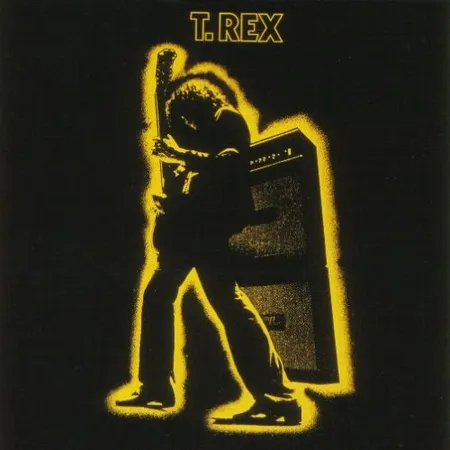
Electric Warrior (1971) by his band T. Rex. It is universally regarded as a masterpiece, the defining document of the glam rock movement, and the album that launched “Trextasy” across the UK. This is the album where Bolan and producer Tony Visconti flawlessly fused acoustic folk imagery with heavy, fuzz-filled electric rock ‘n’ roll. The album consists of 11 tracks that balance heavy, seductive grooves with acoustic vulnerability: “Get It On”: The album’s massive breakout hit, which topped the UK charts. It features Rick Wakeman on keyboards. “Jeepster”: A heavy, blues-driven stomp that reached Number 2 on the UK singles chart. “Cosmic Dancer”: A hauntingly beautiful acoustic ballad accompanied by swooping strings that explores themes of reincarnation and self-fantasy. “Mambo Sun”: The album’s sultry, mid-tempo opening track that immediately established the record’s hypnotic groove. Electric Warrior saw Bolan evolving from pixie poet into a real figurehead for teenagers and album buyers alike. It’s a testament to Visconti’s brilliance as a producer and Bolan’s vision as a bandleader that, despite the use of such “of the era” effects as flanging, backwards tapes and wah-wah pedals, the album doesn’t sound at all dated.
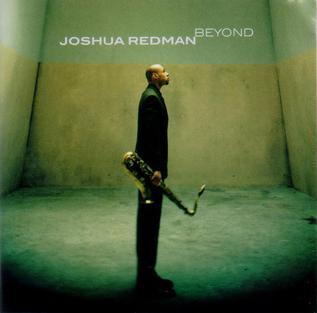
Beyond is a modern jazz album by Joshua Redman. Recorded with his quartet, featuring Aaron Goldberg on piano, Reuben Rogers on bass, and Gregory Hutchinson on drums. features a mix of styles, from funk to balladry. a particular standout moment being a tenor sax duel with guest Mark Turner on “Neverend”. Industry hype has surrounded Redman for a long time and sometimes it’s hard to focus on Redman the jazz musician. Beyond, doesn’t depart sonically from his previous works. However, There are very different grooves here, and the appeal of this album is its variety. The album balances advanced technical structures with immediate emotional warmth. Redman plays with challenging time signatures, yet shapes them into accessible, grooving melodies. Last Rites of Rock ‘n’ Roll”: A straight-ahead bop tune that opens with an unconventional, Middle-Eastern-inflected drone reminiscent of Joshua’s father, Dewey Redman. “Courage (Asymmetric Aria)”: The fast, busy opening track written in an unusual 13/4 meter. It begins with a rhythmic piano and bass vamp before blossoming into sparkling solos. “Belonging (Lopsided Lullaby)”: Another energetic romp in an odd meter featuring a call-and-response form between Redman (playing alto sax here) and Goldberg. “Balance”: A expansive, nine-minute epic that builds slowly from a delicate piano-bass figure into an intense, avant-garde saxophone solo before settling back into its original groove.
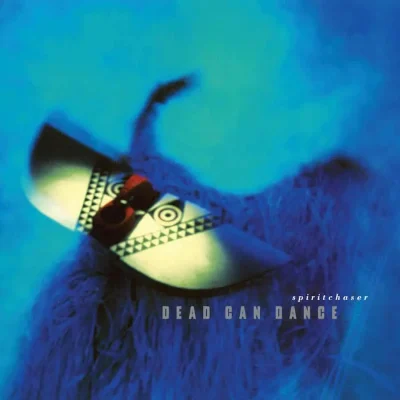
Spiritchaser is A tribal African themed album. Less than half of the album’s songs have lyrics as such. Chanting, both individually and in harmony, seems to be the rule. the Dominating percussion and Chanting singing achieves a mix which creates very atmospheric yet still melodic songs. appreciated by Fans as Dead Can Dance’s venture into more overtly “world music”.Key Tracks: “Nierika” & “Song of the Stars”: Hypnotic, percussion-heavy pieces that establish the album’s trance-like jungle atmosphere. “Indus”: This 9-minute epic features a melody strikingly similar to The Beatles’ “Within You Without You”. Though unintentional, George Harrison personally granted permission for its use, resulting in him receiving a partial songwriting credit.Dedication: The entire record was dedicated to the memory of Lisa Gerrard’s late brother, Mark Gerrard.
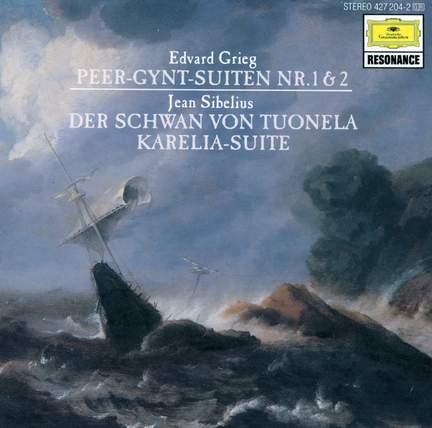
The Peer Gynt Suite No.1 is one of the composer’s most popular works. “Morning Mood” : Often associated with Scandinavian forests, this iconic pastel melody actually depicts the sun rising over the Moroccan desert in North Africa where Peer is stranded. It is heavily driven by flute and oboe. “The Death of Åse” : A deeply melancholic, slow movement scored entirely for strings. It captures the desolate grief surrounding the death of Peer’s mother, Åse. “Anitra’s Dance” : A nimble, exotic tempo in triple time featuring strings and triangle. It illustrates the dance of a Bedouin chieftain’s daughter trying to seduce Peer. “In the Hall of the Mountain King” : One of the most recognisable melodies in popular culture. Built on a simple, repeating theme that starts low and quiet, it utilizes an accelerating accelerando and crescendo to simulate Peer escaping from a horde of angry mountain trolls. The Peer Gynt Suite No. 2: The Abduction of the Bride: Ingrid’s Lament. This movement opens with violent, sudden orchestral bursts. It quickly transitions into a sorrowful, pulsing lament played by the strings in unison, illustrating the despair of Ingrid after Peer abducts and subsequently abandons her. Arabian Dance this movement shifts the setting to a North African Bedouin camp. Grieg uses bright woodwinds, a prominent piccolo, and a lively tambourine to inject an exotic, rhythmic colour palette that stands out sharply against the Scandinavian tone of the rest of the work. Peer Gynt’s Homecoming: Stormy Evening on the Coast, this movement portrays a powerful tempest at sea. The orchestration forms a swirling, chaotic wave of sound that depicts the violent shipwreck Peer experiences as an old man returning to his native Norway. Solveig’s Song The final movement is a hauntingly beautiful orchestral arrangement of the song sung by Solveig, the woman Peer loved and left behind.
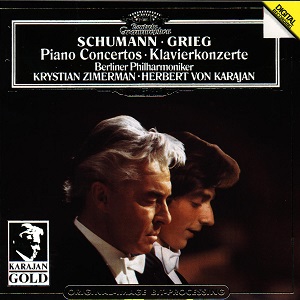
The Piano Concerto in A minor, Op. 16, is famous for seamlessly weaving raw virtuosity with atmospheric Scandinavian lyricism and Norwegian folk music traditions. The concerto opens with a legendary, dramatic timpani roll crescendo followed by a cascading double-octave piano flourish. Features a highly expressive, soul-stirring cello motif and a massive, fire-breathing solo cadenza. The second movement begins with a ravishing, muted melody. The piano enters with a lighter, contrasting rhapsodic section before gracefully joining the orchestra for a peaceful finale. The third movement the rhythm is driven by the halling (a traditional Norwegian folk dance). It concludes with a breathtaking, triumphant shift from minor to major in an accelerated tempo.
It is helpful to research the artist, using sources like Wikipedia , Music Magazine Reviews (Pitchfork, Rolling stone, NME etc.,) Artist Websites, etc…
A synopsis of the life and music of this Issue’s featured artists appears below.
This Week’s Artists
T REX
Marc Bolan founded Tyrannosaurus Rex in July 1967, following a handful of failed solo singles and a brief period as lead guitarist in psych-rock band John’s Children. Subsequently, Bolan retained the band name and the services of Porter, who switched to percussion under the name Steve Peregrin Took, and the two began performing acoustic material as a duo with a repertoire of folk-influenced Bolan-penned songs. Inspired by an influential performance by Ravi Shankar, the band adopted a stage manner resembling the performance of traditional Indian music. The combination of Bolan’s acoustic guitar and distinctive vocal style with Took’s bongos and assorted percussion—which often included children’s instruments, such as the Pixiphone—earned them a devoted following in the thriving hippy underground scene. BBC Radio 1 Disc Jockey John Peel championed the band early in their recording career. Peel later appeared on record with them, reading stories written by Bolan. Another key collaborator was producer Tony Visconti, who produced all of the band’s records through to the mid-1970s.Their debut album My People Were Fair and Had Sky in Their Hair… But Now They’re Content to Wear Stars on Their Brows remained in the UK Albums chart for nine weeks. Their second album Prophets, Seers & Sages: The Angels of the Ages was released a few months later. During 1968–1969, Tyrannosaurus Rex had become a modest success on radio and on record. However, by mid-1969, there was a rift developing between the two halves of Tyrannosaurus Rex. Bolan and his girlfriend June Child were living a quiet life, Bolan working on his book of poetry entitled The Warlock of Love and concentrating on his songs and performance skills. Took, however, had fully embraced the anti-commercial, drug-taking ethos of the UK Underground scene centred around Ladbroke Grove. Took also began writing his own songs, and wanted the duo to perform them, but Bolan strongly disapproved of his bandmate’s efforts, rejecting them for the duo’s putative fourth album, in production in Spring/Summer 1969. Behind the scenes, Bolan’s relationship with Took ended after this dispute, although they were contractually obliged to go through with a US tour which was doomed before it began. Bolan returned to the UK in September and advertised for a replacement for Took. A month later, he recruited percussionist Mickey Finn and they completed the fourth album, released in early 1970 as A Beard of Stars, the final album under the Tyrannosaurus Rex moniker. Tyrannosaurus Rex’s albums began to show higher production values, more accessible songwriting from Bolan, and further experimentation with electric guitars and a true rock sound. Bolan continued the process of simplification by shortening the band’s name to T. Rex. From 1970 to 1973, T. Rex were extremely popular in the UK, with a run of eleven top 10 singles, four of which reached number 1. The band’s 1971 album Electric Warrior received critical acclaim, reached number 1 in the UK and became a landmark album in glam rock. The 1972 follow-up, The Slider, was their most successful album in the US, where it went top 20. 1973’s Tanx saw the band incorporating soul, funk and gospel into their sound. Zinc Alloy and the Hidden Riders of Tomorrow was released in February 1974.
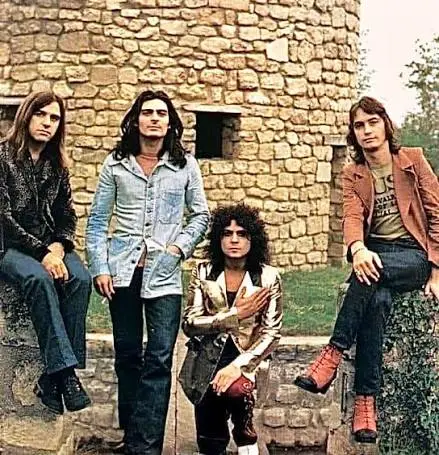
Musically, the band ventured into blue-eyed soul and blended rock with funk and R&B influences. Lyrically, the album harkened back to the Tyrannosaurus Rex days with long song titles and lyrical complexity, but was not a critical success. In the US, Warner Brothers dropped the band without releasing the album there. From 1974, T. Rex’s appeal began to wane, though the band continued releasing albums, with their subsequent work blending rock with R&B and disco. Bolan’s Zip Gun (1975) saw the group further developing the soul and funk of previous records. Most of the material had already been released the previous year in the US as Light of Love. It was self-produced by Bolan who, in addition to writing the songs, gave his music a harder, more futuristic sheen. Bolan’s own productions were not well received in the music press. However, in the US, Rolling Stone magazine gave it a positive review. During this time Bolan became increasingly isolated, while high tax rates in the UK drove him into exile in Monte Carlo and the US. No longer a vegetarian, Bolan put on weight due to consumption of hamburgers and alcohol, and was ridiculed in the music press. In early 1977, Dandy in the Underworld was released to critical acclaim. Bolan had slimmed down and regained his elfin looks, and the songs too had a stripped-down, streamlined sound. A spring UK tour with punk band the Damned in support garnered positive reviews. As Bolan was enjoying a new surge in popularity. Marc Bolan and his girlfriend Gloria Jones spent the evening of 15 September 1977 drinking at The Speakeasy Club and then dining at Morton’s club on Berkeley Square, in Mayfair, Central London. While driving home early in the morning of 16 September, Jones crashed Bolan’s purple Mini 1275 GT into a tree. While Jones was severely injured, Bolan was killed in the crash, at age 29. The band were inducted into the Rock and Roll Hall of Fame in 2020.

DEAD CAN DANCE
The Australian music historian Ian McFarlane described Dead Can Dance’s style as “constructed soundscapes of mesmerising grandeur and solemn beauty, African polyrhythms, Gaelic folk, Gregorian chant, Middle Eastern music, mantras, and art rock” The group’s debut album, Dead Can Dance, was released in February 1984. The album featured “drum-driven, ambient guitar music with chanting, singing and howling” In November 1985 For their second album, Spleen and Ideal, Gerrard and Perry added Session for cello, trombone and tympani. Ned Raggett wrote in his Allmusic review of the album that “the overall feeling is of an ancient religious service suddenly brought to life in a truly modern way, with stunning results.” In 1989, Gerrard and Perry separated domestically. Gerrard moved to Barcelona before returning to Australia. Perry moved to Ireland – but still wrote, recorded and performed as Dead Can Dance. In 1998, Dead Can Dance began recording a follow-up album to Spiritchaser and planned a world tour. However, they separated before it was completed and cancelled the tour. Dead Can Dance reunited in 2005. In March 2022, Perry anticipated plans for a new album influenced by Indian music. But, In September 2022 the band announced the cancellation of both allum and tour. citing unspecified health reasons. in May 2023, Lisa told Igloo magazine that she thought that Dead Can Dance was “really finished now”. citing artistic differences. In 2025, Brendan confirmed that he was working on an album. He confirmed it would be a new Dead Can Dance album, but as a solo work.
EDVARD GRIEG
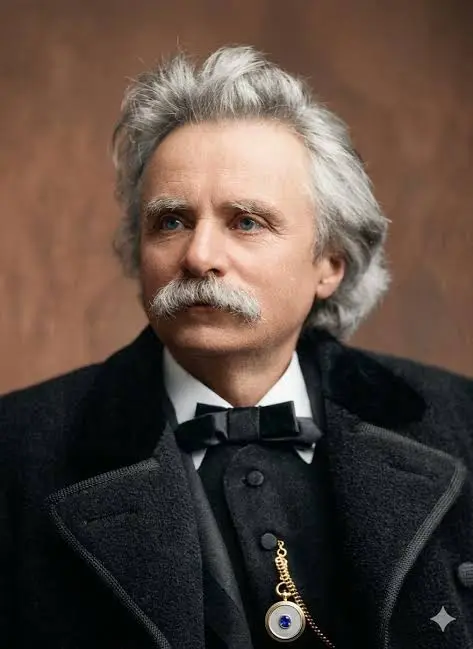
Edvard Grieg was raised in a musical family. His mother was his first piano teacher and taught him to play when he was age six. In the summer of 1858, Grieg met the eminent Norwegian violinist Ole Bull who recognized the boy’s talent and persuaded his parents to send him to the Leipzig Conservatory, where he developed quickly, both personally and musically. In 1863 he moved from Leipzig to Copenhagen where he studied Nordic music for two years. In 1867, Grieg married his first cousin, Nina Hagerup, a lyric soprano. After living for a few years in Oslo, Grieg and his wife moved back to Bergen. There they built their famous villa Troidhaugen at Hop, outside Bergen. In the summer of 1868, Grieg wrote his Piano Concerto in A minor while on holiday in Denmark. In the 1870s, Grieg composed the incidental music for Henrik Ibsen’s play Peer Gynt. Some of Grieg’s early works include a symphony (which he later suppressed) and a piano sonata. He wrote three violin sonatas and a cello sonata.Grieg’s Holberg Suite was originally written for the piano, and later arranged by the composer for string orchestra. Grieg wrote songs in which he set lyrics by poets Johann Wolfgang von Goethe, Henrik Ibsen, Rudyard Kipling and others.Grieg was impressed by Tchaikovsky, who thought very highly of Grieg’s music, praising its beauty, originality and warmth.Throughout his life, Grieg’s health was impaired by a destroyed left lung and considerable deformity of his thoracic spine. In spite of poor health, Grieg made several tours in Scandinavia, on the Continent, and in England. he played his piano concerto in London in 1888. In the summer of 1906 Grieg penned his final composition – the Four Psalms. Later, seriously weakened, he left for the comparative warmth of a hotel in Christiana. He was on the verge of a trip to Britain when he suffered a massive heart attack. In the autumn of 1907 he died in hospital shortly after arrival.
JOSHUA REDMAN
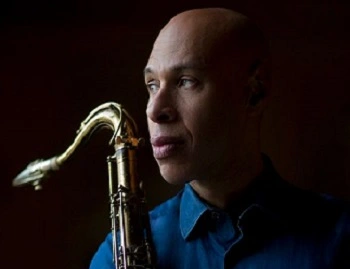
He is the son of the legendary jazz saxophonist Dewey Redman. He was exposed to many kinds of music at the Center for World Music in Berkeley. After graduating from Harvard University Redman moved to New York City. Redman won the Thelonious Monk International Jazz Saxophone Competition in 1991, and began focusing on his musical career. He was signed by Warner Bros. Records and issued his first self-titled album in the spring of 1993, which subsequently earned Redman his first Grammy nomination. His own groups developed in parallel, and from 1992 much of his time has been spent fronting his own quartet. occasionally As a trio and at other times enlarged to a quintet.On his second album as a leader, ‘Wish‘, he was joined by a notable Line-up consisting of guitarist, Pat Methany. bassist Charlie Haden and drummer Billy Higgins. this group Later toured as The Joshua Redman Quartet, featuring Christian McBride in place of Charlie Haden.He has also developed his skills as a composer, experimenting with time and large-scale compositions. His 2001 suite Passage of Time is his most ambitious composition to date. The Work draws together many elements of his earlier work both as player and performer. His role as mentor and educator is emerging as one of his defining contributions to the music world. Redman’s creative reach extends beyond the stage and studio. His music has been featured in film and television, broadening his impact on the cultural landscape..
Sound quality is important and the better online Streaming services will offer superior sound quality. As always, We do encourage you to purchase Favoured albums from good online or High street record stores.
Joshua Redman – Beyond – Label : Warner Brothers
Dead Can Dance- Spiritchaser – Label : 4AD
Edvard Grieg – Peer Gynt Suite No. 1 & 2 & Sibelius: Karelia Suite – Label: Deutsche Grammophon ; Schumann – Grieg Piano Concertos – Label: Deutsche Grammophon
T Rex – Electric Warrior – Label : Fly Records in the United Kingdom and Reprise Records in the United States.
In further issues we will continue to bring you the music of popular genres to listen, review and evaluate.
Issue #3 (coming soon) features The Jam, Aphex Twin, Jan Garbarek and Max Richter