In This Issue #3 We Highlight 4 Artists And Some Significant Works
Join the Conversation!!!

We will Feature Up to 4 Albums from Artists representative of a range of the many sub-genres. We Hope to encourage Listeners of all tastes and passions. So Get your Headphones on and consider discussing the musical offering and sharing your views with like-minded peers.
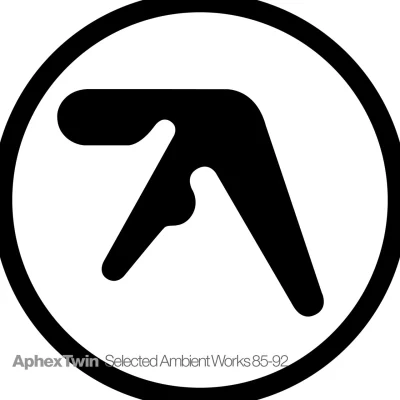
Selected Ambient Works 85–92 received acclaim and established an underground reputation. According to James, He began recording The Works when he was fourteen. He used homemade equipment constructed from Synthesisers and drum machines. Music journalists have credited it with expanding the scope of ambient music and introducing techno to fans of indie music. The website AllMusic described it as “a masterpiece of ambient techno”. Peter Manning wrote that James “managed finally to elevate electronic music’s status to the mainstream consciousness of the general public” .Standout Tracks include: “Hedphelym” & “Delphium”: These darker, tense cuts contrast the lighter tracks. “Hedphelym” utilizes a relentless house throb surrounded by a murky, bleeding feedback loop that creates an atmosphere of paranoia. “Xtal”: Frequently praised as one of the greatest opening tracks in electronic history, it introduces the album with ethereal female vocal coos, hazy nostalgia, and soft breakbeats. Critics note its “sepulchral calm” and strange, romantic glow. “Tha”: A slower, highly immersive track featuring a muted bass-drum pulse that builds an evolving aural landscape, complete with the faint, atmospheric echoes of distant conversation. “Pulsewidth”: Demonstrates James’s keen pop sensibility. Reviewers emphasize its concise momentum and friendly dancefloor beats that keep the album accessible and groovy. “Ageispolis”: A bass-heavy, expansive track that beautifully blends a driving electronic pulse with a lush synth melody, evoking a feeling of gravity-free floating. “Green Calx”: The closest the record comes to pure, spastic sonic experimentation. It features a burbling acid bassline, pitch-shifted machine sounds, mechanical pistons, and a hidden sample of Ennio Morricone’s score for The Thing. “We Are the Music Makers”: A highly structured track that loops simple keyboard melodies over a prominent drumbeat, uniquely highlighted by a whimsical, flipped vocal sample of Gene Wilder from Willy Wonka and the Chocolate Factory.
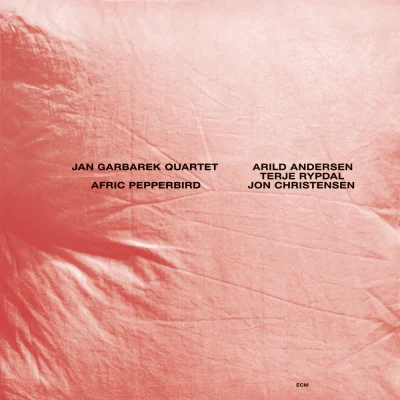
Afric Pepperbird represents the strongest, most aggressive period of Garbarek’s career. It is the first album the saxophonist released on ECM in 1971. it marked The beginning of a lifelong association with the label for him and his fellow musicians. Highlighting the diversity of the artists’ expression of emotion. Albeit in an imaginative Way whether in the atonality of improvisation or in free outbursts on the tenor saxophone. Added to the mix we glean a Nordic sonic aesthetic. Key Tracks Review: “Beast Of Kommodo” The album’s central masterpiece is this 12-and-a-half-minute epic. It launches with a persistent, heavy acoustic bass and a driving drum riff that leans toward the rock-fusion sensibilities of the era. Once Garbarek enters, the restraint shatters. He alternates between roaring, savage wails on the tenor and a honking bass saxophone, building immense tension alongside Rypdal’s randomly placed guitar chords. “Scarabée” The opening track serves as an eerie, atmospheric introduction that relies on the “little instruments”. It begins quietly with Andersen playing a South African thumb piano and Christensen adding dark, delicate cymbal strokes. Garbarek cuts through this sparse space with a hoarse, plaintive tenor sax that constantly shifts between soft murmurs and screaming overblown notes. “Afric Pepperbird” The title track is a standout for its infectious, driving melody underpinned by a steady, swinging bass line from Andersen. Initially charging ahead with deliberate drumming, the track quickly settles into a more spacious, laid-back landscape. Here, Rypdal delivers spacey, gnarled guitar fills before Garbarek tears the arrangement apart in the second half with fierce, relaxed-to-ripping saxophone solos. “Blow Away Zone” This track is a masterclass in blistering, free-improvisation. Garbarek unleashes an ether-wrenching, frenetic sol.. Reviewers frequently highlight Rypdal’s performance here; rather than his later melodic style, his playing is manic and jagged, sounding much closer to avant-garde guitarist Derek Bailey. Interspersed between the heavy storms are short vignettes, mostly written by Arild Andersen.
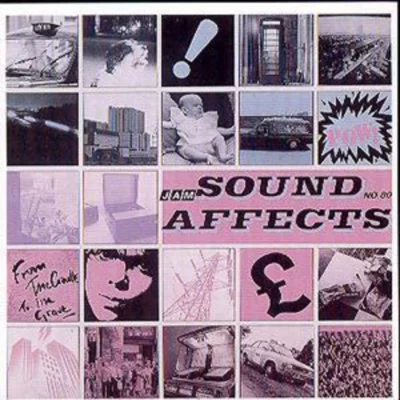
Sound Affects is the fifth studio album by English rock band the Jam. The album was released in November 1980 by Polydor Records. The album features the group’s second UK number one single, “Start!” which has a similar bass-line to the Beatles’ “Taxman” (Revolver) and includes a homage to its guitar solo. Paul Weller focused on sharper observations of human nature, British working-class life, and spirituality rather than straight political railing. From beginning to end, the songs are pure, clever, infectious pop — probably their catchiest. stand-out tracks: “Start!”: The album’s driving lead single hit number one on the UK charts, powered by a thumping, aggressive bassline from Bruce Foxton. “That’s Entertainment”: An acoustic, poignant, and breathtakingly observant masterpiece detailing ordinary British life that remains a critical high-water mark. “Man in the Corner Shop”: A fan-favorite, deeply catchy pop tune featuring clever lyrics and a memorable vocal arrangement. “Pretty Green”: An energetic opening track tackling the corrupting influence of money with a snarling guitar and vocal interplay. On this album you get to hear the Jam at their absolute peak.
The Blue Notebooks, released in 2004, is Max Richter’s second solo album. The album features eleven melodic, ‘ambient’ tracks, firmly rooted in the minor-key, whilst exploring a contemporary and minimalist approach. Named by The Guardian as one of the best classical works of the century. ‘The actress Tilda Swinton reads from Kafka’s The Blue Octavo Notebooks and the work of Czesław Miłosz. Richter has said that The Blue Notebooks is a protest album about the Iraq War. It also serves as a meditation on his own troubled childhood. While The Blue Notebooks is best experienced as a continuous, immersive piece, several key tracks define its emotional core: “Iconography” & “Organum”: These tracks show off Richter’s spiritual, ambient side, utilizing cascading synthesizers and organs to recreate the ethereal, reverbed acoustics of a massive cathedral. “On the Nature of Daylight”: Universally considered the album’s crown jewel, this heartbreakingly beautiful track features a weeping string quintet that builds an overwhelming sense of melancholy and nostalgia. Critics frequently highlight its visceral emotional power, and it has since become a legendary cinematic staple, famously featured in films like Arrival and Shutter Island. “The Shadow Journal”: Lauded by Pitchfork as the album’s structural centerpiece. It masterfully bridges classical music with the modern electronic sphere by pairing a lone, keening viola and harpsichord with a deep, subterranean electronic bassline. “Vladimir’s Blues” & “Written on the Sky”: These short, delicate piano interludes act as emotional anchors. Critics note that “Written on the Sky” serves as a perfect bookend to the record, gently stripping back “On the Nature of Daylight” into a solo piano recap that brings the listener safely “home”. “The Trees”: Marking the album’s grand climax, this track is built on a set of variations on a falling bassline. Reviewers highlight its majestic, tense build-up, which explodes into sonic intensity before dropping the listener into a ghostly stillness.
It is helpful to research the artist, using sources like Wikipedia , Music Magazine Reviews (Pitchfork, Rolling stone, NME etc.,) Artist Websites, etc…A synopsis of the life and music of this Issue’s featured artists appears below.
This Week’s Artists
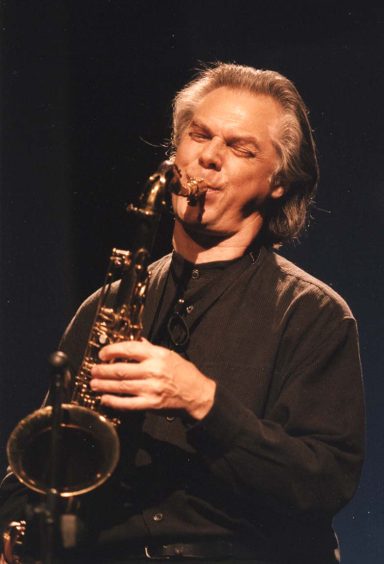
JAN GARBAREK
Garbarek was born in 1947 in Mysen, Norway. the only child of a former Polish prisoner of war, and a Norwegian woman, He grew up in Oslo. Attracted to saxophone during his teens by jazz radio broadcasts. In Oslo while he studied law, He focused on the music and commitment of John Coltrane. He immediately bought a saxophone instruction book and learned fingering positions before he even had a horn. When he did get one, he was a natural . By 1962, he’d won a competition for amateur jazz players and formed his own band. In 1964, he played with Don Cherry, embracing world folk traditions in free jazz .The experience proved a significant influence .By the late 60s Garbarek had met George Russell, an American jazz pianist and music theorist. Garbarek played with Russell on a number of major ventures before cutting his own first album.Garbarek was invited by ECM’s Manfred Eicher to join the fledgling label’s roster. his classic debut, Afric Pepperbird, was released in 1970. The music was new and fresh. By the mid-70s he worked with many leading players. He became a member of Keith Jarrett’s European Quartet and Ralph Towner group Solstice. Garbarek maintains an interest in many different types of music. By the late 80s he was playing with a wide range of musicians from all sorts of cultures. This eclecticism was apparent in the album, Officium, which was made with the Hilliard Ensemble in 1994. The album combined vocal treasures from Renaissance times with the prominent solo instrument line by Garbarek, either on tenor or soprano.He is also a pioneer of ambient jazz composition. most notably on his 1976 album Dis a collaboration with guitarist Ralph Towner. that Album featured the distinctive sound of a wind harp on several tracks.Garbarek has kept all his other musical options burning. He remains one of the most influential and creative jazz musicians of his generation.
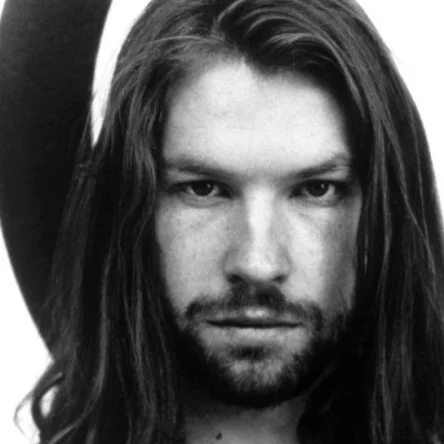
APHEX TWIN
Richard David James known professionally as Aphex Twin. a British musician, composer and DJ active in electronic music since 1988. James was born on 18 August 1971 in Limerick, Ireland to welsh parents. James grew up in Cornwall, where he lived in Lanner. He became interested in making sounds before writing music. as a child he played with the strings inside his family piano and disassembled tape equipment. he bought his first synthesizer at age 12 and after taking an interest in electronics would modify analogue synthesisers. he began DJing at free parties and clubs around the South West and included his own tracks in his sets. James had no formal music training and is largely self-taught. His debut EP Analogue Bubblebath, was released in 1991 on Mighty Force Records,. The Music brought James an early fan base. he began to perform across the UK and continental Europe. James co-founded the independent label Rephlex Records with Grant Wilson-Claridge. the word “braindance” was coined to describe Aphex Twin’s music..
The first full-length Aphex Twin album, Selected Ambient Works 85–92, comprised material dating back to James’s teen years. It was released in November 1992 by Apollo Records. John Bush of Allmusic would later describe the release as a watershed moment in ambient musicJames’s fourth studio album as Aphex Twin, was released on Warp in 1996. It features software synthesisers and unconventional rhythms. Universally acclaimed it features fast breakbeats and intricate drum programming which draw from jungle and drum and bass.In 2001 Aphex Twin released Drukqs. This was seen As an experimental double album featuring abrasive, meticulous programming and computer-controlled piano.
The music showed the influences of Erik Satie and John Cage. It features the piano composition “Avril 14th”, which remains one of James’ best-known work. The album polarised reviewers. For a while it appeared as if it would be James’ swan song. A series of limited vinyl-only 12″s followed in 2005. then the Aphex brand would go dark for more than a decade. James retreated from the public eye, moved to Scotland, got married, had children and simply left the myths to simmer. It wasn’t until 2014 that he re-emerged with Syro, his sixth album under the Aphex Twin moniker. In the years since, James has comfortably resumed his position as an active institutional hero of experimental electronic music.
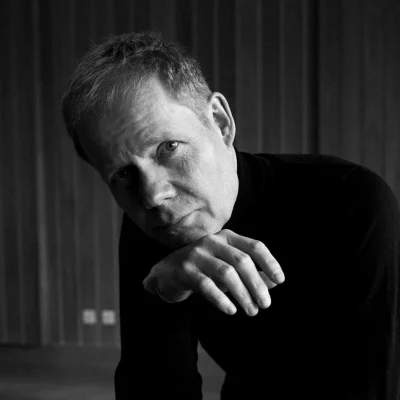
MAX RICHTER
Max Richter is a German-born British composer and pianist. Richter was born in Hamelin, Lower Saxony, West Germany. He grew up in Bedford, England. Richter is classically trained, graduating in composition and Piano from the University of Edinburgh. Further Study followed at the Royal Academy of Music in London, and with Luciano Berio in Italy. He works within post-minimalist and contemporary classical styles. From synthesizers and computers to a full symphony orchestra, Richter’s innovative work encompasses solo albums, ballets, concert hall performances, film and television series, video art installations and theatre works.After finishing his studies, Richter co-founded the contemporary classical ensemble Piano Circus. He stayed with the group for ten years, commissioning and performing works by minimalist musicians.Richter’s solo debut, ‘Memoryhouse’, Reviewed by Andy Gill as “a landmark work of contemporary classical music” . The music combines Voices and ambient sounds , BBC Music called the album “a masterpiece in neoclassical composition.” The Blue Notebooks’, in 2004 was Named by The Guardian as one of the best classical works of the century. The Album “Infra” comprises music written for piano, electronics, and string quintet. Pitchfork called the album “achingly gorgeous. In 2015, Richter released his most ambitious project to date. a collaboration with visual artist and creative partner Yulia Mahr titled ‘Sleep’. This is an 8.5-hour listening experience targeted to fit a full night’s rest. The music is calm, slow, and mellow. composed for piano, cello, two violas, two violins, organ, soprano vocals, synthesisers, and electronics. Richter has called Sleep an eight-hour-long lullaby. It is reputed to be the most streamed classical album of all time. “recomposed by Max Richter: Vivaldi – The Four Seasons” received widespread acclaim in 2012. The piece is a re-composition and reinterpretation of Vivaldi’s violin concertos. “The New Four Seasons” was released in 2022 . re-recording the piece with period instruments
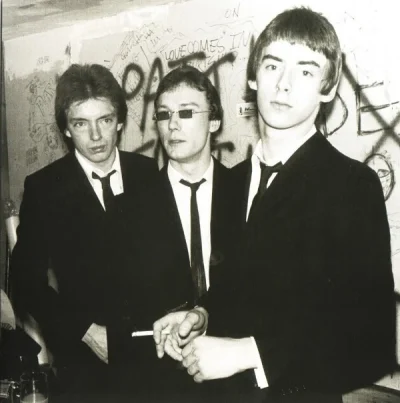
THE JAM
The roots of The Jam began to take shape in Woking, Surrey, England. The final band line-up comprised of Paul Weller, Bruce Foxton and Rick Buckler. They released 18 consecutive top 40 singles (including four number one hits) in the United Kingdom. The Jam were a punk and mod revival band from the late 1970s and early 1980s. They emerged during the first wave of British punk. their early work had the raw energy and aggression of punk rock. The trio were known for their melodic pop songs, their distinctly English take on social commentary, and their mod image..This is reflected in their sharp style and socially conscious lyrics. Weller wrote and sang most of the Jam’s original compositions and played lead guitar. While their initial sound was punk-focused, the band’s music evolved over their career. Their debut album ‘In The City’ featured a mix of R&B covers and originals. The follow-up ‘This Is The Modern World’, cemented the look and feel of the band . ‘All Mod Cons’, released late in 1978, was a turning point in The Jam’s career. Weller’s song writing was becoming more melodic and lyrically incisive. The album was a major success. ‘Setting Sons’, released at the end of 1979, was a huge follow-up. It remains one of The Jam’s most critically favoured albums. By the time ‘Sound Affects’ arrived in 1980 the band seemed unstoppable,. the album went to number 2 and the 3 ensuing singles all hit top 5.
In 1982 ‘The Gift’, the band’s only number 1 album showcased The Jam’s continued evolution. Now a more polished and mature sound while still maintaining their signature energy and social commentary. A standout track is the unforgettable “Town Called Malice.” This iconic song perfectly captures that blend of infectious melody with incisive lyrics.
At the same time commenting on the struggles and aspirations of everyday life. It solidified their position as one of the most influential bands of the era. Nevertheless, with it came Weller’s frustration with the band’s musical direction and he made the decision to disband the group. The Jam announced their breakup in October of 1982 . Weller went on to form The Style Council after the dissolution of The Jam
Sound quality is important and the better online Streaming services will offer superior sound quality. As always, We do encourage you to purchase favoured albums from good online or High Street record stores.
Aphex twin – Selected Ambient Works 85–92 – Label : Apollo Records
Jan Garbarek – Afric Pepperbird – Label : ECM
The Jam – Sound Affects – Label : Polydor Records
Max Richter – The Blue Notebooks – Label : 130701, an imprint of FatCat Records
In further issues we will continue to bring you the music of popular genres to listen, review and evaluate.
Issue #4(coming soon) features Yo La Tengo, Brian Eno, Vijay Iyer and James MacMillan