In This Issue #6 We Highlight 4 Artists And Some Significant Works
Join the Conversation!!!

We will Feature Up to 4 Albums from Artists representative of a range of the many sub-genres. We Hope to encourage Listeners of all tastes and passions. So Get your Headphones on and consider discussing the musical offering and sharing your views with like-minded peers.
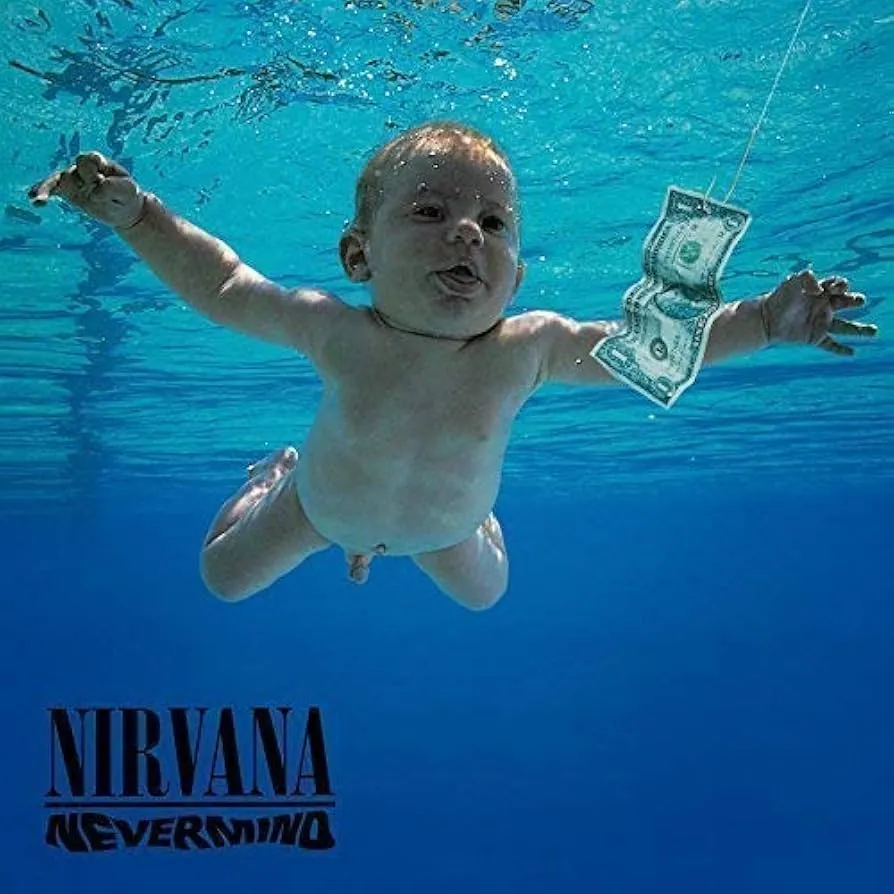
The album completely altered the popular musical landscape of the early 1990s. It effectively ended the dominance of 1980s hair metal and synth-pop, replacing overproduced gloss with a raw, gritty, and passionate “loud-quiet-loud” alternative rock dynamic. Driven by the genius of frontman Kurt Cobain, bassist Krist Novoselic, and newly joined drummer Dave Grohl. Key Tracks: “Smells Like Teen Spirit” : The ultimate Generation-X anthem. Built on iconic, lurching power-chord openings, it defines the quiet-verse, loud-chorus dynamic. Kurt Cobain’s unintelligible yet magnetic shouting sets the album’s aggressive, defiant tone. “Come as You Are”: Eerie, haunting, and tightly wound. Features a mesmerizing, water-logged guitar riff and some of Cobain’s catchiest, most disciplined pop-informed songwriting on the record. “In Bloom” : Melancholic and cynical about teenage alienation. The quintessential track, balancing sharp guitar arpeggios with an acidic bridge and a colossal vocal hook. “Lithium” : Manic, shifting between fractured self-loathing and explosive catharsis. Showcases Dave Grohl’s thunderous drumming alongside Krist Novoselic’s driving bass, capturing the band’s dynamic mastery at its peak. Drain You” : Visceral, bizarre, and strangely romantic. Underrated compared to the singles, it boasts a deceptively sophisticated melody underneath raw, abrasive noise and jagged shifts in texture. “Something in the Way” Subdued, tragic, and suffocatingly intimate. A slow, acoustic heavy-heart closer that proves the band could command total silence just as easily as roaring distortion. Other tracks: Breed: Celebrated by reviewers as a burst of joyous, high-octane punk with an adrenalized pace. Polly: Described as a chilling folk-pop song made deeply unsettling by its dark, empathetic-yet-drained narrative perspective. Territorial Pissings: Praised as raw, fast, and furious punk rock in its absolute purest form. Lounge Act: Acclaimed as part of the powerhouse second half, driven by Krist Novoselic’s melodic, rumbling bassline. Stay Away: Noted for its unrelenting acceleration and a chaotic, roaring feedback finale. On a Plain: Celebrated for its layered vocal harmonies and Cobain’s trademark self-referential lyrical honesty.:
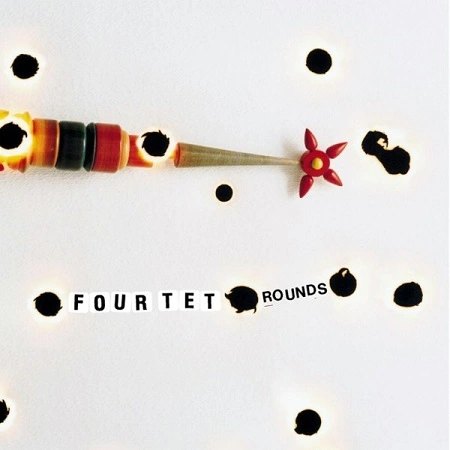
Contains the core 10-track studio album. It spans roughly 45 minutes of groundbreaking folktronica, fusing acoustic samples with hip-hop beats and glitch elements. Critics praised its unique fusion of electronic and organic styles. Tracklist: Hands – Opens with a rapid, irregular heartbeat sample that settles into a jazz-infused hip-hop groove. She Moves She – Anchored by melancholy plucked strings, rotating rimshots, and a sudden splash of distorted static noise. First Thing – A short, atmospheric vignette bridging the opening movement. My Angel Rocks Back and Forth – Features a backwards-and-forwards cycling music box/harpsichord melody over heavy but gentle percussion. Spirit Fingers – A frantic, swirling mandolin and violin jig that mimics the energy of fast electronic subgenres before dropping into a standstill. Unspoken – The emotional, 9-minute centrepiece of the album, utilizing a melancholic piano riff sampled from Tori Amos’ “Winter”. Chia – A brief micro-interlude. As Serious As Your Life – Infuses a distinct uptempo funk and hip-hop rhythmic pattern into the album’s structural framework. And They All Look Broken Hearted – A melancholic track pairing a haunting dulcimer melody with a staggering, drunken drum kit. Slow Jam – Closes the album with indie-rock undertones, integrating a real recorded guitar part alongside the squeak of a plastic toy.
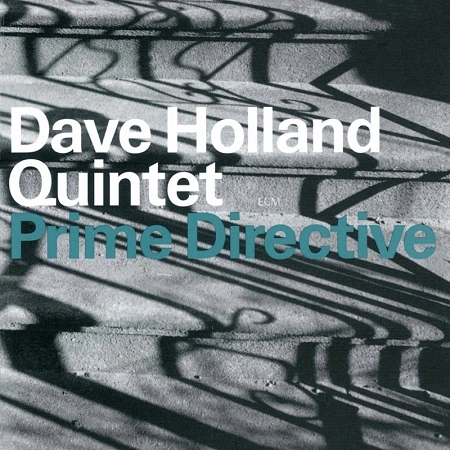
Prime Directive: Prime Directive is an album by the Dave Holland Quintet .The quintet features saxophonist Chris Potter, trombonist Robin Eubanks, vibraphonist Steve Nelson, and drummer Billy Kilson. It is widely celebrated for its driving grooves, complex odd-meter time signatures, and exceptional group improvisation. Tracklist & Credits The album features nine tracks spanning over 76 minutes. Every member of the quintet contributed to the songwriting. Track 1″Prime Directive” features a driving groove with a counterpointed horn dialogue.2″Looking Up” an expansive piece showcasing the band’s inner balance. 3″Make Believe” contemplative pace with prominent vibraphone work. 4″A Searching Spirit” a hopeful track driven by a dense, rhythmic feast. 5″High Wire” a fast, cruising, modern bop-influenced piece. 6″Jugglers Parade” features a unique marimba intro and a funky snap. 7″Candlelight Vigil” a melancholy track highlighting Holland’s bowed bass. 8″Wonders Never Cease” the longest track, showing peak collective improvisation. 9″Down Time” a short, reflective closing piece.. In 2000 the Jazz Journalists Association honoured the recording with their award Album of the Year.
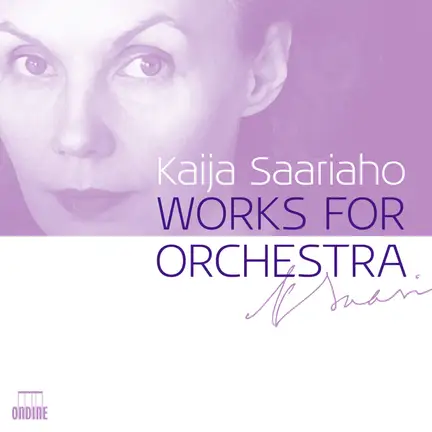
Orchestral Works – ..à la Fumée (…Into Smoke) is a symphonic composition written in 1990, at the age of 38. It is a sequel to her 1989-90 work Du Cristal…, and starts where it ends, with a violoncello solo long trill ‘sul ponticello’. The works explores the concept of “smoke” through more abstract, drawn-out gestures, dynamic rhythms, and a richness of aural imagination. The use of amplification allows for a whisper from the flute to grow to the scale of the orchestra, highlighting the contrast between sound and noise. Du Cristal…, Is a compelling piece that explores the duality between rigid structure and chaos, a theme further developed in its aforementioned companion piece.Orion The piece is noted for its “stunningly original instrumental combinations” and “otherworldly” timbres. The first movement opens with a static, sombre atmosphere. The second movement is calm and contemplative. The finale is energetic and dynamic, a study in perpetual motion – or almost, since the fast motion is repeatedly interrupted by short mysterious episodes in a slow tempo. Notes on Light (2006) is a cello concerto exploring light and darkness through five movements, contrasting the solo cello with radiant or shadowy orchestral textures, using computer software to analyze and manipulate the individual frequencies of sound (spectral techniques) to create either glowing, atmospheric background textures (luminous soundscapes) or sharp, aggressive interactions between instruments (intense dialogues). It is known for its evocative textures, microtones, and complex interplay between soloist and orchestra. Ends with a quote from T.S. Eliot’s Four Quartets.
.
It is helpful to research the artist, using sources like Wikipedia , Music Magazine Reviews (Pitchfork, Rolling stone, NME etc.,) Artist Websites, etc…A synopsis of the life and music of this Issue’s featured artists appears below.
This Week’s Artists
DAVE HOLLAND
Dave Holland David Holland is an English Born October 1, 1946, in Wolverhampton, England, David Holland is a world-renowned jazz double bassist, composer, and bandleader with a career spanning over five decades. He is a highly influential figure in modern jazz, known for his versatile technique and numerous collaborations. He has lived in the United States since the early 1970s. His extensive discography ranges from solo performances to pieces for big band. Holland gained international recognition after joining Miles Davis’s band in 1968, playing on seminal albums like In a Silent Way and Bitches Brew. Born in Wolverhampton, England, Holland taught himself how to play stringed instruments, beginning at four on the ukulele, then graduating to guitar and later bass guitar. He quit school at the age of 15 to pursue his profession in a pop band, but soon gravitated to jazz. By his late teens Holland began exploring an expanding palette of jazz styles and it was clear that music was Holland’s calling. After moving to London in 1964, Holland played double bass in small venues. Holland received a full-time scholarship to the Guildhall School of Music and Drama for the three-year programme. At 20, Holland was keeping a busy schedule in school, studios and Ronnie Scott’s Jazz Club, London’s premier jazz club, where he often played in bands that supported touring American jazz saxophonists. He also began a working relationship with Canada-born, England-based trumpeter Kenny Wheeler that continued until Wheeler’s death in 2014. In 1968, Miles Davis and Philly Joe Jones heard him at Ronnie Scott’s Jazz Club. Jones told Holland that Davis wanted him to join his band (replacing Ron Carter). Holland’s first recordings with Davis were in September 1968. After leaving Davis’s group, Holland briefly joined the avant-garde jazz group Circle, with Corea, saxophonist Anthony Braxton and percussionist Barry Altschul. By 1972, Holland relocated to upstate New York, and began recording under his own name. beginning a long-standing association with the Munich-based ECM label. Holland worked as a leader and as a sideman with many other jazz artists throughout the 1970s. Holland formed his first working quintet in 1983.
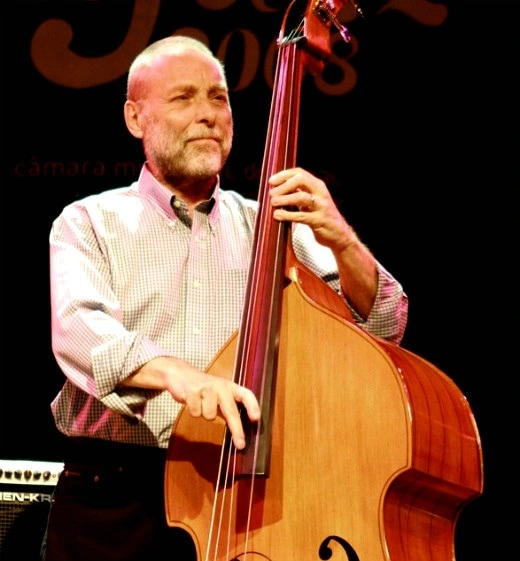
The bassist also continued to collaborate with his peers. During the 1990s, Holland formed his third quartet in addition to releasing four quintet albums on ECM. Holland also revisited a number of historic collaborations—including the Gateway Trio, and working with Herbie Hancock. His desire to focus on his compositional and arranging skills led to the formation of the Dave Holland Big Band. a group that that led to his notching two Grammy awards for Best Large Jazz Ensemble. category. In 2003, Holland departed ECM and formed his own label, Dare2 Records, on which he has issued almost all of his recent recordings. In 2009, Holland was a co-founder of an all-star group called the Overtone Quartet. The National Endowment for the Arts named Holland as one of its five Jazz Masters Fellows in 2017.
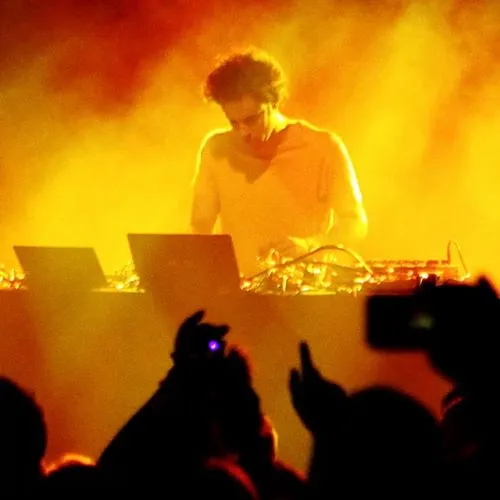
Hebden released the seventh Four Tet album, Beautiful Rewind, in October 2013, and his eighth album, Morning/Evening in July 2015. Hebden released the ninth Four Tet album New Energy in November 2017. In 2020, Hebden announced his tenth album Sixteen Oceans for release in March. Hebden released Three on 15 March 2024. Hebden received two Grammy nominations for his album “Three”, for “Best Dance/Electronic Recording” with “Loved,” and for “Best Dance/Electronic Album.”
FOUR TET
Kieran Miles David Hebden (born September 1977), known as Four Tet, is an English electronic musician. He came to prominence as a member of the post-rock band Fridge before establishing himself as a solo artist with charting and critically acclaimed albums such as Rounds (2003), Everything Ecstatic (2005) and There Is Love in You (2010). In addition to his twelve studio albums as Four Tet, Hebden’s work includes a number of improvisational works with jazz drummer Steve Reid and collaborations with Burial and Thom Yorke. Kieran Hebden was born in Putney, London, England, to a South African-born Indian mother and a British white sociology lecturer father. He attended Elliott School in Putney, where he formed the band Fridge with classmates Adem Ilhan and Sam Jeffers. While working with Fridge, Hebden began a degree in maths and computer sciences at the University of Manchester. After being a member of Fridge since 1995, Kieran Hebden began releasing solo records under the name Four Tet in 1998. 1999’s Dialogue, on the Output label, was Four Tet’s first full-length album release and fused hip hop drum lines with dissonant jazz samples. Four Tet’s second album Pause was released on Domino Recording Company and found Hebden using more folk and electronic samples, which was quickly dubbed “folktronica” by the media and press. Rounds was the third solo album Its ten tracks feature elements of hip hop, jazz and folk; apart from a guitar part recorded for “Slow Jam.” His fourth studio album Everything Ecstatic was released on Domino on 23 May 2005. There Is Love in You, a fifth album was released on 25 January 2010. The sixth full-length Four Tet album, Pink was released on 20 August 2012 through Hebden’s own record label, Text Records. Hebden followed up Pink with 0181 on 15 January 2013 a collection of unreleased material from 1997 to 2001 collected as one track and released online.
NIRVANA
Nirvana was an American rock band formed in Aberdeen, Washington, in 1987. Founded by lead singer and guitarist Kurt Cobain and bassist Krist Novoselic. Their first band, the Sellouts featuring Novoselic on guitar and vocals, Cobain on drums, and Steve Newman on bass only lasted a short time. The band played under the name Nirvana for the first time on March 19, 1988, at Community World Theater, Tacoma, Washington. The band went through a succession of drummers, most notably Chad Channing, before recruiting Dave Grohl in 1990. Nirvana’s success popularized alternative rock, and they were often referenced as the figurehead band of Generation X. Their music maintains a popular following and continues to influence rock culture. Nirvana established itself as part of the Seattle ‘grunge’ scene. They released their first album, Bleach, for the independent record label Sub Pop in 1989. Their sound relied on dynamic contrasts, often between quiet verses and loud, heavy choruses. Disenchanted with Sub Pop, and with the Smart Studios sessions generating interest, Nirvana sought a deal with a major record label since no indie label could buy them out of their contract. Nirvana signed to DGC Records in 1990. Nirvana found unexpected mainstream success with “Smells Like Teen Spirit”, the first single from its landmark second album, Nevermind (1991). By Christmas 1991, Nevermind was selling 400,000 copies a week in the US. In March 1992, Cobain sought to reorganize the group’s songwriting royalties (which to this point had been split equally) to better represent that he wrote the majority of the music. Grohl and Novoselic did not object, but when Cobain wanted the agreement to be retroactive to the release of Nevermind, the disagreements came close to breaking up the band. Amid rumours that the band was disbanding due to Cobain’s health, Nirvana headlined the closing night of the 1992 Reading Festival in England.For their third album, In Utero (1993), Nirvana chose producer Steve Albini, who had a reputation as principled and opinionated in the American indie music scene. While the stories about DGC shelving the album were untrue, the band was unhappy with certain aspects of Albini’s mixes. When released, In Utero topped the American and British album charts. Time critic Christopher John Farley wrote in his review, “Despite the fears of some alternative-music fans, Nirvana hasn’t gone mainstream, though this potent new album may once again force the mainstream to go Nirvana.” In early 1994, Nirvana embarked on a European tour. Their final concert took place in Munich, Germany, on March 1. In Rome, on the morning of March 4, Cobain’s wife, Courtney Love, found Cobain unconscious in their hotel room and he was rushed to the hospital. Cobain had reacted to a combination of prescribed rohypnol and alcohol. In the weeks following his hospitalization in Rome, Cobain’s heroin addiction resurfaced. He was persuaded to enter drug rehabilitation, but withdrew after a week and returned to Seattle. On April 6, 1994, it was announced a cancellation of a Nirvana tour due to Cobain’s ongoing health problems, with reports that they had broken up.
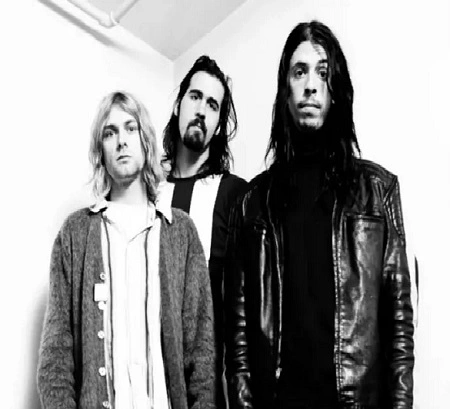
Two days later, on April 8, Cobain was found dead of a self-inflicted shotgun wound to the head at his home in the Denny-Blaine neighbourhood of the city. He had died approximately three days earlier. Nirvana disbanded following Cobain’s suicide. Further releases have been overseen by Novoselic, Grohl, and Cobain’s widow, Courtney Love. During its three years as a mainstream act, Nirvana received an American Music Award, Brit Award, and Grammy Award, as well as seven MTV Video Music Awards and two NME Awards . Characterized by a punk aesthetic, Nirvana are credited with bringing alternative rock to the mainstream. Nirvana’s fusion of pop melodies with noise, combined with its themes of abjection and social alienation, brought them global popularity. Following Cobain’s death, numerous headlines referred to Nirvana’s frontman as “the voice of a generation”, although he had rejected such labelling during his lifetime
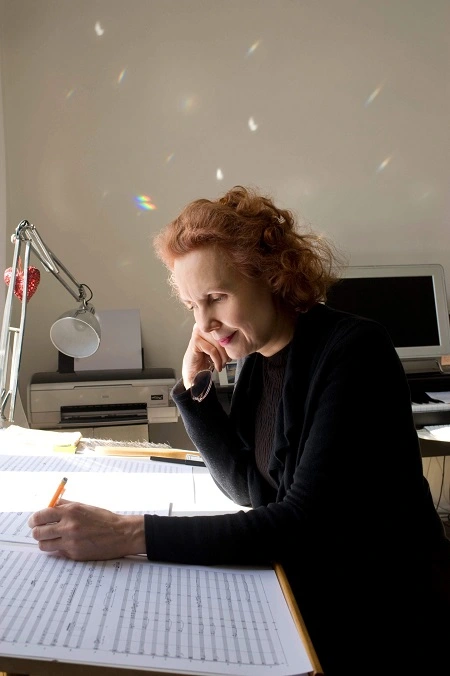
Saariaho received many major awards throughout her career, including the Grawemeyer Award and the Polar Music Prize. She left behind a significant legacy in contemporary classical music as a path-breaking and influential composer, driven by her constant desire to unite the scientific with the poetic, creating deeply felt, multi-sensory experiences Saariaho died in Paris on June 2, 2023, at the age of 70, from an aggressive form of brain cancer.
KAIJA ANNELI SAARIAHO
Kaija Anneli Saariaho (4 October 1952 – 2 June 2023) She played violin, guitar and piano growing up, and received her primary and secondary education at a Steiner school. In university she studied first splitting her time between studying graphic design at the Aalto University School of Arts, piano at the Helsinki Conservatorium and musicology at the University of Helsinki. She later studied composition at the Sibelius Academy. She moved to Germany to study at the Hochschule für Musik Freiburg under Brian Ferneyhough and Klaus Huber. Her research at the Institute for Research and Coordination in Acoustics/Music (IRCAM) marked a turning point in her music away from strict serialism towards spectralism. Her characteristically rich, polyphonic textures are often created by combining live music and electronics. and computer-assisted composition, which defined her signature style. Her work in the 1980s and 1990s was marked by an emphasis on timbre and the use of electronics alongside traditional instruments Nymphéa (Jardin secret III) (1987), for example, is for string quartet and live electronics and contains an additional vocal element: the musicians whisper the words of an Arseny Tarkovsky poem. Another example is Six Japanese Gardens (1994), a percussion piece accompanied by a prerecorded electronic layer of the Japanese nature, traditional instruments, and chanting of Buddhist monks. 1990-1991. Her music is known for its lush, complex, and often mysterious textures. After her breakthrough piece Lichtbogen for ensemble and electronics in 1986, Saariaho gradually expanded her musical expression to a great variety of genres, and her chamber pieces and choral music have become staples of instrumental and vocal ensembles, respectively. Saariaho’s broadest public and critical recognition came from her work in the field of opera. Her final opera, Innocence (2021) dealing with the aftermath of a school shooting, premiered to critical acclaim was termed Saariaho’s ‘masterpiece’ by The New York Times. Other notable works include orchestral pieces like Orion and Circle Map, and concertos such as Graal Théâtre for violin. Her final work, a trumpet concerto titled Hush, premiered posthumously.
Sound quality is important and the better online Streaming services will offer superior sound quality. As always, We do encourage you to purchase favoured albums from good online or High Street record stores.
Four Tet – Rounds – Label : Domino Records
Dave Holland – Prime Directive – Label : ECM
Nirvana – Nevermind – Label : DGC / Sub Pop
Kaija Saariaho – Works For Orchestra – Label : Ondine
In further issues we will continue to bring you the music of popular genres to listen, review and evaluate.
Issue #7(coming soon) features Joy Division, Holly Herndon, Wadada Leo Smith and Paul Hindemith