In This Issue #7 We Highlight 4 Artists And Some Significant Works
Join the Conversation!!!

We will Feature Up to 4 Albums from Artists representative of a range of the many sub-genres. We Hope to encourage Listeners of all tastes and passions. So Get your Headphones on and consider discussing the musical offering and sharing your views with like-minded peers.
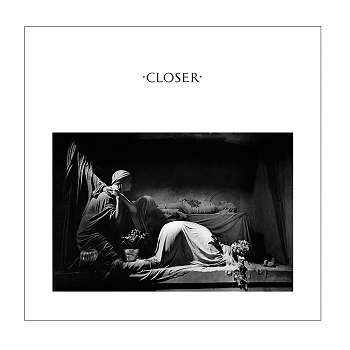
Closer is the second and final studio album by the English rock band Joy Division, released in July 1980 by Factory Records two months after the death of their lead singer and lyricist, Ian Curtis. Compared to their previous album, Unknown Pleasures, this release incorporates more synthesizers and features a more complex sound. The album continues to be influential and appears in modern media. After the album’s release, the surviving members formed New Order. Tracklist: 1. “Atrocity Exhibition”: Opening with a primal, repetitive drum beat from Stephen Morris and screeching, scraped guitars from Bernard Sumner, this track sets an instantly unsettling tone. 2. “Isolation”: A sonic stepping stone toward what the remaining members would later achieve as New Order. Driven by a surprisingly upbeat, icy disco groove and Kraftwerk-inspired synthesizers, the track’s synthetic cheerfulness stands in terrifying contrast to Curtis’s deeply paranoid lyrics.3. “Passover”: A slower, deeply subdued track that anchors the album’s emotional weight. Propelled by Peter Hook’s low-end bass and starkly bare guitar hits, it is frequently cited by critics as a foundational blueprint for the goth-rock genre. 4. “Colony”: Bringing the energy back up, “Colony” features brutal, frantic, and angular guitar work. It provides a bridge back to the aggressive energy of their early live sets while maintaining the album’s claustrophobic atmosphere.5. “A Means to an End”: This track merges a driving rhythm section with sharp, biting guitars. It stands as one of the record’s more straightforward, yet relentlessly bleak, post-punk anthems. 6. “Heart and Soul”: This track pushes the listener into a detached, hypnotic dream state. Built around a swirling Arp Omni 2 synthesizer and a circular, ghostly drum pattern.7. “Twenty Four Hours”: A track of towering, physical intensity. It violently shifts between Peter Hook’s mournful, melodic bass lines and a sudden, raging whirlpool of frantic drums and howling guitars. It captures a mind wrestling with utter despair in real-time. 8. “The Eternal”: Joy Division’s solemn, funeral march. Driven by a heavy, slow-paced bass rumble and a beautifully sorrowful, classical piano arrangement, it stands as one of the most chillingly melancholic pieces of music ever recorded.9. “Decades”: The ghostly, majestic climax of the album. Dominated by sweeping, weeping synthesizers and a persistent hi-hat pattern, Curtis looks back sorrowfully at human suffering with the haunting refrain. It provides a devastating, definitive final note to the band’s studio career.

Platform is the second studio album by American electronic producer Holly Herndon, released in May 2015, via 4AD. The album received wide critical acclaim upon its release, highly regarded for its forward-thinking fusion of experimental electronic music, dance rhythms, and pop structures. The album explores how to engage with technology in a positive way, viewing the laptop as a “hyper-emotional instrument”. Key tracks: “Interference”: The album opener serves as a stuttering, strobing entry point. mimicking the multi-tab, hyper-connected experience of modern web browsing. “Chorus”: Built entirely from samples of Herndon’s own internet browsing metadata, this track is heavily praised as a standout highlight. “Home”: Written as a direct letter to the NSA agent assigned to monitor her, this “breathy piece of pop” addresses surveillance culture.Highlights are its echoing vocals and deep bass thuds, framing it as an investigation into a twisted, non-consensual form of intimacy. “Lonely at the Top”: Stripping away the musical backing completely, this track is a conceptual audio-play designed to trigger ASMR (autonomous sensory meridian response). “Locker Leak”: An icy, spoken-word piece where disembodied voices declaim absurd phrases, the surreal sound of a corporate viral marketing campaign collapsing under its own digital weight.“Unequal” & “DAO”: These tracks emphasize Herndon’s background in academic and classical composition. “Unequal” weaves an operatic harmony reminiscent of Baroque plainchant to advocate for structural change, while “DAO” features fractured vocalizations playing a chaotic game of cat-and-mouse with rough percussion made from household sounds
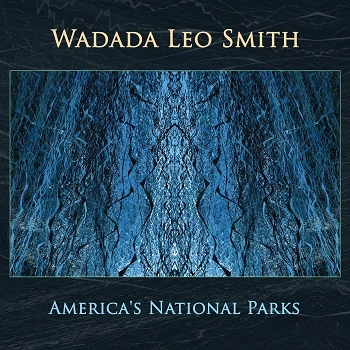
With America’s National Parks, the visionary composer and trumpeter offers a six-movement suite inspired by the scenic splendour, historic legacy, and political controversies of the country’s public landscapes. The album is split across two discs, performed by Smith’s Golden Quintet (trumpeter Wadada Leo Smith, pianist Anthony Davis, cellist Ashley Walters, bassist John Lindberg, and drummer Pheeroan akLaff). Tracklist: New Orleans: Celebrating the cultural depth and complex history of New Orleans with a subtle groove and muted trumpet wails. Eileen Jackson Southern: A tribute to the pioneering African-American musicologist and author. Yellowstone: Explores the majestic, stark, and shifting natural environment using sparse phrases and undulating rhythms. The Mississippi River: The suite’s longest and most impassioned movement, acting as a solemn memorial to black lives lost and historical atrocities along the river. Sequoia/Kings Canyon Features dramatic, heavy chords that evoke the scale of ancient, giant trees. Yosemite: A majestic closer blending striking unaccompanied trumpet passages and an extended drum solo.
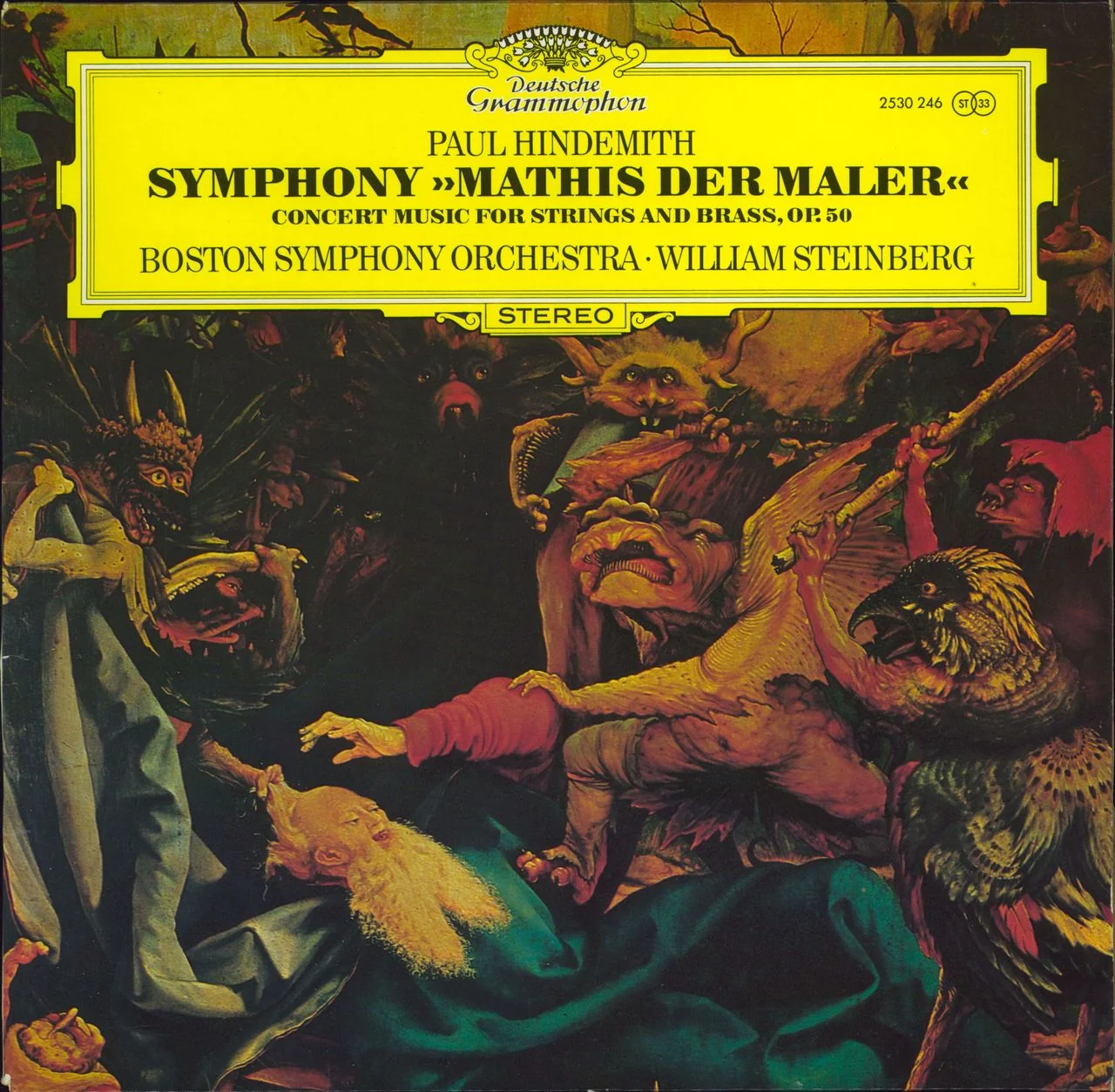
Der Schwanendreher – each movement is based on German folk melodies from the 15th to 17th centuries: The mellow tone of the viola stands in clear contrast to its accompaniment. I. Opens with a striking, melancholic solo viola cadenza before evolving into a rigorous, rhythmically driven dialogue constructed around a 16th-century melody. II. A deeply lyrical, contemplative movement that beautifully highlights the rich timbre of the viola. It breaks into a lively mid-movement Fugato section based on a secondary song,Der Gutzgauch auf dem Zaune saß (“The Cuckoo Sat on the Fence”). III. A highly spirited set of 12 intricate variations based on the titular song. It acts as a brilliant tour de force for the soloist, contrasting boisterous rhythms with lilting textures. Konzertmusik für Streichorchester und Blechbläser (German for Concert Music for String Orchestra and Brass), Op. 50,received widespread critical praise for combining bracing intellectual counterpoint with warmly expressive, gutsy orchestral color.Symphony: Mathis der Maler (Matthias the Painter – Each of the three movements is a direct musical representation of a specific panel from Grünewald’s monumental masterpiece, the Isenheim Altarpiece. 1. Angel Concert – Serves as the opera’s overture. Features a prominent brass quote of the traditional German folk chorale “Es sungen drei Engel” (“Three Angels Sang”). II. Entombment – A sparse, mournful orchestral intermezzo. It relies heavily on solemn open fourths and fifths, concluding with a comforting solo flute gesture. III. The Temptation of St. Anthony – The longest, most complex movement. It builds through savage orchestral outbursts and chromatic tension until a woodwind plainchant (“Lauda Sion”) breaks the darkness, leading to a jubilant, brass-led “Hallelujah” finale.
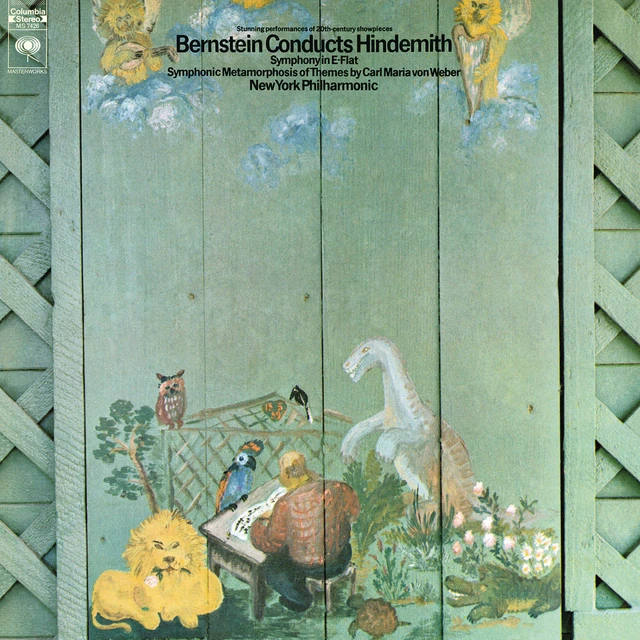
Symphonic Metamorphosis of Themes by Carl Maria von Weber (1943). Hindemith extracted the thematic material from highly obscure Weber piano duets and incidental theatre music. While he retained Weber’s melodic phrasing and general architecture, he radically altered the rhythms, harmonies, and counterpoint. The work is split into four contrasting movements I. Allegro: Opens with a confident, machine-like ostinato and aggressive march themes that carry an Eastern European flavour. II. Turandot: A whimsical movement with a distinct Asian flair. Weber’s basic melody passes through seven complete iterations across the orchestra, culminating in a jazzy, syncopated fugue highlighted by a famous trombone solo. III. Andantino: A peaceful, lyrical slow movement featuring delicate woodwinds. It concludes with an incredibly intricate, bird-like solo flute cadenza. IV. Marsch: Originally a sombre funeral march by Weber, Hindemith doubles the tempo to turn it into a triumphant, catchy, and driving brass stomper.The Symphony in E-flat major follows a traditional four-movement design with the final two movements performed without pause (attacca): I. Sehr lebhaft (Very lively) Monothematic; opens with a heroic, unison brass fanfare that dominates the movement. II. Sehr langsam (Very slowly) Free-form; begins with a sombre, funereal march before introducing a contrasting pastoral theme. III. Lebhaft (Lively) A playful, highly rhythmic scherzo and trio utilizing a short, energetic fugato. IV. Mäßig schnelle Halbe (Moderately fast half-notes) A dramatic, monothematic finale featuring intense counterpoint that transforms the opening movement’s fanfare into a triumphant conclusion.
It is helpful to research the artist, using sources like Wikipedia , Music Magazine Reviews (Pitchfork, Rolling stone, NME etc.,) Artist Websites, etc…A synopsis of the life and music of this Issue’s featured artists appears below.
This Week’s Artists
WADADA LEO SMITH
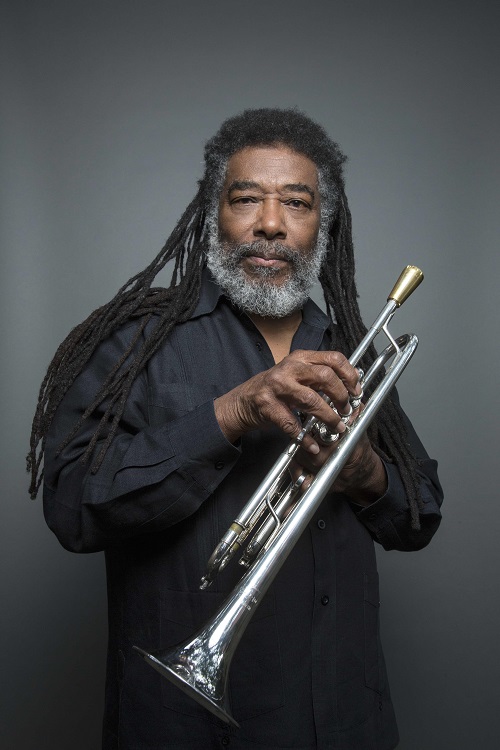
Ishmael Wadada Leo Smith (born December 18, 1941) is an American trumpeter and composer, working primarily in the field of creative music. As an improvisor-composer, Smith has studied a variety of music cultures (African, Japanese, Indonesian, European and American) and to fully express this music, he has developed an original theory and notation system for jazz and world music which he calls Ankhrasmation. Smith was born in Leland, Mississippi, United States. He started out playing drums, mellophone, and French horn before he settled on the trumpet. He played in various R&B groups. In the 60s, he joined the AACM (Association for the Advancement of Creative Musicians) and formed the trio Creative Construction Company (or CCC) with saxophonist Anthony Braxton and violinist Leroy Jenkins. His work frequently engages with themes of civil rights, universal human rights, and spiritual peace. He participated in a number of landmark recordings associated with the AACM. Smith has performed and recorded with a wide variety of musicians over the years. With a discography of over 100 albums, significant projects include: Divine Love (1978): A seminal early recording on ECM that showcases his expansive, luminous sound. Ten Freedom Summers (2012) A massive 4-CD box set inspired by the American civil rights movement. At the age of 84, Smith has shown no sign of slowing down. He’s released 15 albums this decade. His most recent collaborative album Defiant Life, with pianist Vijay Iyer released on ECM Records. Others include America’s National Parks (2016): An acclaimed suite exploring the natural and cultural history of the U.S. Park system. Rosa Parks: Pure Love (2019): An oratorio dedicated to the civil rights icon.
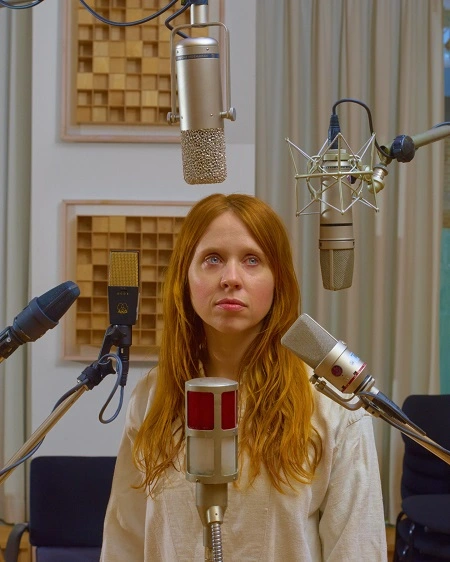
With each consecutive album, Herndon has brought more collaborators into her process. For PROTO, she assembled an electronic pop choir that included both human and AI voices, with Spawn an AI program created by Herndon and Mat Dryhurst trained to replicate human voices, featuring throughout.
HOLLY HERNDON
Holly Herndon (born 1980) is an American composer, musician, and sound artist known for her pioneering work at the intersection of electronic music, artificial intelligence (AI), and decentralized technology. Based in Berlin, she holds a PhD from Stanford University where she researched the ethics and aesthetics of AI in music. Holly Herndon was born in 1980 and raised in Johnson City, Tennessee. As a teenager, she spent several years living in Berlin on a high school exchange program, absorbed in the city’s dance and techno scene, she got her start experimenting with club music. When Herndon returned to the United States she began studying electronic music at Mills College in Oakland, California receiving her MFA in Electronic Music and Recording Media. At school she focused on laptop performance, and she currently does most of her composing via laptop. In 2012 she pursued a music career internationally. Herndon moved from California back to Berlin. Herndon’s music although often includes human singing voices (including her own), is primarily computer-based, and regularly uses the visual programming language Max/MSP to create custom instruments and vocal processes. She has released music on the labels RVNG Intl. and 4AD. She lives with her partner and frequent collaborator, Mat Dryhurst. Every Holly Herndon album comes with a concept. Her first, Movement, was inspired by the notion that “the laptop is the most intimate instrument.” The experimental collection of songs was made up of sounds of bodies in motion — a cut-and-pasted sigh, a hand brushing up against another. Her second album, 2015’s Platform, furthered that narrative; using sousveillance technology, the recording of an activity by a member of the public, rather than a person or organisation in authority. The technology was developed by Dryhurst called Net Concrete, Herndon spied on her digital self. Platform was a critical success, and in the years since it was released, conversations surrounding online privacy have become more urgent.
JOY DIVISION
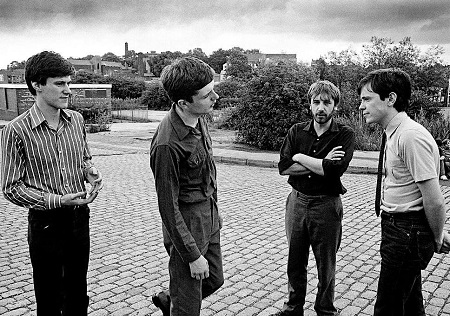
Joy Division were an English rock band formed in Salford in 1976. The group consisted of vocalist, guitarist and lyricist Ian Curtis, guitarist and keyboardist Bernard Sumner, bassist Peter Hook and drummer Stephen Morris. While Joy Division’s first recordings were heavily influenced by early punk rock, they soon developed a sparse sound and style that made them one of the pioneering groups of the post-punk genre. Their self-released 1978 debut EP An Ideal for Living drew the attention of Tony Wilson, who signed them to his independent label Factory Records. Their debut album Unknown Pleasures, recorded with producer Martin Hannett, was released in 1979. Curtis struggled with personal problems, including a failing marriage, depression, and epilepsy. As the band’s popularity grew, Curtis’s health condition made it increasingly difficult for him to perform; he occasionally experienced seizures on stage. He died by suicide on the eve of what would have been the band’s first North American tour in May 1980, aged 23. Joy Division’s second and final album, Closer, was released two months later; it and the single “Love Will Tear Us Apart” became their highest-charting releases. Critic Simon Reynolds observed how the band’s originality only “really became apparent as the songs got slower”, and their music took on a “sparse” quality. According to music critic Jon Savage, “Joy Division were not punk but they were directly inspired by its energy.”. Curtis was the band’s sole lyricist. He typically composed his lyrics in a notebook, independently of the music. The music itself was largely written by Sumner and Hook as the group jammed during rehearsals. Curtis’s imagery and word choice often referenced “coldness, pressure, darkness, crisis, failure, collapse, loss of control”. Despite their short career, Joy Division have exerted a wide-reaching influence and achieved widespread critical acclaim.
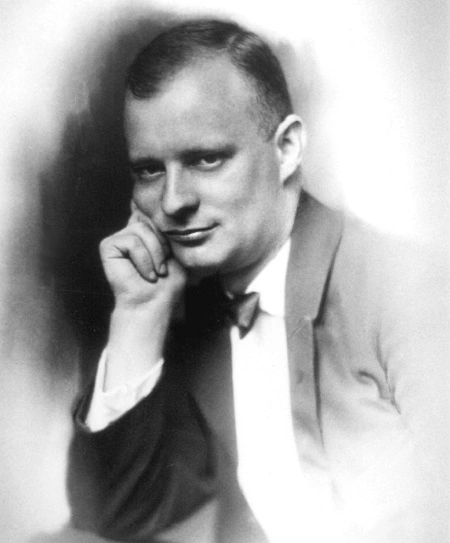
Hindemith’s legacy is marked by his dual roles as a composer and educator, reflecting a deep commitment to bridging the gap between composers and audiences. He passed away in 1963, leaving behind a rich and diverse body of work that continues to resonate in the music world today.
PAUL HINDEMITH
Paul Hindemith (1895–1963) was a versatile German-American composer, violist, and educator who became a central figure in 20th-century music. Initially a “bad boy” of the avant-garde, he later championed Neue Sachlichkeit (New Objectivity) and Neoclassicism, seeking to bridge the gap between performers and audiences through functional music. Despite being a pre-eminent German musician, his music was denounced as “atonal noise” and “degenerate” by Joseph Goebbels. Born in 1895. His early life in Frankfurt am Main was marked by financial struggles and a strict upbringing, which influenced his artistic development. Despite a challenging childhood, he demonstrated exceptional musical talent, studying violin at the Hoch Conservatory and eventually becoming a notable violist. Hindemith’s career took off in the post-World War I period, during which he gained recognition for his compositions and performances, particularly with the Amar Quartet. His music evolved from experimental works to a neoclassic style characterized by tonal roots and a neo-Baroque contrapuntal texture (music with two or more independent, equally important melodies weaving together, creating a rich, thick sound where no single melody dominates) reminiscent of Johann Sebastian Bach. Hindemith’s professional good fortune gradually began to change when the Nazi Party came to power in 1933. His music was held in low esteem by the Nazi authorities, who viewed it as decadent. Hindemith, reluctant to abandon the country of his birth, initially attempted to work within the repressive guidelines of the Third Reich. In 1935, he accepted an invitation by the Turkish government to reorganize the music and music education systems in that country. Another career move saw him spend a brief time in Switzerland. He eventually settled in the United States in 1940, where he became a legendary professor at Yale University and a U.S. citizen. In 1953, he returned to Switzerland and taught at the University of Zürich until his retirement. After moving to the United States, he continued to compose influential works, including the celebrated “Symphonic Metamorphosis” and “Ludus Tonalis.” Throughout his life, he emphasized the idea of “Gebrauchsmusik,” or functional music, aiming to create accessible music for performers of varying skill levels.
Sound quality is important and the better online Streaming services will offer superior sound quality. As always, We do encourage you to purchase favoured albums from good online or High Street record stores.
Holly Herndon – Platform – Label : 4AD
Wadada Leo Smith – America’s National Parks – Label : Cuneiform Records
Joy Division – Closer – Label : Factory
Paul Hindemith – Symphony: Mathis der Maler – Label : Deutsche Grammophon ; Symphonic Metamorphosis and Symphony in E – Label : Sony
In further issues we will continue to bring you the music of popular genres to listen, review and evaluate.
Issue #8(coming soon) features Queens of the Stone Age, LCD Sound Systems, John Scofield and Charles-Camille Saint-Saëns