In This Issue #13 We Highlight 4 Artists And Some Significant Works
Join the Conversation!!!

We will Feature Up to 4 Albums from Artists representative of a range of the many sub-genres. We Hope to encourage Listeners of all tastes and passions. So Get your Headphones on and consider discussing the musical offering and sharing your views with like-minded peers.
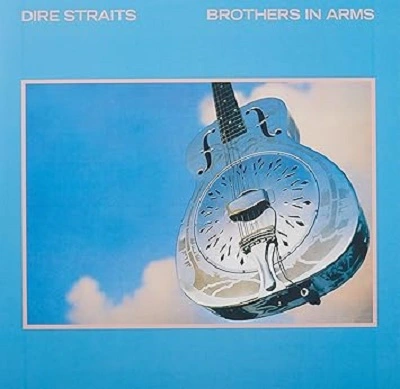
Brothers in Arms (1985) was a global phenomenon. All the songs on this album were composed by lead vocalist and guitarist Mark Knopfler and he and the group honed their signature sound of R&B and jazz with an increased sense of pop song craft that ultimately paid off as the album dominated charts worldwide and won two Grammy awards. Tracklist : So Far Away — A moody, mid-tempo opener that sets a soothing, atmospheric tone with Knopfler’s signature understated vocals and rhythmic guitar chugging.
Money for Nothing — The massive global smash hit featuring an iconic, driving electric guitar riff and witty satirical lyrics, elevated by Sting‘s memorable backing vocals on the chorus. Walk of Life — A joyful, upbeat roots-rock track powered by a bouncy keyboard melody, catchy rhythms, and an infectious, celebratory spirit. Your Latest Trick — A sultry, jazz-influenced masterpiece driven by smooth saxophone and trumpet lines (featuring the Brecker Brothers) telling a smoky nighttime tale of seduction. Why Worry — A tender, consoling, and reflective acoustic-leaning ballad that offers a gentle emotional breather in the middle of the record. Ride Across the River — A dark, atmospheric, and cinematic track featuring ominous percussion and sophisticated lyricism surrounding geopolitical conflict.
The Man’s Too Strong — An acoustic-driven, folk-blues piece that shifts the mood into a gritty, morally ambiguous narrative about power and guilt. One World — A grooving, upbeat track that brings a lighter, rhythmic 1980s texture back into focus before the album’s dramatic conclusion. Brothers in Arms — The utterly gorgeous, haunting title track acting as an anti-war lament, anchored by some of Knopfler’s most expressive, weeping electric guitar solos and poignant poetry.

Lamentations, released in November 2020 through Temporary Residence Ltd., is widely considered one of Basinski’s most deeply moving and distinct releases since his iconic The Disintegration Loops. Pulled from an archive of tape loops dating back over 40 years, the record functions as a “greatest hits” of his signature processed tape decay, capturing a pervasive sense of grief, existential ennui, and existential dread. Tracklist : 1. For Whom the Bell Tolls – Heavy with foreboding; features distorted, pitched church bells struggling to emerge from a thick storm of white noise. 2. The Wheel of Fortune – Deeply repetitive but highly atmospheric; praised by critics for building an eerie sense of acceptance towards death. 3. Paradise Lost – A brief, Miltonic flash of damnable memory that slips away almost as quickly as it appears. 4. Tear Vial – A delicate loop built around isolated, melancholic chimes and distant ricochets. 5. O, My Daughter, O, My Sorrow – The album’s centrepiece, features heavily warped Balkan operatic vocals submerged beneath waterboarded string loops. 6. Passio6 – A dense layer of loops incorporating subtle, buried hints of instrumentation. 7. Punch and Judy – Features a creeping, tense atmosphere driven by an eardrum-buzzing pattern that resembles Morse code. 8. Silent Spring – Conjures a terrifying wall of harsh white noise, reflecting modern ecological anxiety. 9. Transfiguration – One of the few moments of light on the record; relies on an elegant, swelling horn loop to pull a sense of beauty out of the dark. 10. All These Too, I, I Love – An expansive, slightly playful loop of chopped opera vowels, record skipping, and glitchy classical music. 11. Please, This Shit Has Got to Stop – A desperate, uncharacteristically direct title for Basinski; pairs a hypnotic rhythm of cyclical record skips with repeating, reverb-heavy operatic vocals. 12. Fin – A short extension of the preceding track’s final loop, offering an abrupt but fittingly decayed conclusion to the project.
Released in October 2003 on ECM Records, Napoli’s Walls (Dans les murs de Naples) is a critically acclaimed jazz album. The album is a “lively meditation” on the city of Naples, inspired specifically by the street art of radical French painter Ernest Pignon-Ernest who wandered around the Italian city of Naples, literally applying his artwork to the walls of the city. Pignon-Ernest’s scenes depicting suffering and pain in a stark, classical style inspired Sclavis to form a new group and write new music in response. Sclavis has shown a particular talent for putting together remarkable bands tailored to specific projects, and this is no exception. It features a unique instrumentation that includes: Louis Sclavis: Clarinets and saxophones. Vincent Courtois: Cello and electronics. Médéric Collignon: Pocket trumpet, electronics, and distinct “glossolalia” vocal improvisations. Hasse Poulsen: Acoustic and electric guitars. Full of sensual pleasure and accessible, often deeply moving articulation of a new musical language. The music is an eclectic blend of contemporary jazz, chamber music, and avant-garde improvisation.Key tracks “Colleur De Nuit” begins in an austere, forbidden landscape of gongs and whistles before transforming with a heavy, looped beat. Tracks like “Divinazione Moderna II” showcase Collignon’s manic, nearly-sensical vocal scatting layered over electronic manipulation.“Les Apparences” offers a gorgeous, lilting cello line countered by pocket trumpet, highlighting the album’s sensory and deeply moving nature.

Written to showcase his own virtuosic, long-fingered piano technique, these pieces served as a vital stylistic bridge between the Classical models of Mozart and the fiery, programmatic Romanticism of Liszt and Chopin.1. Piano Concerto No. 1 in C major, Op. 11 (1810) Written when Weber was just 23 years old, this concerto captures a transitional phase in classical music. It follows a standard three-movement format: Allegro, Adagio, and Presto. The first movement mirrors Mozart’s structural phrasing while leaning into the muscular octave runs reminiscent of Beethoven’s early concertos. It famously omits a traditional improvisatory cadenza. The slow Adagio movement features an incredibly rare, intimate chamber orchestration consisting of just two horns, a viola, two solo cellos, and a double bass accompanying the piano. 2. Piano Concerto No. 2 in E-flat major, Op. 32 (1812). Composed shortly after Weber purchased a copy of Beethoven’s “Emperor” Concerto, this piece is viewed as a direct homage to that masterpiece. Comprises an Allegro maestoso, an Adagio, and a Rondo (Presto). It shares the same key (E-flat major) as the “Emperor” and features a similar architecture, including a striking, dreamlike slow movement written in the distant key of B major. The Finale: The third movement closes out the work with a rumbustious, galloping 6/8 rondo that requires immense agility and technical precision from the soloist.
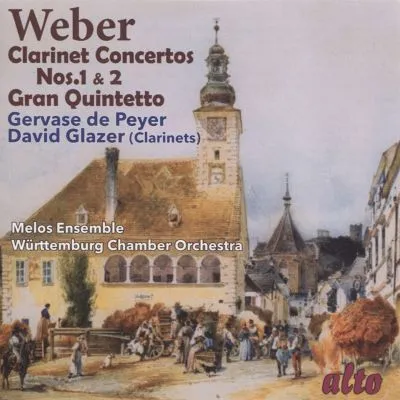
Clarinet Concerto No. 1 in F minor, Op. 73: Written in 1811 after King Maximilian I Joseph of Bavaria heard the Concertino, Op. 26 and requested more music. It features a dramatic first movement, a moody central Adagio, and a playful rondo.
Clarinet Concerto No. 2 in E-flat major, Op. 74: Composed in 1811 and premiered in 1813, this piece highlights the brilliant, operatic, and joyful capabilities of the instrument, ending with a lively Alla Polacca.
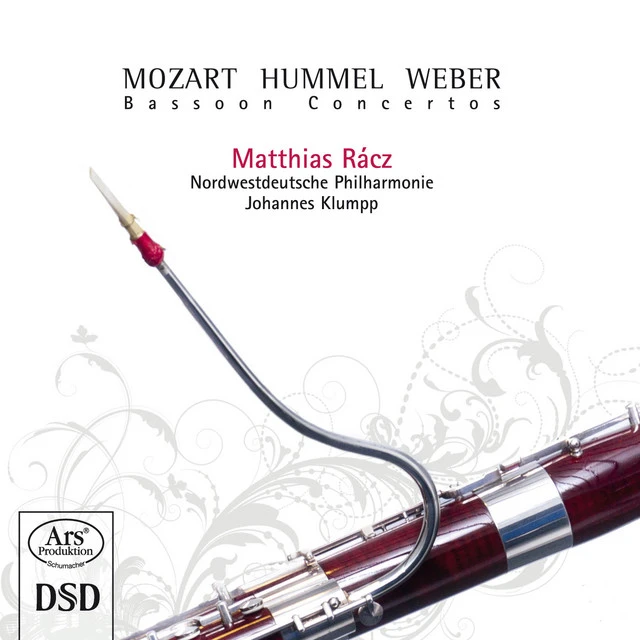
Bassoon Concerto in F major, Op. 75 (J. 127) is one of the most significant works in the woodwind repertoire, widely considered second in historical importance only to Mozart’s bassoon concerto. Traditional three movements: 1. Allegro ma non troppo (F major): Strongly influenced by a majestic, military character. The movement relies on sharp dramatic contrasts, opening with a heroic orchestral introduction before easing into an amorous wind duet. II. Adagio (B-flat major): Deeply operatic and reminiscent of a theatrical love aria. It gives the bassoonist a chance to showcase a seamless, singing line (cantabile style) with rich expressive shading. III. Rondo: Allegro (F major): A vibrant, cheerful finale packed with characteristic Weber wit and charm. This movement puts the soloist’s technical agility on full display through rapid, leaping registers and playful syncopation.
It is helpful to research the artist, using sources like Wikipedia , Music Magazine Reviews (Pitchfork, Rolling stone, NME etc.,) Artist Websites, etc...A synopsis of the life and music of this Issue’s featured artists appears below.
This Week’s Artists
LOUIS SCLAVIS
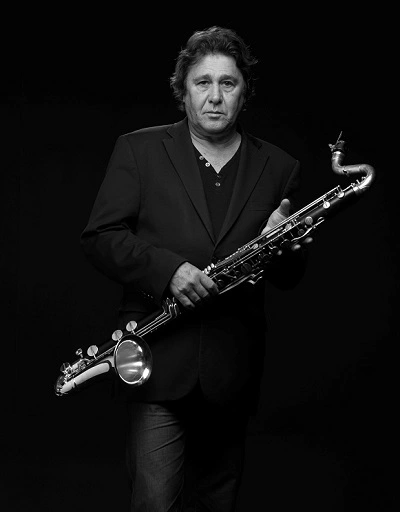
One of the finest clarinettists in free jazz and avant-garde, Louis Sclavis plays improvised music with unusual clarity and precision. And while his technique is huge, it doesn’t overshadow his musicality; Sclavis is a most expressive player. Sclavis began studying clarinet at the age of nine, later entering the Lyons Conservatory of Music. From 1975-1982, he played with a variety of ensembles, including most notably the Henri Texier Quartet and Chris MacGregor’s Brotherhood of Breath. He formed his own band in 1982, Le Tour de France, comprised of six musicians from different regions of France. He also played and recorded with a number of prominent free jazz musicians, including Evan Parker, Lol Coxhill, Tony Oxley, and Peter Brötzmann for the FMP and NATO labels. In 1984, he recorded Clarinettes, a solo album for the Ida label. That year, he also formed a new quartet; the band would record a pair of albums: Chine (1987) for Ida and Rouge (1991) for ECM. In 1987, he founded a septet, which would also record for Ida. In 1988, he was awarded the Prix Django Reinhardt as French jazzman of the year. That year, he founded the Trio de Clarinettes with Jacques di Donato and Armand Angster; in addition to playing improvised pieces, the group also played works written by its members and such classical composers as Brian Ferneyhough and Pierre Boulez. Around that time, he met choreographer and dancer Mathilde Monnier and they collaborated on several performances. Sclavis’ renown grew during the next decade; he won a British Jazz Award in 1991, and recorded often for FMP and ECM. Projects included a trio with Aldo Romano and Henri Texier; also, recordings and performances with his clarinet trio, septet, percussionist Trilok Gurtu, and a Cecil Taylor large ensemble.
.
Besides his jazz-related activities, Sclavis has also composed for theatre and film. His 2002 release Dans la Nuit was a soundtrack for an antiquated French silent film. 2004 saw the release of Napoli’s Walls, Sclavis’ first attempt to provide a soundtrack for visual art. He recorded a series of pieces based on the history and culture of Naples as interpreted by the work of the French artist Ernest Pignon-Ernest, who lived and worked in the city for a number of years. Phare appeared a year later in 2005, followed by Imparfait des Langues in 2007. He frequently performs with the cellist Ernst Reijseger and was one of the first to combine jazz with French folk music, working most prominently with the hurdy-gurdy player Valentin Clastrier. In the 2000s and 2010s, Louis Sclavis expanded his compositional palette by integrating global influences, particularly drawing from Eastern European and Mediterranean traditions, as evident in his album Lost on the Way (ECM, 2009). Collaborations further deepened this exploration, such as his partnership with Moroccan oud player Majid Bekkas, culminating in Makenba (Igloomondo, 2011), where Gnawa rhythms blend with jazz improvisation to create authentic cross-cultural dialogues without superficial exoticism. By the late 2010s, Sclavis continued this trend in Characters on a Wall (ECM, 2019), incorporating Eastern-tinged dances in 5/8 time and world fusion elements inspired by Palestinian poet Mahmoud Darwich’s imagery, reflecting his ongoing adaptation to diverse sonic landscapes. Sclavis’s shift toward larger ensembles in the 2010s marked a significant evolution, allowing for richer textural layers in his contemporary jazz frameworks. Early in the decade, projects like Sources (ECM, 2012) with the Atlas Trio—featuring keyboards and electric guitar—eschewed traditional rhythm sections to emphasize rhythmic interplay and minimalist grooves drawn from global journeys. This progression toward varied group sizes, from trios to octet-like configurations, enabled Sclavis to balance composed structures with collective improvisation, adapting to modern ensemble trends while maintaining his signature clarity. Recent works include the 2023 album India with his quintet, further exploring global fusions. Post-2000, Sclavis responded to contemporary production trends by incorporating digital tools and sampling sparingly, primarily to enhance atmospheric and multimedia elements. This approach reflects broader shifts in jazz toward hybrid sound design, though Sclavis prioritizes organic interplay over heavy processing. By the 2020s, his evolution culminated in intimate duo explorations like Unfolding (ECM, 2024) with pianist Benjamin Moussay, where sparse compositions allow for fluid improvisation influenced by Messiaen and Debussy, emphasizing empathy and letting go of rigid forms in favour of unhurried, contemporary chamber dialogues. Louis Sclavis is renowned for his mastery of the bass clarinet, an instrument central to his work since the 1980s, when he released his debut solo album Clarinettes (1985) showcasing its deep, resonant tones and extended low register in improvised and composed contexts. He often employs the bass clarinet’s multiphonic capabilities to produce layered, harmonic textures, drawing on its potential for simultaneous tones to enhance the ethereal quality of his free jazz performances. Louis Sclavis has pioneered approaches to improvisation that emphasize narrative depth, where solos and ensemble passages develop thematic motifs to construct cohesive stories within performances. This approach draws on influences from film scoring to guide improvisers toward dramatic resolution rather than open-ended exploration.
WILLIAM BASINSKI
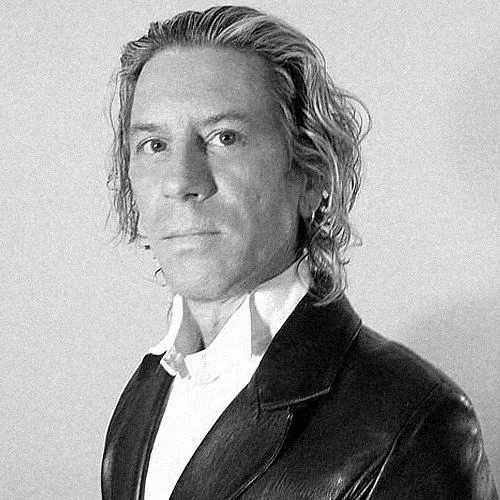
William Basinski is an American avant-garde composer and sound artist renowned for his work in ambient music and his innovative use of analogue technology, particularly reel-to-reel tape loops. Born in Houston, Texas, in 1958, he is a classically trained clarinettist and studied jazz saxophone and composition at North Texas State University. His music often explores the temporal nature of life and memory through slow-moving drones and repetitive textures. He cites minimalist pioneers like Brian Eno and Steve Reich as primary influences. He began developing his own vocabulary using tape loops and old reel-to-reel tape decks. He developed his meditative, melancholy style experimenting with short looped melodies played against themselves creating feedback loops. His first release was Shortwavemusic. Although created in 1983, it was first released on vinyl in a small edition in 1998 by Carsten Nicolai’s Raster-Noton sub-label. This was followed by Watermusic, self-released in 2000 on Basinski’s 2062 Records. Another 2-disc work was Variations: A Movement in Chrome Primitive, 1980: it was finally released in 2004 by David Tibet on the Durtro/Die Stadt label. At the time this work was created, Basinski was experimenting with compositions for piano and tape loops. Throughout the 1980s, Basinski created a vast archive of experimental works using tape loop and delay systems, found sounds, and shortwave radio static.
He was a member of many bands including Gretchen Langheld Ensemble and House Afire. In 1989 he opened his own performance space, “Arcadia” at 118 N. 11th Street. On one occasion, he opened for David Bowie, playing saxophone with rockabilly band The Rockats. Basinski would later dedicate a track from A Shadow in Time to Bowie. In August and September 2001 he set to work on what would become his most recognizable piece, the four-volume album The Disintegration Loops.The work was created by digitising old magnetic tape loops from the 1980s; as the tapes played through the deck, the oxide coating gradually flaked off, causing the sound to slowly crumble and decay in real-time.The series has been hailed as one of the most significant works of the 21st century Recent works include Lamentations (2020): A mournful album constructed from archive tape loops dating back to 1979. On Time Out of Time (2019): Features recordings of gravitational waves from the LIGO observatory. …. on reflection (2022): A collaboration with Janek Schaefer. Aurora Terminalis (2024/2026): A collaboration with Richard Chartier. Basinski remains active, with scheduled performances in 2026 at venues like Cafe OTO and international festivals like Tokyo’s NU Festival.
DIRE STRAITS
Brothers Mark and David Knopfler were born in Glasgow, Scotland, and grew up in Blyth in the northeast of England. With John Illsley and Pick Withers, from Leicester in the East Midlands, they formed Dire Straits in Deptford, south east London. They sent a tape to DJ Charlie Gillett, presenter of Honky Tonk on BBC Radio London. Two months later, Dire Straits signed a recording contract with the Vertigo Records division of Phonogram Inc. The group’s first album, Dire Straits in February 1978 was produced by Muff Winwood. This led to a United States recording contract with Warner Bros. Records and the following year, Dire Straits embarked on their first North American tour. The group’s second album, Communiqué was rleased in June 1979, Making Movies was released in October 1980. During the recording sessions, tensions between the Knopfler brothers reached a point where David Knopfler left the band for a solo career. After the recording sessions, keyboardist Alan Clark and Californian guitarist Hal Lindes joined Dire Straits as full-time members for the On Location tour of Europe, North America, and Oceania. Making Movies received mostly positive reviews and featured longer songs with more complex arrangements, a style which would continue for the rest of the band’s career. The album featured many of Mark Knopfler’s most personal compositions. Dire Straits’ fourth studio album, Love Over Gold, filled with lengthy passages that featured Alan Clark’s piano and keyboard work, was well received when it was released in September 1982. During 1983 and 1984, Mark Knopfler was also involved with other projects he wrote and produced the music score to the film Local Hero.
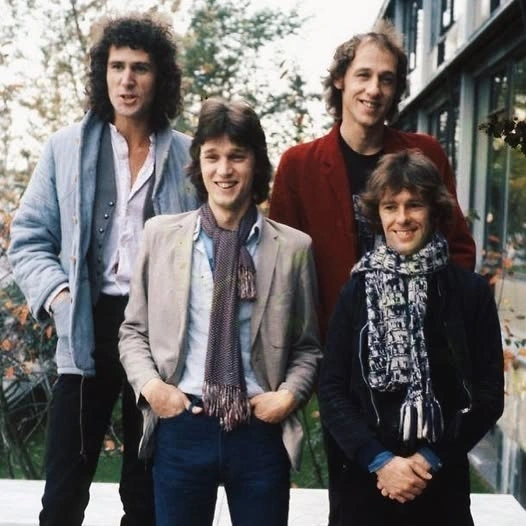
At the end of 1984, Dire Straits began recording tracks for their upcoming fifth studio album, to be titled Brothers in Arms. The recording sessions saw further personnel changes. The album featured a more lavish production and overall sound than Dire Straits’ earlier work and spawned several big chart singles. Mark Knopfler took a break from Dire Straits, and, during 1987, he concentrated on solo projects and film soundtracks and later announced the dissolution of Dire Straits in September 1988. In 1990, Dire Straits reunited. Dire Straits released their sixth studio album, On Every Street, in September 1991, which turned out to be their final studio release. It was met with more moderate success and mixed reviews. The band’s gruelling final tour was not as critically acclaimed nor as commercially successful. This led to the second and final break-up. Knopfler spent two years recovering from the experience, which had taken a toll on his creative and personal life. In an era dominated by punk and disco “introspective lyrics with out-of-this-world guitar and drum sounds made them one of the most original rock bands of the 80s.”
CARL MARIA VON WEBER
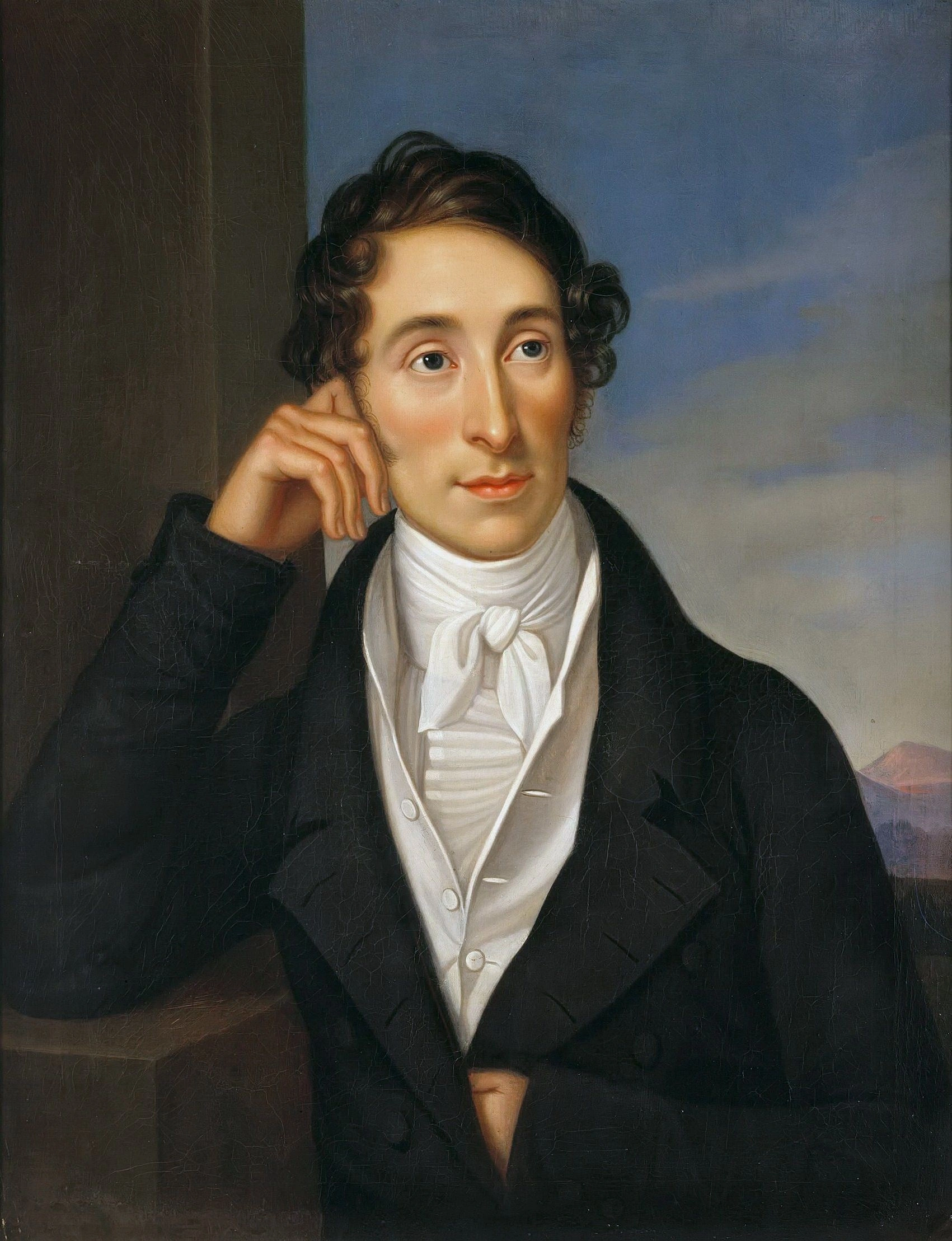
Carl Maria von Weber (born 1786, Eutin, Holstein [Germany]—died 1826, London, England.) was a German composer and opera director during the transition from Classical to Romantic music, Weber was born into a musical and theatrical family. His father, Franz Anton, was a musician who had formed a small travelling theatre company. His mother, Genovefa, was a singer. Carl Maria was a sickly child, having been born with a diseased hip that caused him to limp throughout his life. When he began to show signs of musical talent, his ambitious father set him to work under various teachers in towns visited by the family troupe in the hope that he might prove a Mozartean prodigy. Among these instructors was Michael Haydn, the younger brother of the composer Joseph Haydn. Under Haydn, Weber wrote and published his Opus 1, Sechs Fughetten (1798). Weber later studied under the influential Abbé Vogler, through whom he was appointed musical director at Breslau in 1804. After many difficulties, occasioned by inexperience in putting through reforms, and a near-fatal accident in which he permanently impaired his voice when he swallowed some engraving acid, Weber was forced to resign. He was rescued by an appointment as director of music to Duke Eugen of Württemberg, for whose private orchestra he wrote two symphonies. They are attractive, inventive works, but the symphony was not the natural medium of a composer who sought to bring Romantic music to a freer form derived from literary, poetic, and pictorial ideas. Weber was next a secretary in the court of King Frederick I of Württemberg. Here he lived so carelessly and ran up so many debts that, after a brief imprisonment, he was banished.
The principal fruits of these years (1807–10) were his Romantic opera Silvana (1810), songs, and piano pieces. Weber and his father fled to Mannheim, where he was, in his own words, “born for the second time.” He made friends with an influential circle of artists, from whom he stood out as a talented pianist and guitarist; he was also remarkable for his theories on the Romantic movement.Moving on to Darmstadt, he met Vogler again, as well as the German opera composer Giacomo Meyerbeer. From this period came principally the Grand Concerto No. 1 in C Major, Opus 11, for piano, and the delightful one-act opera Abu Hassan (1811). Weber travelled on to Munich, where his friendship with the clarinet virtuoso Heinrich Bärmann led to the writing of the Concertino, Opus 26, and two brilliant, inventive clarinet concerti. Weber was also one of music’s great piano virtuosos; his own music reflects something of the brilliance and melancholy and exhibitionist charm described by his contemporaries when he performed it. From 1809 to 1818 Weber also wrote a considerable number of reviews, poems, and uncompromising, stringent music criticisms. All his work, music, and critical writings furthered the ideals of Romanticism as an art in which feeling took precedence over form and heart over head. Appointed conductor of the opera at Prague in 1813, after a period in Berlin during which he caught the patriotic fervour of the day in some stirring choruses and songs, Weber was at last able to put his theories into full practice. Now happily married, he applied himself energetically to his work, assuming full control over all aspects of the operatic production. No detail escaped him: he supervised repertory, recruitment, casting, scenery, lighting, and production, as well as the orchestra and the singers, taking care to see that every performer fully understood the words and plot of each opera. He produced several works during this period, including the last of his four piano sonatas, many songs and shorter piano solos, such as the famous Invitation to the Dance (1819), and the Konzertstück, Opus 79 (1821), for piano and orchestra. In 1821 in the opera Der Freischütz he not only helped liberate German opera from French and Italian influences, but, in his novel orchestrations and in his choice of a subject matter containing strong supernatural elements, he laid the foundations of one of the principal forms of 19th-century opera. Der Freischütz made Weber a national hero. When Covent Garden in London commissioned a new opera, Weber took on the task of learning English and working with a librettist, James Robinson Planché, by correspondence. Weber was already suffering from tuberculosis when he visited London. In form, Oberon was little to his taste, having too many spoken scenes and elaborate stage devices for a composer who had always worked for the unification of the theatrical arts in opera. But into it he poured some of his most exquisite music, and he travelled to London for the premiere in 1826. Oberon was a success and Weber was feted, but his health was declining fast. Shortly before he was due to start the journey back to Germany, he was found dead in his room, he was 39 years old.
Sound quality is important and the better online Streaming services will offer superior sound quality. As always, We do encourage you to purchase favoured albums from good online or High Street record stores.
Stone Roses – Stone Roses – Label : Silvertone ; Second Coming – Label : Geffen.
Hidden Orchestra – Night Walks – Label : Tru Thoughts
Louis Sclavis – Napoli’s Walls – Label : ECM
Carl Maria von Weber – Piano Concertos – Label : Naxos ; Clarinet Concertos – Label : Alto
In further issues we will continue to bring you the music of popular genres to listen, review and evaluate.
Issue #14(coming soon) features LYNRYD SKYNRYD – TANGERINE DREAM – TYSHAWN SOREY – MICHAEL TIPPETT.