Blues Music – Issue #1

Blues is a music genre and musical form that originated among African Americans
The blues emerged at a particular time, in a particular place as a response to social and economic conditions. This genre of music came from the souls of slaves and emerged simultaneously throughout the South, originating as early as 1860. The blues has a distinct melancholic and sombre tone, which is achieved through vocal techniques such as melisma, rhythmic techniques such as syncopation, and instrumental techniques such as “choking” guitar strings on the neck or applying a metal slide to the guitar strings to create a whining voice-like sound. Melisma is the act of singing several different notes while holding a single syllable of text. Chroniclers began to report about blues music at the dawn of the 20th century. The first publication of blues sheet music was in 1908. Blues has since evolved from unaccompanied vocal music and oral traditions of slaves into a wide variety of styles and subgenres. Blues songs are lyrical rather than narrative; blues singers are expressing feelings rather than telling stories. The emotion expressed is generally one of sadness or melancholy, often due to problems of love but also oppression and hard times. The Great Depression and the World Wars caused the geographic dispersal of the blues as millions of Blacks left the South for the cities of the North.
The blues became adapted to the more sophisticated urban environment. Lyrics took up urban themes, and the blues ensemble developed as the solo bluesman was joined by a pianist or harmonica player and then by a rhythm section consisting of bass and drums. The electric guitar and the amplified harmonica created a driving sound of great rhythmic and emotional intensity.The blues have influenced many other musical styles. The blues have had their greatest influence on rock music and blues and jazz are closely related. While hip-hop and rap music tends to be harmonically and melodically static. artists such as Kanye West and Jay-Z have used samples extracted from blues songs as the basis for new music. The lyrics too, are similar to early blues, commenting on personal situations, unjust societies and disillusionment with the urban environments in which the musicians live

Music Remains deeply personal, We hope to Highlight albums that evoke images, memories, and emotions to spark debate and Broaden your Horizons, step out of Your comfort zone and expand your music taste and experiences.
Join the Conversation!!!
We will Feature Up to 4 Albums from Artists representative of a range of the Many sub-genres. We Hope to encourage Listeners of all tastes and passions. So Get your Headphones on and Consider discussing the musical Offering and sharing your views with like-minded peers.
In Issue #1, We Feature B.B. King
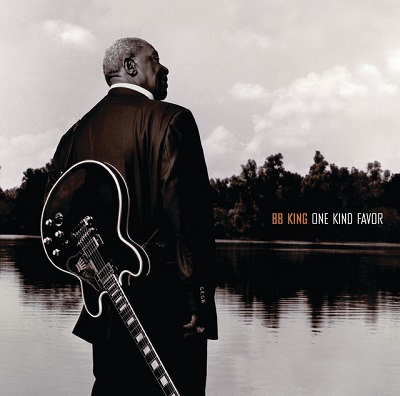
One Kind Favor is a mixture of old blues covers from King’s early influences. Produced by Grammy Award winner T-Bone Burnett. the album recaptures much of the spirit and sound of B.B. King’s early recordings, complete with rich horn-section blasts, vintage-style tube distortion on the vocals and boogie-woogie piano. the sound is stripped-back, not splashy, there is not a reliance on guest stars, and the repertoire is pure blues — and these are all songs that he’s never recorded before.Tracklist: “ That My Grave Is Kept Clean” – The atmospheric, hushed shuffle opener that gives the album its title, blending a noir-ish feel with King’s signature guitar stabs. “I Get So Weary” – A deep, late-night emotional slow blues. “Get These Blues Off Me”– A slow, heavy, deeply felt vocal and guitar showcase. “How Many More Years”– One of the album’s rare uptempo stompers, driven by a sharp horn section, rolling piano, and punchy guitar solos. “Waiting for Your Call”– A smooth, intimate slow groove. “My Love Is Down” – A patient, melancholic acoustic/electric blues. “The World Is Gone Wrong”– A soft shuffle elevated by a subtle, warm brass arrangement. “Blues Before Sunrise” – A steady, traditional mid-tempo blues standard. “Midnight Blues”– A slow-burn, advisory late-night blues. “Backwater Blues” – A jazz-tinged, relaxed vocal feature where King’s baritone takes center stage. “Sitting on Top of the World”– A driving, acoustic-flavoured roots classic. “Tomorrow Night” (Lonnie Johnson) – A dramatic, vibrato-laden ballad closing the record.
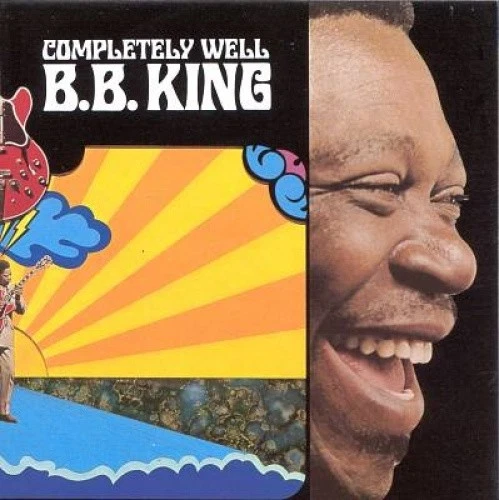
Released in 1969, it’s often considered a turning point in the blues guitarist’s career. Completely Well must be considered one of the most important albums of his career, but it is also one of his best studio albums. The album features a blend of traditional blues songs and R&B influences, including elements of soul and funk. Reviewers consistently praise King’s Awesome guitar playing and vocals, noting his powerful and emotive delivery. The album is famous for including the iconic “The Thrill Is Gone,” but other tracks like “So Excited” and “You’re Mean” are also frequently mentioned for their quality. Key Tracks include: “The Thrill Is Gone”: The undisputed crown jewel of the record. A slow, minor-key twelve-bar blues groove accented by weeping strings, it climbed to No. 15 on the Billboard Hot 100 and permanently altered the landscape of King’s career. “What Happened” perfectly encapsulate the album’s thematic dedication to heartbreak and relationship struggles, driven by a brassy, classy arrangement. “Confessin’ The Blues” pivots the energy into a relaxed, joyful groove. “You’re Mean”: An extended, fiery instrumental jam that lets the rhythm section stretch its legs while Lucille wails over the top
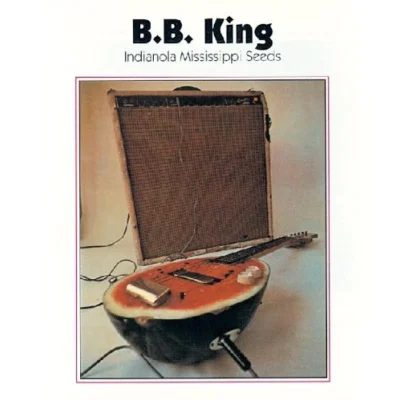
Released in October 1970 on ABC Records, Critics and listeners note that while it features B.B. King’s signature guitar and voice, the album’s inclusion of synthesizers, gospel choirs, and other guest artists creates a unique, ‘pop-flavoured’ but still authentic sound that many consider one of his best works. Tracklist: 1. “Nobody Loves Me But My Mother” – A short, stripped-back intro featuring B.B. King solo on a down-home church piano before a humorous lyrical twist. 2. “You’re Still My Woman” – A slow, deeply reflective blues track layered with elegant string arrangements and emotional guitar licks. 3. “Ask Me No Questions” – A more energetic, up-tempo blues track fuelled by Leon Russell’s rhythmic piano work.4. “Until I’m Dead and Cold”– A sprawling, slow-burning blues track featuring B.B.’s emotive signature vocals. 5. “King’s Special” – A dynamic, high-energy instrumental that lets King and the stellar rhythm section stretch out. 6. “Ain’t Gonna Worry My Life Anymore” – A smooth, funk-infused soul-blues number. 7. “Chains and Things” – A somber, minor-key masterpiece accented by string arrangements and Carole King’s hypnotic electric piano work.8. “Go Underground” – An R&B-infused shuffling swing that incorporates a unique wah-wah powered guitar groove. 9. “Hummingbird”– The album’s transcendent, soul-stirring finale written by Leon Russell, featuring a powerful gospel-esque musical coda.
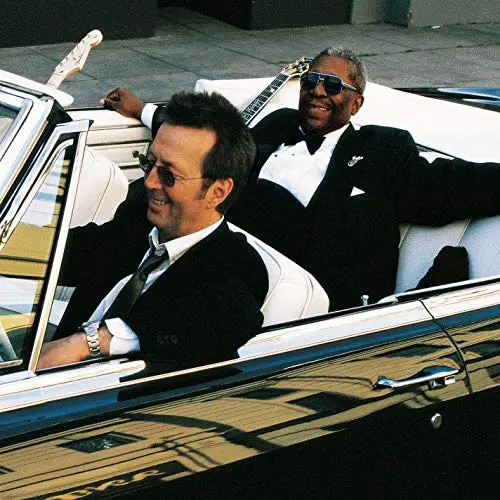
Riding with the King, the Grammy Award-winning blues collaboration between B.B. King and Eric Clapton, was originally released on June 13, 2000. The album brought together two generation-defining guitar titans for a mix of vintage blues tracks, modern covers, and acoustic duets. While some purists argue it lacks raw, gritty edge compared to classic 1950s/1960s electric blues, the guitar interplay, warm vocal trading, and deep mutual reverence between King and Clapton make it a benchmark modern blues. The record cleverly balances heavy electric numbers with acoustic surprises. Their unplugged rendition of “Worried Life Blues” offers a rare, intimate look at both players on acoustic instruments. While soul-leaning tracks like “Hold On I’m Coming” feel like a stylistic detour, the band—backed by elite session players like Steve Gadd and Nathan East—keeps the groove incredibly tight.
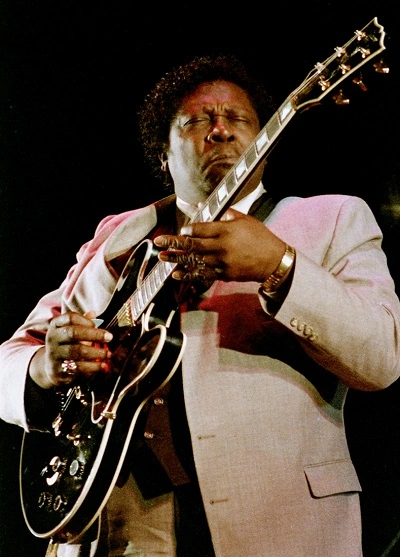
Riley B. King (September 16, 1925 – May 14, 2015), known professionally as B. B. King, was an American blues guitarist, singer, songwriter, and record producer. King was reared in the Mississippi Delta, and gospel music in church was the earliest influence on his singing. He was shuttled between his mother’s home and his grandmother’s residence as a child his father having left the family when King was very young. In his youth he spent long days working as a sharecropper and devoutly sang the Lord’s praises at church before moving to Indianola in 1943. , he set off for Memphis, In 1946 there his cousin, Bukka White taught him the finer points of playing blues guitar. King had a breakthrough year in 1949. He cut his first four tracks for Bullet Records. for a time he worked as a disc jockey at station WDIA, where he acquired the name “B.B.” (for “Blues Boy”) King. In the early part of his career, he played to exclusively black audiences, but his heartfelt vocals and undeniable talent saw him embraced by a much broader fanbase as time went on – touring Europe and topping the charts. The 1950s saw King establish himself as a perennially formidable hitmaking force in the R&B field. Between 1951 and 1985, King notched an impressive 74 entries on Billboard’s R&B charts, and he was one of the few full-fledged blues artists to score a major pop hit when his 1970 smash “The Thrill Is Gone” crossed over to mainstream success. King was one of a precious few bluesmen to score hits consistently during the 1970s, and for good reason: he wasn’t afraid to experiment with the idiom
A chance meeting in the late 1980s led to a collaboration with the pop/rock band U2. He joined them on their album Rattle and Hum. While his presence lent the Irish rockers a certain authenticity, they introduced him to another generation. Although he continued to play Gigs on average 300 nights a year King tempered his studio activities somewhat. Nevertheless, in 1993 his MCA disc Blues Summit was a return to form. King celebrated his 80th birthday in 2005 with the star-studded album 80, which featured guest spots from such varied artists as Gloria Estefan, John Mayer, and Van Morrison. In 2008 King released One Kind Favor which saw a stripped-back approach and return to pure blues. King was the recipient of numerous awards and honours. He was a member of the inaugural class of inductees to the Blues Hall of Fame in 1980. In 1987 he earned a Grammy Award for lifetime achievement and was inducted into the Rock and Roll Hall of Fame. After his hit-making days, he partnered with such musicians as Eric Clapton , all the while maintaining his immediately recognizable style on the electric guitar. Late in 2014, King was forced to cancel several shows due to exhaustion; he was later hospitalized twice and entered hospice care in the spring. He died in Las Vegas, Nevada, on May 14, 2015.
Sound quality is important and the better online Streaming services will offer superior sound quality. As always, We do encourage you to purchase Favoured albums from good online or High street record stores.
Artists in upcoming issues: John Mayall, Joe Bonamassa, John Lee Hooker…..Keep Listening!!