Rap Music – Issue #3
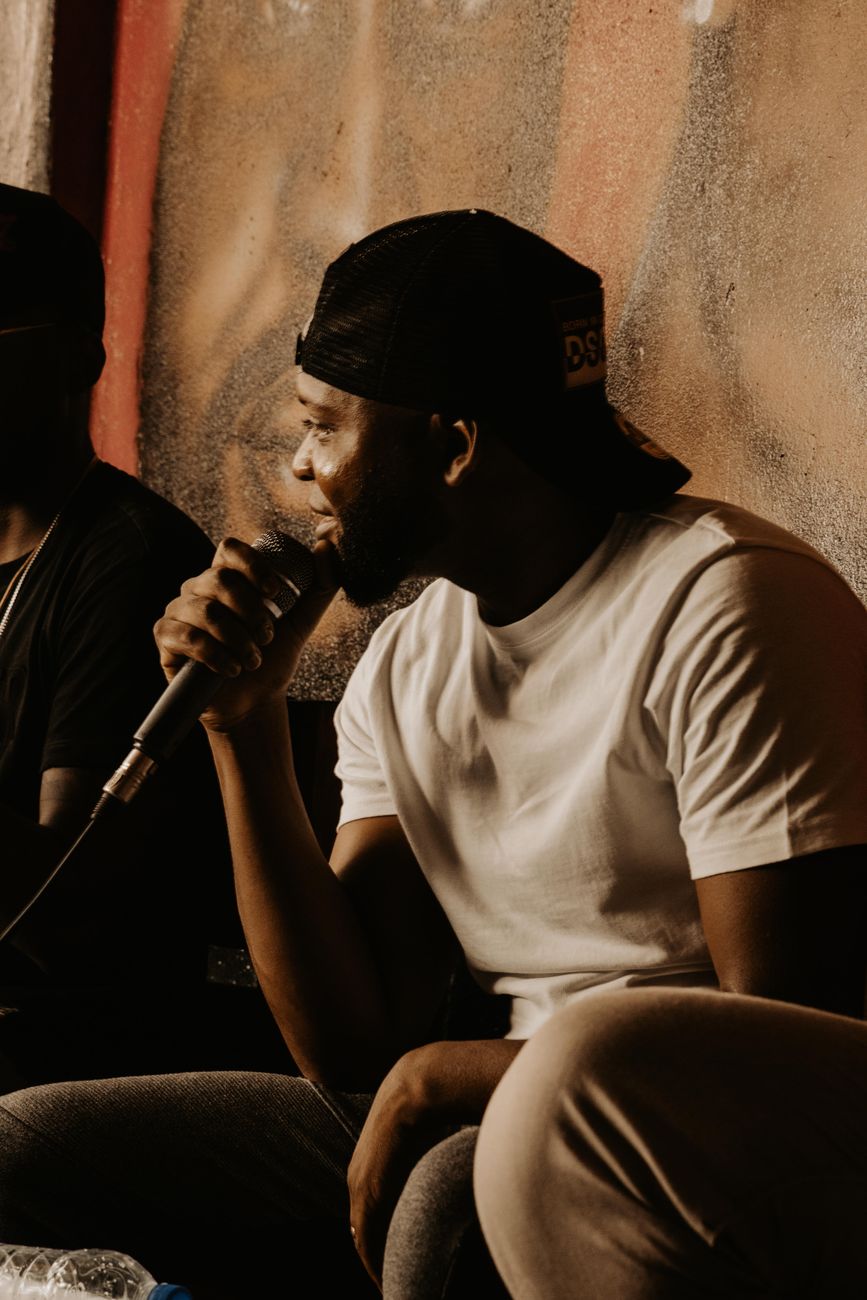
Rap music is stylistically and lyrically diverse, representing a range of experiences and worldviews. originating in the Bronx, New York City, in the early 1970s. It features rhythmic, rhyming speech delivered over a musical backdrop, known as a beat or instrumental track. Its earliest performers comprise MCs (derived from master of ceremonies but referring to the actual rapper) and DJs (who use and often manipulate pre-recorded tracks as a backdrop to the rap), break dancers and graffiti writers. Rap music is a musical form of vocal delivery that is a primary component of hip-hop culture. Early pioneers like Grandmaster Flash and DJ Grand Wizard Theodore developed key techniques such as scratching and looping “break beats”—instrumental sections of songs that people could dance to. The core elements of rap include: Content: The lyrics, which often incorporate “street vernacular” and address a wide range of social and political issues, such as racism and poverty. Flow: The rhythm and rhyme scheme of the delivery. Delivery: The cadence, tone, and vocal qualities used by the rapper (MC). The Beat: The instrumental accompaniment, typically created by a DJ or producer using turntables, samplers, drum machines (like the iconic 808 drum machine), and synthesizers. Sampling and the evolution of rap and hip hop go hand in hand. Essentially, this comes down to combining old classics with contemporary sounds.Rap music has deep cultural roots and several precursors: The tradition of rhythmic storytelling by West African griots over drums is often cited as an early precursor; African American Traditions Influences blues and jazz vocal styles; Jamaican Toasting (or Deejaying) A Rhythmic Chanting or Talking Style Performed over a Beat; “playing the dozens,” a verbal game where participants exchange witty insults about each other’s family to demonstrate verbal skill and coolness without getting genuinely angry, evolving into ‘battle rap.’ and 1960s African American poetry and spoken word artists like The Last Poets and Gil Scott-Heron.
Changes to the musical production of hip-hop, along with growing stylistic diversity and advances in technology, led to the community-imposed concept of an old and new school. The “Old School” is associated with the period from the early 1970s to the mid-1980s. Rap gained commercial viability in 1979 with The Sugarhill Gang’s “Rapper’s Delight” and later with artists like Kurtis Blow. “New School” rap was coined by the 2nd generation artist (1984) to distinguish the pop sensibilities of the first commercial generation of rap artists and ranged from the pop-oriented humorous style of the Fat Boys, for example, to the rock-oriented sounds of say, Run-D.M.C. Women rappers like Queen Latifah introduced Black women’s point of view to rap fans and proved that they were as skilled and commercially successful as the men.The chaotic sounds of Public Enemy and N.W.A became known as hardcore. The harsh lyrical content mirrored the deteriorating conditions of the inner-cities and pushed the boundaries of lyrical complexity and social commentary. also known as “conscious” rap and a sub-genre “gangsta” rap characterized by its lyrical focus on the often-violent realities of inner-city life, including crime, gang activity, and drug dealing. In the 2000s, hip-hop music was mainstream.Kanye West’s production and lyricism redirected attention away from gangsta rap and explored a range of topics including his middle-class upbringing, anti-Black racism, corporatism, and his faith presented in full ‘boasting’ style. Additionally, Eminem will become a most revered lyricist, by rap artists and rap fans alike. Encouraging white artists to Foster relationships with people of colour and follow their lead in dismantling oppressive systems. a legacy of Vanilla Ice the first solo white rapper to achieve commercial success in 1990. Musically, music-making turned away from the East Coast and the West coast and found a new home in the South. Several epicentres develop influential styles: Miami (Miami bass), New Orleans (bounce), Houston (screwed), and Atlanta (crunk and trap). By the 2010s, socially conscious rap will cross over into the mainstream as R&B and rap artists respond to tension borne from increased police and vigilante shootings of unarmed Black men, women, and children, and from advances in technology for self-production and instant sharing through social media. Key artists include Kendrick Lamar. In the 2010s we witness the rise of female MCs as producers of critically acclaimed albums. Women leading the trend include Nicky Minaj and Cardi B. By the 21st century, Rap had become a global phenomenon, influencing music, fashion, and culture worldwide. Fame in rap often comes with mainstream success and cultural impact, and few have shaped culture like Jay-Z. From his fluid rhymes about hustle and heartache to becoming a mogul in music and business, his influence spans beyond music charts to fashion and social activism.

Music Remains deeply personal, We hope to Highlight albums that evoke images, memories, and emotions to spark debate and Broaden your Horizons, step out of Your comfort zone and expand your music taste and experiences.
Join the Conversation!!!
We will Feature Up to 4 Albums from Artists representative of a range of the Many sub-genres. We Hope to encourage Listeners of all tastes and passions. So Get your Headphones on and Consider discussing the musical Offering and sharing your views with like-minded peers.
In Issue #3, We Feature Missy Elliott
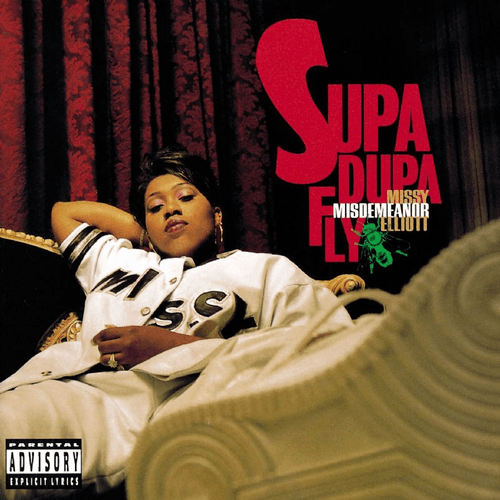
Supa Dupa Fly (1997) sounded NOTHING like anything before it – from Timbaland’s groundbreaking, mind-bending production to Missy’s scattershot rapping laced with R&B vocals. So much of what R&B and hip-hop takes for granted today started with this monumental album, an ode to outlandish creativity. Key Tracks include: “The Rain (Supa Dupa Fly)”: The lead single that launched her solo career, famous for sampling Ann Peebles’ “I Can’t Stand the Rain”, eccentric onomatopoeias, and Hype Williams’ inflated trash-bag suit music video. “Sock It 2 Me” (feat. Da Brat): A high-energy, fun R&B/hip-hop cut sampling The Delfonics’ “Didn’t I (Blow Your Mind This Time)” that became a major radio hit. “Hit ‘Em wit da Hee” (feat. Lil’ Kim): A bass-heavy, confrontational club track showcasing Missy and Lil’ Kim’s dynamic rap flows. “Beep Me 911” (feat. 702 & Magoo): A slow-jam R&B slow burner featuring smooth harmonies from 702. “Best Friends” (feat. Aaliyah): A smooth, futuristic R&B collaboration highlighting Missy’s tight creative and personal bond with the late Aaliyah. “Busta’s Intro” & “Busta’s Outro” (feat. Busta Rhymes): High-voltage, rapid-fire hype tracks bookending the record with Busta Rhymes’ explosive energy. “Friendly Skies” (feat. Ginuwine): A spacey, mid-tempo late-night collaboration built on Timbaland’s signature stuttering percussion
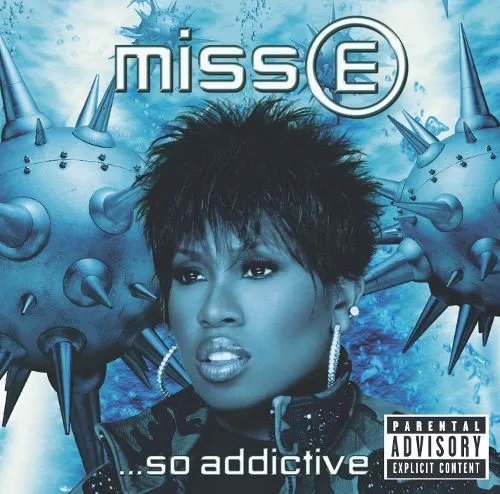
Miss E … So Addictive (2001) celebrated as one of the most daring albums of the new millennium. Sounding much more confident (and downright braggadocios), Missy’s expert songwriting shines here, making it an album that still holds up nearly two decades later..Standout Tracks include: “Get Ur Freak On” – The iconic lead single built around a signature Punjabi bhangra loop and hypnotic beat. “One Minute Man” (feat. Ludacris / Remix feat. Jay-Z) – A punchy, high-energy track addressing performance and pacing, becoming a massive club and radio staple. “Take Away” (feat. Ginuwine) – An emotional, mid-tempo R&B ballad driven by Timbaland’s plucked-string production. “4 My People” (feat. Eve) – A vibrant, electronic-infused dance and hip-hop crossover anthem. “Lick Shots” – A hard-hitting, bass-heavy underground favourite showcasing Missy’s aggressive rhythmic delivery. “Dog in Heat” (feat. Redman & Method Man) – A raw, high-intensity opener setting a gritty tone for the album. “Old School Joint” – A retro, post-disco and early-’80s-inspired synth groove made for the dance floor. “X-tasy” – A dark, sunken, and experimental funk track with slurred, atmospheric vocals
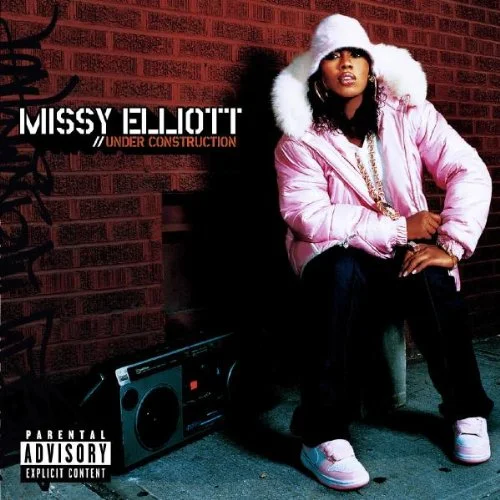
Under Construction (2002) is widely considered Missy Elliott’s best album, featuring hits like “Work It”. It is her highest-selling record and a critical peak, an ode to the old-school hip-hop sound that influenced her career. Marrying 80s-era production with a 21st century flair, the album was equal parts tribute and daring statement to individuality. Missy refuses to conform, and that’s what makes her, and this album, so special. It’s her most consistent and poignant work. Key tracks blend old-school hip-hop homage with futuristic Timbaland production: “Work It”: The massive lead single that peaked at number two on the Billboard Hot 100, famous for its playful wordplay and reverse-vocal sample. “Gossip Folks” (featuring Ludacris): An energetic, high-tempo track sampling Frankie Smith’s “Double Dutch Bus”. “Back in the Day” (featuring Jay-Z): An ode to early-1980s and 1990s hip-hop culture. “Bring the Pain” (featuring Method Man): A hard-hitting track that nods to classic B-boy style and vintage rap tracks. “Nothing Out There for Me” (featuring Beyoncé Knowles): A smooth R&B duet co-produced by Missy Elliott, Craig Brockman, and Nisan Stewart. “Can You Hear Me” (featuring TLC): The emotional closing track serving as a tribute to Aaliyah and Lisa “Left Eye” Lopes
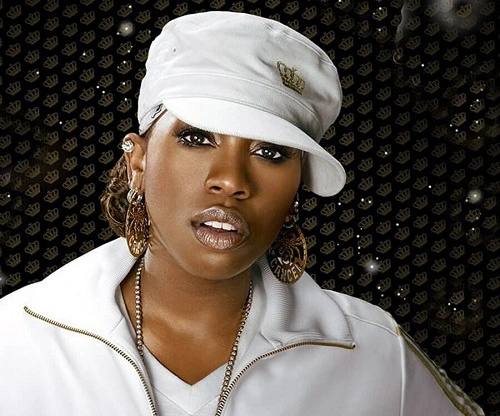
Melissa Arnette Elliott was born on July 1, 1971, at Naval Medical Center Portsmouth in Portsmouth, Virginia. An only child, she grew up in an active church choir family, where singing was a normal part of her youth. Her earliest years were spent in Jacksonville, North Carolina when her father was an active Marine. When her father returned from the Marines, her parents moved back to Virginia. where they lived in extreme poverty. Elliott has talked about seeing her mother suffer domestic abuse at the hands of her father. When Elliott was 14, her mother decided to end the situation and fled with Elliott. Elliott graduated school in 1990. She later said that she occasionally speaks to her father, but has not forgiven him for abusing her mother. In 1988, Elliott formed an all-women R&B group called Fayze with friends. She was introduced to her neighbourhood friend Timothy Mosley (Timbaland) who became the group’s producer and began making demo tracks, among them included the 1991 promo “First Move”. Fayze moved to New York City and signed to Elektra Records through DeVante’s Swing Mob imprint and also renaming the group Sista. Sista’s debut song was titled “Brand New”, which was released in 1993. All 20-plus members of the Swing Mob lived in a single two-story house in New York. When Swing Mob folded and many of its members dispersed. Elliott, Timbaland, Magoo, Ginuwine, and Playa remained together and collaborated on each other’s records for the rest of the decade as the musical collective,
The Superfriends. Elliott and Timbaland, also, continued working together as a songwriting/production team.She signed a deal in 1996 to create her own imprint, The Goldmind Inc., with East West Records, which at that time was a division of Elektra Entertainment Group, for which she would record as a solo artist. Timbaland was again recruited as her production partner, a role he would hold on most of Elliott’s solo releases. In the middle of a busy period of making guest appearances and writing for other artists, Elliott’s debut album, Supa Dupa Fly, was released in mid-1997; the success of its lead single “The Rain” led the album to be certified platinum. Although a much darker album than her debut, Elliott’s second album was just as successful as the first. Missy Elliott next released Miss E… So, Addictive on May 15, 2001. For her next outing, Elliott and Timbaland focused on an old school sound, utilizing many old school rap and funk samples, the album, 2002’s Under Construction won a Grammy Award for Best Rap Solo Performance for “Get Ur Freak On” and nominations for Best Rap Album and Album of the Year. Elliott’s singles, “Pass That Dutch” and “I’m Really Hot”, from her fifth album, This Is Not a Test! (released November 2003), both rose the urban charts. However, both were not as successful at pop radio in comparison to many of her previous efforts. Her sixth solo album, The Cookbook was released on July 4, 2005, Elliott’s work during The Cookbook era was heavily recognized. Elliott received 5 Grammy nominations including one for Best Rap Album for The Cookbook.
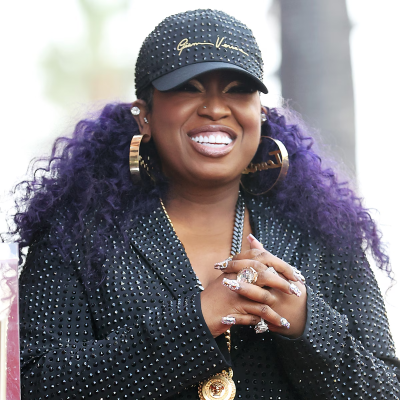
Block Party was the planned seventh studio album by Missy Elliott, announced around 2008 as the follow-up to The Cookbook. Although it produced the 2008 single “Best, Best” and was slated to feature artists like Jazmine Sullivan, the project was ultimately abandoned in 2009. A slowing down on her solo output in the 2010s, Elliott continued working as a producer. In June 2011, Elliott told People magazine that her absence from the music industry was due to having Graves’ disease, with which she was diagnosed after she nearly crashed her car from having severe leg spasms while driving. She experienced severe symptoms from the condition and could not even hold a pen to write songs. After treatment, her symptoms stabilized. Her solo releases were sporadic, limited to a handful of tracks highlighted in 2015 by the platinum-certified Pharrell Williams collaboration “WTF (Where They From).”Elliott has been referred to as the “Queen of Rap”. Elliott’s experimental concepts in her music videos changed the landscape of what a hip-hop video had as themes at the time. Her catalogue of songs has included themes of feminism, gender equality, body positivity and sex positivity since the beginning of her career, being one of the first to centre on these topics among hip-hop and R&B performers. The Guardian and The Observer considered her America’s first Black female music mogul, as she gained in 2001 total control over her image and music, and the opportunity to sign artists. As of 2015, she has remained the bestselling female rap album artist in the US. ABC website editor Gab Burke expressed that Elliott “railed against the male-dominated mainstream rap scene throughout her career, constantly pushed the boundaries, and cemented a place for women in hip hop”. In 2023, she became the first female hip-hop artist to receive a nomination for the Rock and Roll Hall of Fame.
Sound quality is important and the better online Streaming services will offer superior sound quality. As always, We do encourage you to purchase Favoured albums from good online or High street record stores. Missy Elliot label:The Goldmind, Inc – Atlantic Records
Artists in upcoming issues: Nicki Minaj, Eminem………..Keep Listening!! JOIN THE CONVERSATION…