In This Issue #20 We Highlight 4 Artists And Some Significant Works

We will Feature Up to 4 Albums from Artists representative of a range of the many sub-genres. We Hope to encourage Listeners of all tastes and passions. So Get your Headphones on and consider discussing the musical offering and sharing your views with like-minded peers.

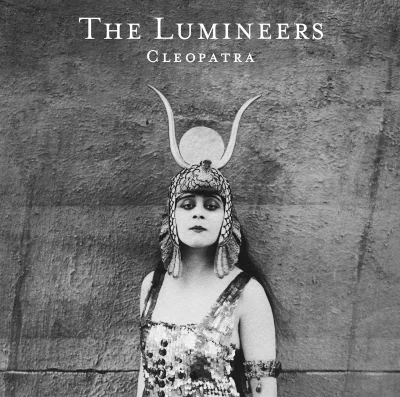
Cleopatra is the second studio album by American indie folk band The Lumineers, released in April 2016. Produced by Simone Felice, it followed their massively successful 2012 self-titled debut. This album presents a calmer tone: The tracks move away from the high-energy, stomp-and-clap festival atmosphere of the first record with deeper storytelling and Wesley Schultz’s raspy vocals anchor more reflective, narrative-driven songwriting. While critics and dedicated followers praised the mature direction, casual listeners missing immediate pop hooks found it restrained. The album achieved widespread commercial success. It marks the band’s final studio album to feature cellist and vocalist Neyla Pekarek before her departure in 2018. The album explores growth, the realities of sudden fame, personal loss, and bittersweet endings. The standard edition consists of 11 tracks, leaning into a more mature, acoustic storytelling landscape. Key tracks include: Sleep On The Floor – A driving, cinematic ballad about escaping a small town. Ophelia – The upbeat, piano-forward lead single. Cleopatra – The rhythmic, guitar-led title track. Angela – A melancholic yet sweeping track featuring acoustic guitar work. Gale Song – Originally written for The Hunger Games: Catching Fire soundtrack. Patience – to finish with a wistful piano outro, a sweet finale to what is ultimately a strong album.

Sleep On The Floor
Ophelia
Cleopatra
Gun Song
Angela
In The Light
Gale Song
Long Way From Home
Sick In The Head
My Eyes
Patience

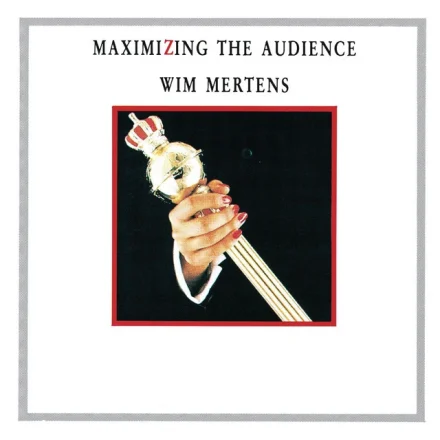
Maximizing the Audience is widely acclaimed and most celebrated as a masterpiece, released in 1984. Originally composed for Jan Fabre’s theater production The Power of Theatrical Madness, it represents the peak of his minimalist style. The title track uses repeating piano chords mixed with his unique, high-pitched vocal style to create a strong emotional pull. Fans and critics view it as his finest balance between strict minimalist patterns and deep feeling..Tracklist: 1. Circles – Built entirely on overdubbed woodwinds. It opens with a lone bass clarinet playing an arpeggiated chord sequence and slowly adds contrapuntal layers of saxophones and clarinets one by one. 2. Lir – Wim Mertens (Solo Piano). A massive 18-minute composition held entirely within the confines of a repetitive piano arrangement using simple melodic structures that lock the listener into a trance. 3. Maximizing the Audience – It kicks off with a hard-driving, aggressive repeated bass line in fifths. Over this rhythmic engine, Mertens weaves echoing operatic female vocals, a sharp violin melody, and a reverb-heavy soprano sax. 4. The Fosse – A haunting vignette featuring just a raw piano line and solo female vocals. It serves as a brief emotional palate cleanser. 5. Whisper Me – A massive chamber piece that introduces Mertens’ signature high, piercing counter-tenor vocal style. The deep textures of the French horn, cello, and viola twist around the piano to end the album on a deeply romantic and solemn note.

Circles
Lir
Maximizing The Audience
The Fosse
Whisper Me

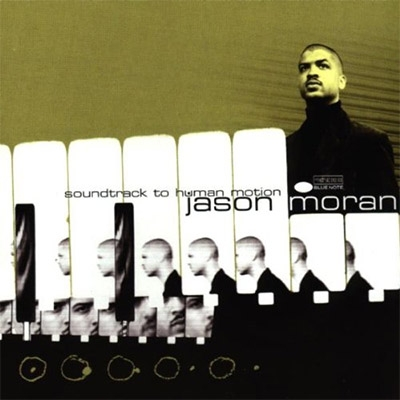
Soundtrack to Human Motion. is the critically acclaimed debut album, recorded in 1998 and released in 1999 under the prestigious Blue Note Records label. Released when Moran was just 24 years old, the album immediately established him as a major new voice in contemporary jazz, blending post-bop, avant-garde jazz, and classical impressionism. The title reflects Moran’s concept that the music could serve as a sonic backing to all the movements a human might make throughout a single day. The album features a stellar, forward-thinking ensemble produced by Moran’s mentor, saxophonist Greg Osby: Jason Moran – Piano, Greg Osby – Alto and soprano saxophones, Stefon Harris – Vibraphone, Lonnie Plaxico – Acoustic bass and Eric Harland – Drums. The record consists of 10 tracks, balancing intricate full-ensemble arrangements with intimate trio, duet, and solo moments. Notable tracks “Gangsterism on Canvas” – Inspired by visual artist Jean-Michel Basquiat, this track laid the structural groundwork for Moran’s ongoing “Gangsterism” composition series throughout his career. “Snake Stance” “Le Tombeau de Couperin / States of Art” – A clever medley blending Maurice Ravel’s classical work with Moran’s original modern jazz sensibilities. “JAMO Meets SAMO” – Another nod to Basquiat (referencing the painter’s famous graffiti tag, SAMO). “Retrograde” – A subtle, swinging piece structured as a backward rendition of avant-garde pioneer Andrew Hill’s tune “Smokestack”. “Root Progression” – A lyrical closing duet between Moran and Osby.

Gangsterism On Canvas
Snake Stance
Le Tombeau De Couperin / States Of Art (Medley)
Still Moving
JAMO Meets SAMO
Kinesics
Aquanaut
Retrograde
Release From Suffering
Root Progression

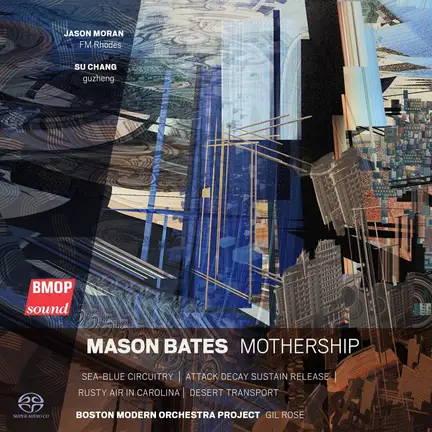
Mothership, reveals a masterful blending of electro-acoustic symphonic textures. mapping out Bates’ pioneering approach of fusing classical orchestration with jazz harmonies, techno rhythms, and field recordings. 1. Mothership 2010 – the symphonic foundation is driven by a steady 1980s techno and electronica beat managed via an electronic drum pad and laptop triggers; features “docking” improvisational soloists by virtuoso Su Chang on the traditional Chinese guzheng and jazz luminary Jason Moran on an FM Rhodes synthesizer. 2. Sea-Blue Circuitry 2010 – Zesty, bright pastoralism The patterns are woven together to mimic the flow of electricity navigating a complex motherboard circuit. 3. Attack Decay Sustain Release 2010 – Named after the standard phases of sound synthesis (ADSR) this brief, four-minute piece functions as a reimagined classical fanfare built on aggressive, driving brass syncopations layered tightly against electronic textures. 4. Rusty Air in Carolina 2006 – An evocative tone poem mimicking Southern summers, featuring the first time Bates utilized insect sound sampling. The acoustic string and wind textures blend seamlessly into field recordings of locusts and bush crickets, using nature’s own ambient architecture to dictate the rhythmic pacing of the orchestra. 5. Desert Transport 2010 – A sonic journey which simulates a helicopter ride lifting off from the Arizona desert. The music mimics the internal mechanics of the transport and the visual expanse of the landscape below integrating the traditional singing of the Pima Indians.

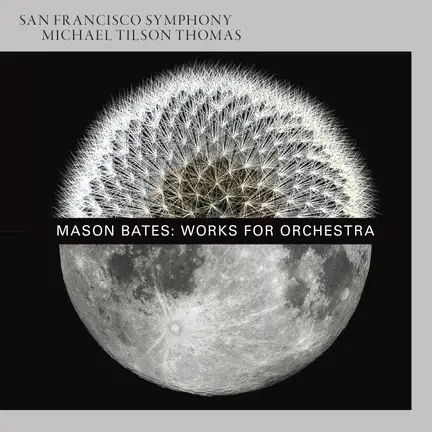
Works for Orchestra features live recordings from the San Francisco Symphony conducted by Michael Tilson Thomas, with the composer performing on live electronics. The album spans 1 hour and 11 minutes across three major electro-acoustic orchestral works. Bates merges post-minimalist orchestral writing with club culture, drum-and-bass beats, jazz, techno, and real-world audio samples. Rather than using pre-recorded backing tracks in a rigid format, Bates actively performs live electronics on stage alongside the orchestra, treating the ensemble like a massive analog synthesizer. Each piece functions like a speculative fiction chapter or sci-fi world-building exercise, moving from microscopic ambient textures to massive rhythmic climaxes. The B-Sides (2009) Inspired by the experimental nature of vinyl B-sides and hip-hop singles. A five-movement symphonic electronica piece. It uses retro sounds and field recordings to mimic outer space. Liquid Interface (2007) A four-movement symphonic suite exploring water, nature, and climate change. Alternative Energy (2011) A four-part “energy symphony” traveling across time, space, and industrial eras from a 19th-century farm to a futuristic particle accelerator.

Mothership
Attack Decay Sustain Release
Desert Transport
Rusty Air in Carolina
Sea-Blue Circuitry
The B-Sides: I. Broom of the System
The B-Sides: II. Aerosol Melody (Hanalei)
The B-Sides: III. Gemini in the Solar Wind
The B-Sides: IV. Temescal Noir
The B-Sides: V. Warehouse Medicine
Alternative Energy: I. Ford’s Farm, 1896
Alternative Energy: II. Chicago, 2012
Alternative Energy: III. Xinjiang Province, 2112
Liquid Interface: I. Glaciers Calving
Liquid Interface: II. Scherzo Liquido
Liquid Interface: III. Crescent City

It is helpful to research the artist, using sources like Wikipedia , Music Magazine Reviews (Pitchfork, Rolling stone, NME etc.,) Artist Websites, etc…A synopsis of the life and music of this Issue’s featured artists appears below.

This Week’s Artists

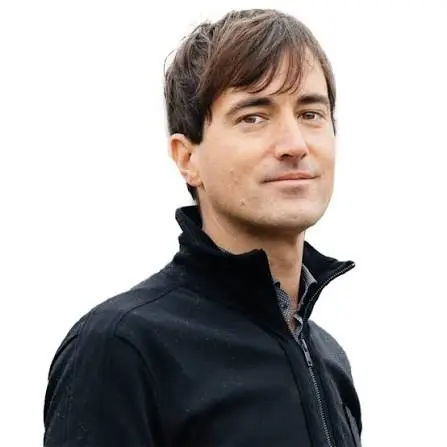
Mason Bates

Bates was born in Philadelphia and raised in Richmond, Virginia and Newtown, Virginia, where his family homestead and farm is located. He exhibited an early interest in creative writing at St. Christopher’s School. His earliest choral compositions were conducted by his piano teacher Hope Armstrong Erb, and he studied composition with Dika Newlin, who was a student of Arnold Schoenberg. During the summer of 1993 at Brevard Music Center, Bates’s music caught the attention of conductor Robert Moody, who subsequently commissioned his first symphonic work Free Variations for Orchestra for his orchestra in Evansville, Indiana. Bates subsequently attended the Columbia University-Juilliard School program and earned a Bachelor of Arts in English literature and Master of Music in music composition. He studied music composition with John Corigliano, David Del Tredici, and Samuel Adler, while also studying playwriting with Arnold Weinstein. In 2001, Bates relocated to the Bay Area and studied under Edmund Campion in the Center for New Music and Audio Technologies at the University of California, Berkeley and graduated in 2008 with a PhD in composition. Bates showed an early interest in bridging the worlds of electronic and symphonic music, premiering his Concerto for Synthesizer in 1999 with the Phoenix Symphony and subsequently performing it with the Atlanta Symphony. Robert Moody premiered that work in addition to Rusty Air in Carolina. He gained national attention in 2007 with Liquid Interface, a water symphony commissioned by the National Symphony Orchestra under Leonard Slatkin, who premiered several works by Bates including Violin Concerto for Anne Akiko Meyers.

He worked around that time as a DJ and techno artist under the name Masonic in clubs and lounges of San Francisco. In that year, with conductor Benjamin Shwartz and visual designer Anne Patterson, he founded Mercury Soul, a San Francisco-based non-profit organization that mounts club shows combining classical music and DJ sets in clubs. He concurrently lived in Rome 2003-2004 as the recipient of The Rome Prize from the American Academy in Rome as well as in Berlin in 2005 as recipient of the Berlin Prize from the American Academy in Berlin. In 2014 he joined the Composition faculty of the San Francisco Conservatory of Music. He currently lives in Burlingame, California. Bates has spoken about his symphonies as a revival of the narrative symphonies of the 19th century using 21st-century sounds, as exhibited by his 2018 symphony Art of War. The piece “explores the drama of human conflict” using field recordings of mortar and artillery explosions made during two visits to Camp Pendleton, as well as recordings of the printing presses of the US Mint which appear in the work’s opening movement “Money as a weapons system”. Some of his works do not include electronic sounds, such as Resurrexit, which was commissioned by Pittsburgh Symphony Orchestra in celebration of Manfred Honeck’s 60th birthday. A long partnership with the San Francisco Symphony began with the 2009 premiere of The B-Sides under Michael Tilson Thomas, who subsequently conducted several works by Bates with the YouTube Symphony. The latter premiered Mothership at the Sydney Opera House in 2011 to an online audience of two million, and the work has become one of the most-performed orchestral works by a living composer. The year 2017 saw a nomination for Best Contemporary Classical Composition for his Alternative Energy for the Chicago Symphony Orchestra, where Bates was named composer-in-residence from 2010 to 2015. Film projects began in 2015 with the score for Gus Van Sant’s film The Sea of Trees. While gaining national prominence for his electro-acoustic symphonic music, Bates began experimenting with concert format in his curating projects in partnership with institutions such as the Chicago Symphony Orchestra and the Kennedy Center. His first opera, The (R)evolution of Steve Jobs, was premiered in 2017 the libretto was written by Mark Campbell. In 2018, the Metropolitan Opera announced the commission of The Amazing Adventures of Kavalier & Clay, with music by Bates and libretto by Gene Scheer. On September 21, 2025, his opera The Adventures of Kavalier & Clay opened the Met Opera 2025-2026 season

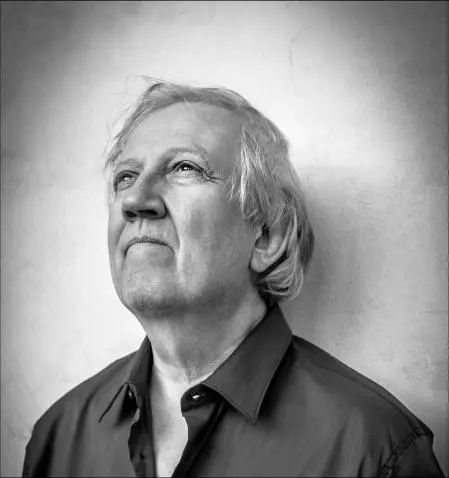
Wim Mertens

Wim Mertens is a Flemish-Belgian composer, countertenor vocalist, pianist, guitarist, and musicologist. Mertens was born in 1953 in Neerpelt, Belgium. He studied social and political science at the University of Leuven (graduating in 1975) and musicology at Ghent University; he also studied music theory and piano at the Ghent Conservatory and the Royal Conservatory of Brussels. In 1978, he became a producer at the BRT (Belgian Radio and Television) he produced concerts by Philip Glass, Steve Reich, Terry Riley, Meredith Monk, Urban Sax and others, and hosted a program called Funky Town together with Gust De Meyer (with whom he recorded the experimental album For Amusement Only).Known primarily as a composer since the early 1980s, Mertens began developing a reputation after releasing “Struggle for Pleasure”, under the name of his early ensemble Soft Verdict, and for “Maximizing the Audience”, which was composed for Jan Fabre’s play The Power of Theatrical Madness. His early landmark albums included Vergessen and Struggle for Pleasure (1982). Mertens’ style has continually evolved during the course of his prolific career, starting from experimental and avant-garde, always gravitating around minimalism, usually, however, preserving a melodic foundation to the forays that he makes into the worlds that he is exploring. His compositional quality has often overweighted the “labelling issue” and reached wider audiences although stemming from a far-from-mainstream musical context. One can follow three separate threads of musical styles throughout his work: Compositions for ensemble, perhaps his most accessible and “commercial” material; Solo piano and voice compositions, which features haunting keyboard melodies accompanied by Mertens’ unique high-pitched tenor voice singing in an invented, personal language; and Experimental minimalist “cycles” for single, dual, and sometimes more instruments. His releases have included the ambitious 37-CD cycle Qua started in 1991. Other special releases included 1997’s guitar album Sin embargo and Moment (2003), a 13-album box set with 80 compositions.

Other notable projects include original music for piano and voice for the silent movies La femme de nulle part by Louis Delluc and The Land Beyond the Sunset by Harold Shaw in 1993. Wim Mertens also works for the theatre and movies. Scores have included Jan Fabre’s performances The Power of Theatrical Madness (1984), Peter Greenaway’s film The Belly of an Architect (1987), Je pense à vous by the Dardenne brothers (1992), Marion Hänsel’s film Li – Between the Devil and the Deep Blue Sea (1992) and Paul Cox’s Father Damien (1999), among others. In August 2007 Mertens signed a contract with EMI Classics (now Warner Classics) for his entire catalogue. The label re-released his entire back-catalogue beginning in January 2008. EMI Music Belgium also released Mertens’ new work, beginning with the 9-track album Receptacle on 24 September 2007. For this album Mertens decided to work with an orchestra consisting of only women, 17 in total. Mertens is the author of American Minimal Music, which looks at the school of American repetitive music and the work of La Monte Young, Terry Riley, Steve Reich, and Philip Glass. To celebrate his 40th artistic anniversary, the Belgian composer released Inescapable in 2019, a 4-CD limited edition box set. It was followed by a tour that ran for two years, the double studio album Heroides and the ensemble studio version of Voice of the Living in 2023. In 2024, Ranges of Robustness explored the forms and degrees of the notion of ‘robustness’. The following year, As Water is to Fish considered the relationship between fish and water. Wim Mertens regularly performs with different settings and ensembles and also with symphony orchestra. After a series of shows in Greece, one reviewer wrote: “Intimate yet gripping, he reaffirmed the value of listening—and the audience followed. One of the most powerful musical moments of 2025.”

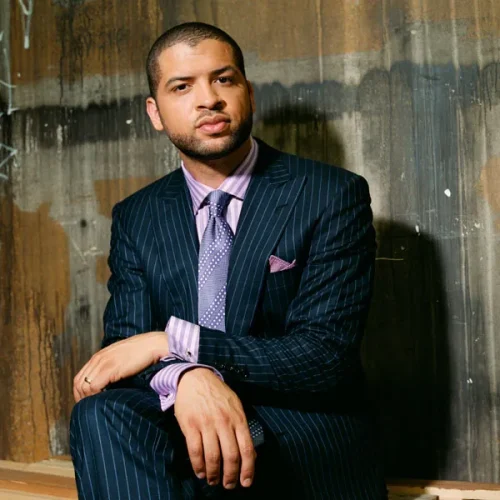
Jason Moran ( born January 21, 1975) is an American jazz pianist, composer, and educator involved in multimedia art and theatrical installations. Moran recorded first with Greg Osby and debuted as a band leader with the 1999 album Soundtrack to Human Motion. Since then, Moran has released albums with his trio The Bandwagon, solo, as a sideman, and with other bands. He combines post-bop and avant-garde jazz, blues, classical music, stride piano, and hip hop.

Jason Moran

Moran was born in Houston, Texas, and grew up in the Pleasantville neighbourhood of Houston. His parents, Andy, an investment banker, and Mary, a teacher, encouraged his musical and artistic sensibilities at the Houston Symphony, museums and galleries. Moran began training at classical piano playing, in Yelena Kurinets’ Suzuki method music school, when he was six. However, his father’s extensive record collection (around 10,000 in 2004), varied from Motown to classical to avant-garde jazz. As a boy he developed a preference for hip hop music over the piano until, at the age of 13, he first heard the song “′Round Midnight” by Thelonious Monk at home, and switched his efforts to jazz. Monk’s childlike melodies, with their many silent spaces, struck him as relatively easy to play and not overly ornate, while the rhythms were reminiscent of hip hop songs, and the harmonies unorthodox. Both jazz and hip hop were part of Houston’s skateboarding scene in which he was involved. He attended Houston’s High School for the Performing and Visual Arts (HSPVA), graduating in 1993 from the jazz program headed by Robert Morgan. In his senior year, he was student director of the school’s jazz combo and part of the Texas high school all-state jazz ensemble. He then enrolled at the Manhattan School of Music, from which he would graduate in 1997 with a BM degree, to study with pianist Jaki Byard. The next year he participated in Betty Carter’s Jazz Ahead exclusive workshop, composing the piece “Make a Decision” for the final concert. In 1997, when Moran was a senior at Manhattan School of Music, he was invited to join the band of saxophonist Greg Osby for a European tour, following a conversation that lingered mostly on older piano jazz, and no audition. Osby liked his playing, and Moran continued to play with Osby’s group upon their return to the United States, making his first recorded appearance on Osby’s 1997 Blue Note album Further Ado. He would subsequently appear on several other Osby albums, and Osby would introduce him to avant-garde pianists Muhal Richard Abrams and Andrew Hill. His stint with Osby led Moran to sign a contract of his own with Blue Note. His debut Soundtrack to Human Motion was released in 1998. Moran’s next album, 2000’s Facing Left (after a work by Egon Schiele, featured a trio Moran, bassist Tarus Mateen and drummer Nasheet Waits. Compositions were some of Moran’s and some by Mateen, Duke Ellington, Björk and Byard. The trio, which came to be known as The Bandwagon, was joined by saxophonist and pianist Sam Rivers for their next album, Black Stars, which appeared in 2001.In 2002,

Moran released a solo album, Modernistic, and followed it in 2003 with a live trio album, recorded at New York’s Village Vanguard, called The Bandwagon. That same summer he appeared in the Montreal International Jazz Festival, first partnering with Lee Konitz, and then with the trio. Moran’s 2005 album Same Mother, an exploration of the blues, brought guitarist Marvin Sewell into the Bandwagon mix. Moran’s 2006 release, Artist in Residence, included a number of selections from different works commissioned by museums, all of which premiered in 2005. Critical reception to Artist in Residence has been arguably colder that to his other releases. Moran’s IN MY MIND, premiered in 2007, is a multimedia presentation inspired by Thelonious Monk’s 1959 “large band” concert at The Town Hall in New York City. The program is played by The Big Bandwagon: the trio with a largely changeable five-piece horn section. The New York Times wrote: “It had a magical balance of theory and intuition, and the crowd stayed fully with it.” In April 2007, Moran took the piano in Charles Lloyd’s New Quartet, succeeding Geri Allen having recorded one studio album and two live ones. Moran and Lloyd recorded a duo album, Hagar’s Song, in 2013. From September 2009 to about 2012, Moran toured with Dave Holland’s Overtone Quartet. The album Ten, released in 2010, marked a ten-year interval from the Bandwagon’s debut, Facing Left. The Downbeat 2010 critics’ poll voted Ten “Jazz Album of the Year”, while also voting Moran “Pianist of the Year” and “Jazz Artist of the Year”. Since 2011 Moran has been performing the show “Fats Waller dance party”, originally commissioned by Harlem Stage. It became the basis of a 2014 release, All Rise: A Joyful Elegy for Fats Waller. Moran has been on the faculty of the New England Conservatory of Music since 2010, where he coaches two ensembles, teaches lessons, and gives masterclasses. At the Kennedy Center he has been the musical adviser for jazz since 2011, and artistic director for jazz since 2014, occupying the position of Billy Taylor. Moran and his family manage the granting of “Moran Scholarship Award”, first set in 1994 for jazz students at HSPVA. In 2005 they set in Houston The Mary Lou Chester Moran Foundation, for similar purposes. In addition to recordings under his own name, Moran has recorded with a range of other musicians including Charles Lloyd, Cassandra Wilson, Joe Lovano, Christian McBride. He has also performed with the likes of Marian McPartland, Lee Konitz, Robert Glasper, The Bad Plus and Bill Frisell.

Lumineers

The Lumineers are an American indie folk band formed in Ramsey, New Jersey, in 2005, and now based in Denver, Colorado. The founding members are Wesley Schultz (lead vocals, guitar) and Jeremiah Fraites (drums, percussion, piano). When Schultz and Fraites began collaborating, writing together and playing gigs around New York City, they did so under various names and the band became ‘The Lumineers’ after a band called Lumineers (a made-up word) were supposed to play at a club in Jersey City the week after Schultz and Fraites played there. The MC mistakenly introduced Schultz and Fraites as The Lumineers, and the name stuck. In 2010, after the band’s relocation to Denver, Fraites and Schultz met classically trained cellist Neyla Pekarek. Although Pekarek had just recently graduated from college and was planning to become a music teacher, she responded to a Craigslist ad posted by Schultz and Fraites requesting a cellist and agreed to join the band when she was invited. As a three-piece, The Lumineers met Maxwell Hughes at an open mic event in Denver. Hughes played and toured with the band as an unofficial fourth member and contributed to the band’s debut album. He suggested joining the band as a mandolin accompaniment, but the band was not looking for a permanent fourth member at the time, so Hughes and The Lumineers parted ways. In December 2011, the song “Ho Hey”, which would become the band’s first single, was used in the first season of CW’s Hart of Dixie.  This started a national buzz on social media. The band passed up major label offers to sign a deal with an independent label Dualtone Records.

Their self-titled debut album The Lumineers was released in April 2012, on Dualtone Records. The album was met with mixed to positive critical reception. The band released their second studio album Cleopatra in April 2016. In October 2018, Neyla Pekarek quit the band in order to concentrate on a solo career. Their third album, titled III, was released in September 2019. Extensive touring which accompanied album release was limited by the COVID-19 pandemic. Their fourth studio album, Brightside was officially released January 14, 2022. Their fifth studio album, Automatic, would be released in February 2025 and the band announced a tour of the album, set to begin on July 3, 2025 and to end around late summer early autumn. Other artists have commented on the folk-style music of The Lumineers and similar bands like Mumford & Sons; alternative rock artist Jack White praised the style, stating, “I think these acts nowadays are keeping people’s ears open to the idea of the soulfulness of folk-style music and acoustic music, and you get a little bit closer to the musician, to the writer, at times.” Conversely, hard and shock rock artist Alice Cooper criticized the two bands, calling it “an offense” to label them rock bands. By 2025, online criticism towards the Lumineers and their contemporaries frequently referred to their folk-style derisively as “stomp clap hey” music. The band has become one of the top touring bands in the United States and is also popular in other countries. The Lumineers have released five albums on American independent label Dualtone Records. The group’s signature sound relies heavily on stripped-back acoustic instrumentation, raw narrative songwriting, and driving foot-stomping rhythms. Over time, they have evolved from standard acoustic “stomp-clap” folk into an expansive alternative rock and cinematic pop entity. 


NOTES

Sound quality is important and some streaming services will offer superior sound quality. We do encourage you to purchase albums from good online record stores. alternatively, stream the music of favoured artists from those better online streaming services.

Mason Bates – Works For Orchestra – Label : SFS Media ; Mothership – Label : BMOP/sound

Wim Mertens – Maximising The Audience – Label : Les Disques Du Crépuscule

Jason Moran – Soundtrack to Human Motion – Label : Blue Note

Lumineers – Cleopatra – Label : Decca

In further issues we will continue to Bring you the music of Popular genres to listen, review and evaluate.