In This Issue #22 We Highlight 4 Artists And Some Significant Works
Join the Conversation!!!
THE LEAST DISAGREEABLE NOISE
We Aim to Encourage Listeners of all Tastes and Passions. So get your Headphones on and consider Discussing the Musical offering and Sharing your views with like-minded Peers
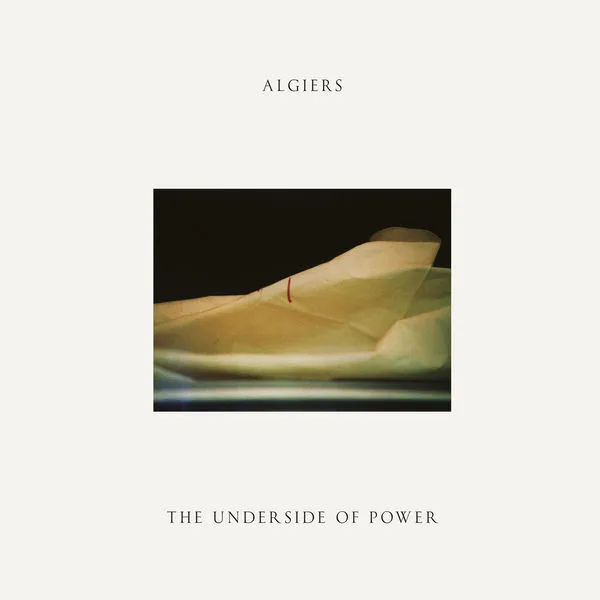
The Underside of Power is the second studio album by American experimental band Algiers. The album was released through Matador Records in June 2017The Underside of Power by the Atlanta/London-based band Algiers is a highly acclaimed, politically charged album released in 2017 on Matador Records. The record famously fuses 60s soul and Southern gospel with post-punk, industrial noise, and electronic-punk, delivering a blistering critique of systemic racism, institutional corruption, and global political unrest. Key tracks include: “Walk Like a Panther” – An aggressive, abrasive anti-anthem opening track that sets an explosive, rebellious tone. “Cry of the Martyrs” – A powerful collision of raw post-punk noise and intense gospel energy. “The Underside of Power” – The melodic, driving title track that acts as a rhythmic protest anthem with Northern Soul backdrop. “Death March” – A tense, atmospheric piece featuring plodding tom hits and a groove that is as moody as it is dark. “A Hymn for the Average Man” – A slower-paced, lumbering piano-driven composition. “Cleveland” – A gospel-influenced, incendiary track acting as a direct, furious response to the Black Lives Matter movement and racist killings. “Mme Rieux” – A track that leans toward a near-piano ballad structure. “A Murmur. A Sign.” – A minimalist, spacious, and bleak slow-burner. “Bury Me Standing” – An instrumental track toward the final third of the record featuring a standout saxophone performance.
Walk Like a PantherCry of the MartyrsThe Underside of PowerDeath MarchA Murmur. A Sign.Mme RieuxClevelandAnimalsPlague YearsHymn for an Average ManBury Me StandingThe Cycle/The Spiral: Time to Go Down Slowly
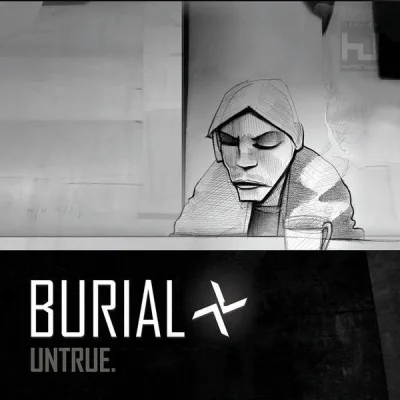
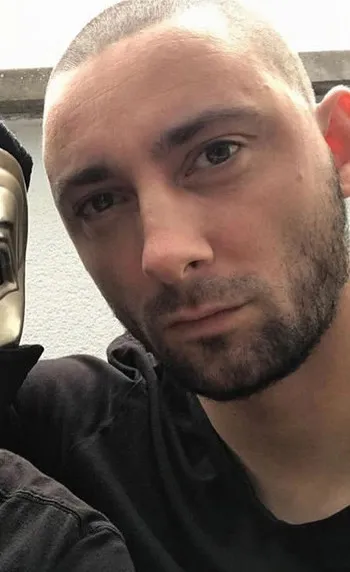
Untrue is the landmark second studio album by British electronic music producer Burial (William Bevan). Released on 5 November 2007 through the independent label Hyperdub, the record is widely celebrated as one of the most influential electronic and dubstep albums of the 21st century. Produced entirely using the basic digital audio editing software Sound Forge, the album uniquely captures a rainy, late-night South London atmosphere. It masterfully processes heavily pitch-shifted, time-stretched R&B vocal samples layered over crackling, off-kilter 2-step garage and dubstep rhythms. Key tracks include “Archangel”: The album’s defining lead single, featuring pitched-down R&B vocal samples, vinyl crackle, and subtle percussion elements adapted from Metal Gear Solid. “Ghost Hardware”: A paranoid, supernatural-themed centrepiece blending intricate garage rhythms with cavernous reverb and fractured vocal harmonies. “Untrue”: The spacious, serene title track built around a haunting, repeated vocal loop of “Because you lied…” “Raver”: The closing track, offering a more direct, driving beat that balances melancholy with a sense of early-morning euphoria.
UntitledArchangelNear DarkGhost HardwareEndorphinEtched HeadplateIn McDonaldsUntrueShell Of LightDog ShelterHomelessUKRaver
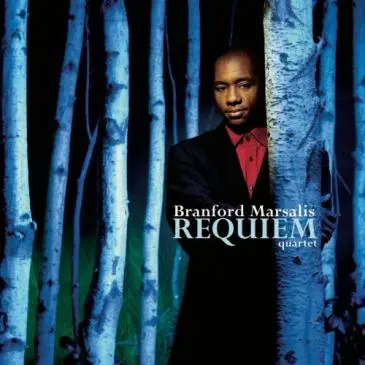
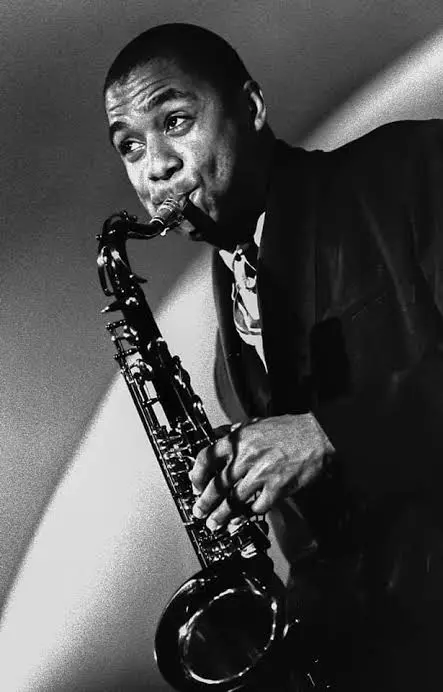
Requiem (1999) is widely considered one of the finest albums in saxophonist Branford Marsalis’s official catalogue. Recorded live-to-tape, it marks the powerful return of his acoustic quartet format. Tragically, it also serves as a swan song; longtime pianist Kenny Kirkland passed away in November 1998 mid-way through production, making this his final recorded performance. The album’s runtime spans 69:29 across 8 core tracks: 1.”Doctone” Named after Kirkland’s nickname; a swinging, John Coltrane-influenced opener that highlights fluid interplay. 2. “Trieste” Written by Paul Motian. Features a Middle Eastern-style intro before shifting into a fiery, high-combustion groove. 3.”A Thousand Autumns” An extravagantly melancholy, restrained, and elegant ballad written by Marsalis. 4.”Lykief” A creative variation piece meant as a stylistic play on Keith Jarrett’s name and 1970s rhapsodic gospel harmonies. 5.”Bullworth” Blasts off with an aggressive hip-hop and funk-tinged rhythm laid down by drummer Jeff “Tain” Watts. 6. “Elysium” The lone trio piece on the album. Features quirky tempo shifts and an uptempo swing without piano accompaniment. 7. “Cassandra” A poignant, slow-burning jazz ballad. 8. “16th St. Baptist Church” Grounded in a classic New Orleans brass street-march beat. Note: Most pressings include an uncredited, touching Marsalis/Kirkland duet benediction at the very end.
DoctoneTriesteA Thousand AutumnsLykiefBullworthElysiumCassandra16th St. Baptist Church
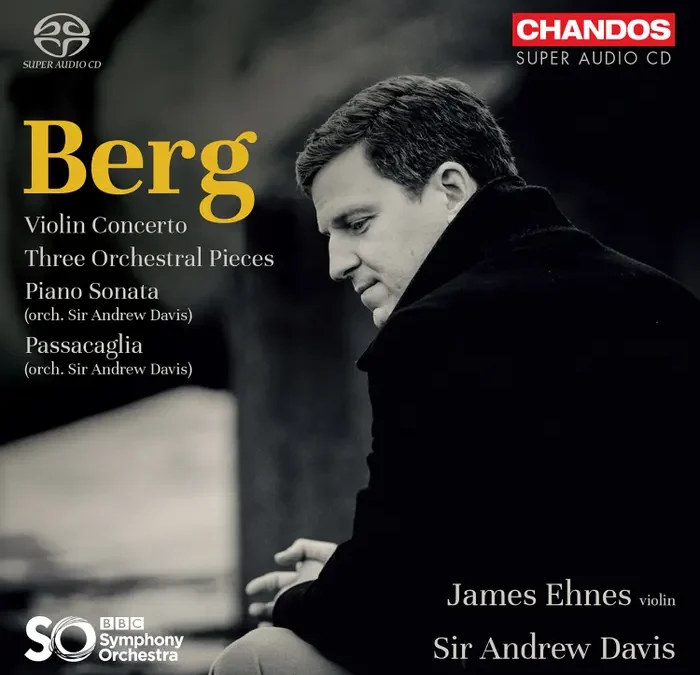
Violin Concerto (1935) Berg structured his final completed work into two large parts. Part I: Andante: This opens with an unhurried, translucent introduction then a lively, dance-like movement treated with a delicate, nostalgic rustic charm before shifting into darker, more shadow-flecked orchestral colours. Part II: Allegro: The second half of the concerto begins with a sudden, violent explosion of orchestral panic. It is heavily rhythmic, aggressive, and features a cadenza-like role for the solo violin. driving the music toward a climax where out of the devastation emerges a profound hymn providing a deeply moving resolution.Three Orchestral Pieces, Op. 6 (1914–15) Written right before the outbreak of WWI, this dense orchestral score is indexed across three tracks: I. Präludium (Prelude) – Andante con moto: It begins in near-total silence with the unpitched scraping of percussion (tam-tam and bass drum). Out of the noise, fragmented motives gradually coalesce into a massive, complex orchestral swell before disintegrating back into acoustic dust. II. Reigen (Round Dance) – Un poco allegretto: A twisted, hallucinatory take on the traditional Viennese waltz. Lyrical, sweeping melodies are constantly interrupted, fractured, and subverted by overlapping rhythmic layers and heavy brass. III. Marsch (March) – Moderato: The longest and most chaotic movement a sonic collage of a world collapsing into war which reaches an earth-shattering climax punctuated by a massive hammer blow.
Violin Concerto: I. AndanteViolin Concerto: II. AllegroThree Orchestral Pieces, Op. 6: I. PräludiumThree Orchestral Pieces, Op. 6: II. ReigenThree Orchestral Pieces, Op. 6: III. MarschPassacaglia (Orchestrated by Sir Andrew Davis)Piano Sonata, Op. 1 (Orchestrated by Sir Andrew Davis)
It is helpful to research the artist, using sources like Wikipedia , Music Magazine Reviews (Pitchfork, Rolling stone, NME etc.,) Artist Websites, etc…A synopsis of the life and music of this Issue’s featured artists appears below.
This Week’s Artists
Branford Marsalis (born August 26, 1960) is an American saxophonist, composer, and bandleader. While primarily known for his work in jazz as the leader of the Branford Marsalis Quartet, he also performs frequently as a soloist with classical ensembles and has led the group Buckshot LeFonque. From 1992 to 1995 he led The Tonight Show Band.
Branford Marsalis
Marsalis was born on August 26, 1960, in New Orleans. He is the son of Dolores (née Ferdinand), a jazz singer and substitute teacher, and Ellis Louis Marsalis, Jr., a pianist and music professor. His brothers Jason Marsalis, Wynton Marsalis, and Delfeayo Marsalis are also jazz musicians. While in high school, Marsalis played in a R&B cover band called The Creators. Marsalis then attended Southern University, a historically black college in Baton Rouge, where he studied under renowned jazz clarinettist Alvin Batiste. At the encouragement of Batiste, Marsalis later transferred to Berklee College of Music in Boston. While a student at Berklee, he toured Europe playing alto and tenor saxophone in a large ensemble led by drummer Art Blakey. Other big band experiences with Lionel Hampton and Clark Terry followed over the next year, and by the end of 1981 Marsalis, on alto saxophone, had joined his brother Wynton in Blakey’s Jazz Messengers. Other performances with his brother, including a 1981 Japanese tour with Herbie Hancock, led to the formation of his brother Wynton’s first quintet, where Marsalis shifted his emphasis to soprano and tenor saxophones. He continued to work with Wynton until 1985, a period that also saw the release of his own first recording, Scenes in the City, as well as guest appearances with other artists including Miles Davis and Dizzy Gillespie. In 1985, he joined Sting, singer and bassist of rock band the Police, on his first solo project, The Dream of the Blue Turtles, alongside jazz and session musicians Omar Hakim on drums, Darryl Jones on the bass, and Kenny Kirkland on keyboards. He performed with Sting at Live Aid and became a regular in his line-up both in the studio and live performances until the release of Brand New Day in 1999.In 1986, Marsalis formed the Branford Marsalis Quartet with pianist Kenny Kirkland, drummer Jeff “Tain” Watts, and bass player Robert Hurst. That year, they released their first album, Royal Garden Blues. That lineup of the quartet would go on to release four more albums, the last of which, I Heard You Twice the First Time (1992), won the Grammy Award for Best Instrumental Jazz Album. In 1988, Marsalis co-starred in the Spike Lee film School Daze, also rendering several horn-blowing interludes for the music in the film. Between 1990 and 1994, Marsalis played with The Grateful Dead numerous times, appearing on their 1990 live album Without a Net. In 1992, Marsalis became the leader of The Tonight Show Band on the newly launched The Tonight Show with Jay Leno. In 1994, Marsalis formed the group Buckshot LeFonque (named after a pseudonym once used by Cannonball Adderley), a jazz group with elements of rock and hip-hop. That year, they released their first album, Buckshot LeFonque, which was mostly produced by DJ Premier. The Branford Marsalis Quartet has toured and recorded extensively. For two decades Marsalis was associated with Columbia, where he served as creative consultant and producer for jazz recordings between 1997 and 2001. In 2002, Marsalis founded his own label, Marsalis Music. Marsalis has also become involved in college education, with appointments at Michigan State University (1996–2000), San Francisco State University (2000–2002), and North Carolina Central University (2005–present). Marsalis wrote the music for the 2010 Broadway revival of the August Wilson play Fences. On July 14, 2010, Marsalis made his debut with the New York Philharmonic.
William Emmanuel Bevan, known by his recording alias Burial, is a British electronic musician from South London. Initially anonymous, Burial became the first artist signed to Kode9’s electronic label Hyperdub in 2005. He won acclaim the following year for his self-titled debut album, an influential release in the UK’s dubstep scene which showcased a dark, emotive take on UK rave music styles such as UK garage and 2-step; it was named the album of the year by The Wire. Burial’s second album, Untrue, was released to further critical acclaim in 2007, and recognised as a landmark work of electronic music.
Burial
Burial, is a British electronic musician. In 2008, Bevan’s identity was revealed by The Independent and confirmed by Hyperdub. In the following years, he went on to collaborate with artists such as Four Tet, Massive Attack, Thom Yorke, Zomby, and The Bug, in addition to releasing a series of long-form EPs such as Kindred (2012), Truant / Rough Sleeper (2012), and Rival Dealer (2013); most of these releases were later compiled on the 2019 compilation Tunes 2011–2019. Bevan grew up a fan of jungle and garage, having been introduced to the UK rave scene by his older brothers. He mentioned American garage producer Todd Edwards and the UK’s 2-step subgenre as favourites. Bevan began sending Steve Goodman (Kode9) letters and CD-Rs of his home-made music around 2002, having been a fan of the music featured on Goodman’s Hyperdub website. In 2005, the label released the South London Boroughs EP, which collected tracks recorded by Burial for several years prior. Burial’s self-titled 2006 debut album was the first full-length release on Hyperdub. Despite early acclaim, Burial initially remained anonymous. In February 2008, The Independent speculated that Burial was Bevan, an alumnus of South London’s Elliott School. The school’s alumni also include Kieran Hebden (Four Tet), with whom Bevan has collaborated. He has remained reclusive, giving few interviews and avoiding public appearances. AllMusic described him as “one of the most acclaimed, influential, and enigmatic electronic musicians of the early 21st century”. On 22 July 2008, it was announced Burial was a nominee for the 2008 Mercury Music Prize for his second album, Untrue. There was much Mercury Prize-related coverage in tabloid newspapers. Bevan confirmed his identity, and posted a picture of himself on his Myspace page. A blog entry stated, “I’m a lowkey person and I just want to make some tunes”, as well as announcing a forthcoming four-track 12″, and thanking his fans for their support up to this point. Rather than releasing a third album, Burial has spent the years since Untrue releasing increasingly longer and more experimental individual tracks. This began with “Moth” / “Wolf Cub”, a collaboration with Four Tet, and Burial’s own track “Fostercare” and EP Street Halo. He developed this practice, experimenting with multi-part suites rather than conventional songs and subsequent solo EPs Kindred (2012), Truant / Rough Sleeper (2012) and Rival Dealer (2013), each of these EPs was met with critical acclaim, with Kindred being singled out in particular as a landmark release. Three further shorter records were released in the following years; “Temple Sleeper” was released on Keysound Recordings in 2015, as an EP titled Young Death / Nightmarket came out in November 2016, and Subtemple / Beachfires followed in May 2017. In 2018, Burial worked with Kode9 to compile Fabriclive 100, the final instalment of the long-running Fabriclive mix CD series. He collaborated with The Bug on two EPs, 2018’s Fog / Shrine and 2019’s Dive / Rain, released under the names “Flame 1” and “Flame 2”, respectively. A compilation of Burial’s solo EP and single releases, Tunes 2011–2019, was released on Hyperdub at the end of 2019. Burial, Four Tet, and Thom Yorke released two new collaborative songs, “Her Revolution” and “His Rope”, in December 2020, followed by a Burial-only release, “Chemz”. The following April, Burial and Blackdown released a split EP, Shock Power of Love, and a month later the previous year’s single, “Chemz”, was given a physical release alongside the track “Dolphinz”. The Antidawn EP was released in January 2022, followed by the Streetlands EP in October of the same year. In July 2023, Burial released the single “Unknown Summer”, alongside Kode9’s single “Infirmary”. In February 2024, Burial released the EP “Dreamfear / Boy Sent From Above” on XL Recordings. Later that year in June, Burial and Kode9 released another split single, consisting of Burial’s “Phoneglow” and Kode9’s “Eyes Go Blank”. In July 2024, it was reported that Burial had composed the scores for Andrea Arnold’s film, Bird (2024), and Harmony Korine’s film, Baby Invasion (2024). On 31 July 2025, Burial released an EP titled “Comafields / Imaginary Festival” on Hyperdub.
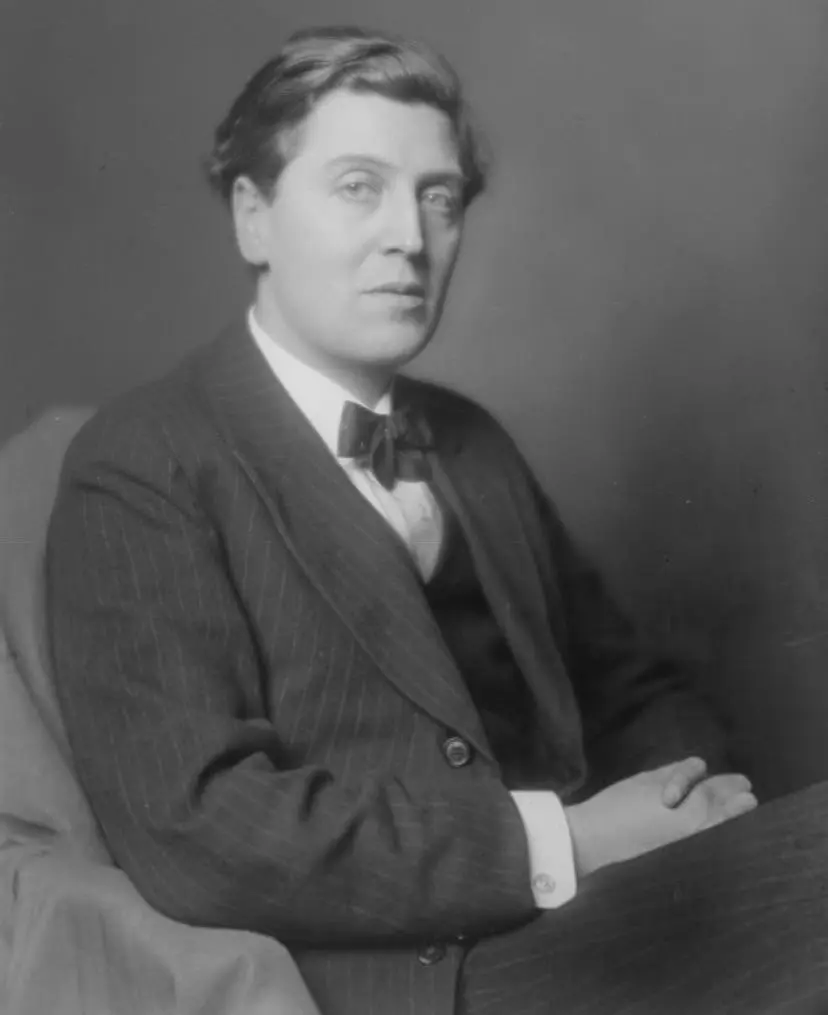
Alban Maria Johannes Berg (9 February 1885 – 24 December 1935) was an Austrian composer of the Second Viennese School. His compositional style combined Romantic lyricism with the twelve-tone technique. Although he left a relatively small oeuvre, he is remembered as one of the most important composers of the 20th century for his expressive style encompassing “entire worlds of emotion and structure”.
Alban Berg
Berg was born and lived in Vienna. He began to compose at the age of fifteen. He studied counterpoint, music theory and harmony with Arnold Schoenberg between 1904 and 1911, and adopted his principles of developing variation and the twelve-tone technique. Berg’s major works include the operas Wozzeck (1914–1922) and Lulu (from 1928; finished posthumously), the chamber pieces Lyric Suite and Chamber Concerto, as well as a Violin Concerto. He also composed a number of songs (lieder). Berg died from sepsis in 1935. He is said to have brought more “human values” to the twelve-tone system; his works are seen as more “emotional” than those of Schoenberg. His music had a surface glamour that won him admirers when Schoenberg himself had few. Berg was born in Vienna, the third of four children of Johanna and Konrad Berg. His father ran a successful export business. The family’s financial situation turned to the worse after the death of Konrad Berg in 1900. Berg was more interested in literature than music as a child and would consider a career as a writer several times, turning to music slowly and at times unconfidently until the success of Wozzeck. He did not begin to compose until he was fifteen, when he started to teach himself music, although he did take piano lessons from his sister’s governess. In 1906 Berg met the singer, Helene Nahowski. Despite the outward hostility of her family, the couple married on 3 May 1911. With little prior music education, Berg began studying counterpoint, music theory, and harmony under Arnold Schoenberg in October 1904. By 1906 he was studying music full-time; by 1907 he began composition lessons. His student compositions included five drafts for piano sonatas. He also wrote songs, including his Seven Early Songs (Sieben frühe Lieder). The early sketches eventually culminated in the Piano Sonata, Op. 1, published in 1910, it has been described as one of the most formidable “first” works ever written. Berg was a part of Vienna’s cultural elite during the heady fin de siècle period. From 1915 to 1918 Berg served in the Austro-Hungarian Army. During a period of leave in 1917 he accelerated work on his first opera, Wozzeck. After the end of World War I, he settled again in Vienna, where he taught private pupils. He also helped Schoenberg run his Society for Private Musical Performances. In 1924 three excerpts from Wozzeck were performed, which brought Berg his first public success. The opera, which Berg completed in 1922. Today, Wozzeck is seen as one of the century’s most important works. Berg made a start on his second opera, the three-act Lulu, in 1928 but interrupted the work in 1929 for the concert aria Der Wein which he completed that summer. Other well-known Berg compositions include the Lyric Suite (1926), the post-Mahlerian Three Pieces for Orchestra (completed in 1915 but not performed until after Wozzeck); and the Chamber Concerto (Kammerkonzert, 1923–25) for violin, piano, and 13 wind instruments. Life for the musical world was becoming increasingly difficult in the 1930s both in Vienna and Germany due to the rising tide of antisemitism and the Nazi cultural ideology that denounced modernity. Berg’s “crime” was to have studied with the Jewish composer Arnold Schoenberg. Berg found that opportunities for his work to be performed in Germany were becoming rare, and eventually his music was proscribed and placed on the list of degenerate music. In 1932 Berg and his wife acquired an isolated lodge in Carinthia, where he was able to work in seclusion, mainly on Lulu and the Violin Concerto. Berg had interrupted the orchestration of Lulu because of an unexpected (and financially much-needed) commission from the Russian-American violinist Louis Krasner for a Violin Concerto (1935). This profoundly elegiac work, composed at unaccustomed speed and posthumously premiered, has become one of Berg’s frequently performed compositions. Berg died aged 50 in Vienna, on Christmas Eve 1935, from blood poisoning apparently caused by a furuncle on his back, induced by an insect sting that occurred in November. He was buried at the Hietzing Cemetery in Vienna. Before he died, Berg had completed the orchestration of only the first two of the three acts of Lulu. The completed acts were successfully premièred in Zürich in 1937. The final act orchestration, which Berg had in fact completed in short score,.was therefore commissioned in secret from Friedrich Cerha and premièred in Paris (under Pierre Boulez) only in 1979, soon after Helene Berg’s own death
Algiers
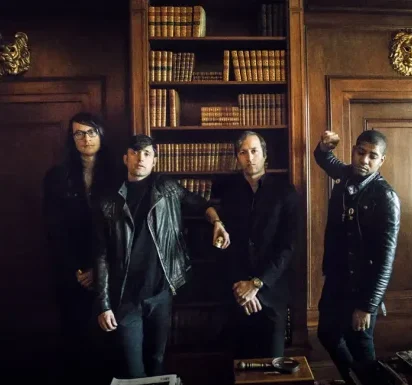
Algiers wereformed in 2012. The band consists of multi-instrumentalists Franklin James Fisher, Ryan Mahan, Lee Tesche, and Matt Tong. Algiers pulls from a divergent number of musical (and non-musical) influences; the most notable of these influences are post-punk, hip-hop, Southern Gothic literature, and the concept of the Other. Their sound has been described as dystopian soul due to its sombre mood, afro-folk inspired vocal approach, and heavy emphasis on atonal textures. Fisher, Mahan, and Tesche (of the experimental band Lyonnais) met and grew up playing music together in Atlanta, Georgia, but officially formed in London in 2012 with the release of their first single. They chose the name Algiers in reference to Gillo Pontecorvo’s 1966 film, The Battle of Algiers, symbolizing anti-colonial struggle, a contested space where violence, racism, resistance, and religion commingle. The group released their first single “Blood” in January 2012 via Atlanta based label Double Phantom. The band’s self-titled debut album Algiers was released through Matador in June 2015. Ahead of their eponymous release, the band opened for Interpol, during their North American Tour. Matt Tong, formerly of Bloc Party, began playing drums for Algiers at this time. In the spring of the following year, the band premiered and toured the Eastern US. On June 23, 2017, Algiers released their second studio album, The Underside of Power, to universal critical acclaim. This coincided with a European stadium tour that found the band opening up for Depeche Mode. In the lead up to their next album, the band released the critically acclaimed, explosive, free jazz single, “Can the Sub Bass Speak?”. Their third full-length album for Matador, There Is No Year, followed in January 2020. Post-release, members of the band travelled to Algeria for the first time and met with Algerian Independence fighter Saadi Yacef. This marked a frenzied period of activity and collaboration for the group. On September 13, 2022, Algiers released the single “Bite Back” featuring the rappers Billy Woods and Backxwash, their first new music in over two years. They quickly followed it up with the blistering single, “Irreversible Damage”. It was announced that their fourth album, Shook, would be released the following February. It was preceded by the single “I Can’t Stand It!” featuring Samuel T. Herring from Future Islands and Jae Matthews from Boy Harsher. Dante Foley began playing drums on a second drum set for Algiers live sets during this time.
Algiers with members from Aberdeenshire, Scotland and New Orleans itself, the band is a unique blend of core British music influences and a flavour of American alternative music. With vastly experienced musicians and a comparatively unorthodox background, The Algiers aim to bring the swagger of the UK and the rusty edge of American alt indie to be a different kind of New Orleans band.
NOTES
Sound quality is important and some streaming services will offer superior sound quality. We do encourage you to purchase albums from good online record stores. alternatively, stream the music of favoured artists from those better online streaming services.
Alban Berg – Violin Concerto / Three Orchestral Pieces – Label : Chandos
Branford Marsalis – Requiem – Label : Sony Music
Burial – Untrue – Label : Hyperdub
Algiers – The Underside Of Power – Label : Matador Records