
Join the Conversation!!!
We will Feature Up to 4 Albums from Artists representative of a range of the Many sub-genres. We Hope to encourage Listeners of all tastes and passions. So Get your Headphones on and Consider discussing the musical Offering and sharing your views with like-minded peers.
Rock Music – Issue #15
Rock music’s history is glorious. But who are it’s greatest rock bands and artists?
Over the years Many Disparate rock music sub-genres have emerged. hybrids like blues rock, folk rock, country rock, Progressive Rock, Psychedelic Rock, Glam Rock, Heavy Metal, Punk, Electronic, Etc. Have their Fans and Critics. From the ’90s alternative Rock achieves dominance. New genres, like grunge, Britpop, Hip Hop and indie Rock enter the mainstream. each with their own Unique Characteristics, Style, and Cultural Significance. Rock music has long been linked with political activism. Together with changes in social attitudes to race, sex, and drug use. Rock Music has assimilated cultural and social Movements – mods, rockers, Punks and the hippie movement for Example. the music both reflects society and influences society.The evolution of Rock Music has been inextricably linked to technological advancements. from the invention of the electric guitar to the rise of digital streaming platforms. Thus Music became ubiquitous, whether in public places or in the home. Music is a form of human conversation
In Issue #15, We Feature Blur
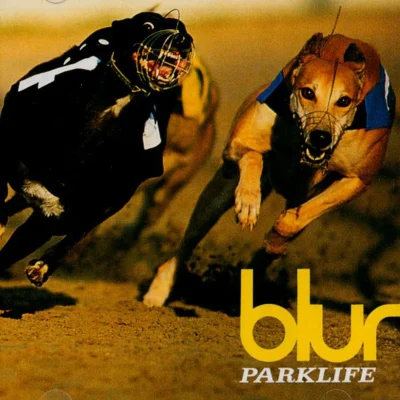
Parklife is the landmark third studio album, released on 25 April 1994 by Food Records. It is widely celebrated as a defining cultural flashpoint that inaugurated the Britpop movement and mid-90s youth culture in the UK. Music listeners consistently point to the interplay between Damon Albarn’s British pop sensibilities and Graham Coxon’s heavier, American-influenced guitar work as the engine of the album. Parklife shot straight to No. 1 on the UK Albums Chart, cementing the band’s status as British rock royalty. Musically, Parklife serves as a vibrant, seriocomic sketch of mid-90s British life. It moves seamlessly through genres like new wave, disco, synth-pop, punk, and traditional music hall. 1. Girls & Boys – The groovy, disco-fied lead single driven by Alex James’ iconic bassline. 2. Tracy Jacks – A suburban character study vignette. 3. End of a Century – A melancholy look at couples consumed by modern media and daily drudgery. 4. Parklife – The explosive title track featuring a famous, cheeky spoken-word performance by actor Phil Daniels.5. Bank Holiday – A fast-paced punk parody of British work-life humour. 6. Badhead – A gentle, horn-laced reflection on estranged friendship.7. The Debt Collector – A whimsical instrumental piece. 8. Far Out – A short, space-themed track sung by bassist Alex James. 9. To the End – A sweeping, cinematic ballad featuring orchestral arrangement and French backing vocals by Stereolab’s Lætitia Sadier. Surprisingly, Albarn, for all of his cold, dispassionate wit, demonstrates compassion in this melancholy Walker Brothers tribute. 10. London Loves – A critique of high-flying city life set to New Wave synths. 11. Trouble in the Message Centre – A tense, effects-heavy art-rock track. 12. Clover Over Dover – A darker, emotionally vulnerable harpsichord-led song. 13. Magic America – A sarcastic character study of commercialism. 14. Jubilee – A high-energy rocker about a teenage television and video game addict. 15. This Is a Low – An epic, slow-building ballad structured around the BBC shipping forecast, featuring standout guitar work from Graham Coxon. 16. Lot 105 – A manic, organ-led instrumental outro. For all of its celebration of tradition, Parklife is a thoroughly modern epoch-defining record..
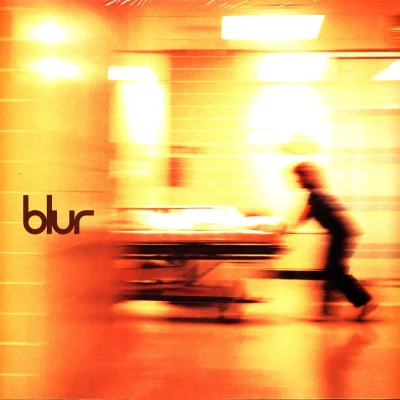
Released in February 1997, Blur marked a massive creative pivot for the band, as they consciously abandoned the polished, “Cool Britannia” aesthetic of Britpop in favour of gritty U.S. indie rock, lo-fi, and grunge influences. Blur managed to maintain a consistent level of quality, with barely a lull across its 14 tracks. 1. Beetlebum – blending melody with a grimy, distorted sound boasting one of Graham Coxon’s best riffs and a chorus that feels like emotional unburdening. 2. Song 2 – a 2-minute grunge parody , a quiet-loud explosion, Damon Albarn barking nonsense lyrics. It’s a perfectly distilled burst of energy that became their biggest global and U.S. crossover hit. 3. Country Sad Ballad Man – A warped, lo-fi psychedelic track marking a shift toward introspection and darker themes. 4. M.O.R. – An energetic rocker borrowing its chord progression from David Bowie’s “Boys Keep Swinging” (earning Bowie and Brian Eno co-writing credits).5. On Your Own – A danceable slice of synth-pop layered with an old 1980s Roland drum machine. 6. Theme from Retro – An atmospheric, dub-heavy instrumental space-rock excursion. 7. You’re So Great – The first Blur track written and sung entirely by guitarist Graham Coxon, a raw, melancholic gem featuring a heartfelt, heavily distorted lo-fi performance. 8. Death of a Party – A haunting, minimalist track with an ominous, skeletal organ riff. 9. Chinese Bombs – A frantic, hyper-fast punk track clocking in at under a minute and a half. 10. I’m Just a Killer for Your Love – A dark, weary, and bluesy lo-fi jam. 11. Look Inside America – A clever subversion of traditional Britpop arrangement, complete with cinematic strings. 12. Strange News from Another Star – A moody acoustic space ballad heavily echoing David Bowie.13. Movin’ On – A noisy, high-tempo, and aggressively distorted alternative rocker.14. Essex Dogs – A dark, experimental, and dystopian closing track featuring Damon Albarn reciting spoken-word poetry over screeching guitar feedback
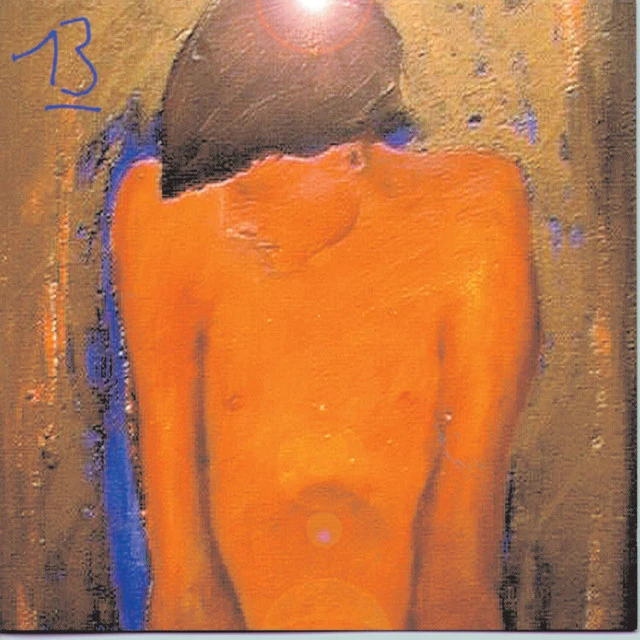
13 is the sixth studio album released in 15 1999. Marking a stark departure from the bright Britpop sound that originally made them famous, the record is heavily celebrated for its experimental nature, incorporating elements of art rock, electronic music, psychedelia, and noise rock. The album was recorded during a period of intense personal and professional turmoil within the band. Frontman Damon Albarn was processing his painful, high-profile breakup with Elastica’s Justine Frischmann, which heavily inspired the raw, sombre lyricism of the record. At the same time, internal relationships were strained, and guitarist Graham Coxon was battling severe alcoholism. To capture this heavier, fractured mood, Blur hired William Orbit, who helped the band construct a woozy, dystopian sonic landscape using experimental editing and electronic loops. Notable tracks – “Tender” A secular hymn about trying to heal and find hope after heartbreak. It sets up the emotional core of the album: acknowledging immense pain while trying to move forward. Despite the sadness, the song is ultimately comforting, bolstered by the London Community Gospel Choir singing the refrain, “Come on, come on, come on / Get through it.” It frames love not just as a source of pain, but as the ultimate healer. “No Distance Left to Run” The absolute, devastating acceptance that the relationship is completely over. It is arguably Blur’s most raw, unvarnished ballad. A song that looks for a silver lining, this track is pure exhaustion and grief. Albarn completely lets go of his pride, wishing his ex-partner happiness with someone else, even if it hurts. The minimalist, weeping guitar line by Graham Coxon amplifies the feeling of a cold, empty room. Albarn later admitted that singing it made him cry. “Coffee & TV” Written and sung by Graham Coxon, this track shifts the focus from Albarn’s breakup to Coxon’s personal struggles with severe alcoholism and social anxiety. The song is a plea for comfort and stability amidst a personal mental health crisis. “Coffee and TV” are the simple, non-destructive comforts Coxon used to replace drinking and partying. It uses an upbeat, melodic indie-pop shell to mask deeply anxious, reclusive thoughts. “1992” & “Caramel” These experimental, avant-garde tracks dive headfirst into the disorientation, anger, and substance-fuelled numbness of the separation. “1992”: The title refers to the year Albarn and Frischmann first started dating. The song feels like an ambient nightmare, capturing the feeling of being creatively and emotionally drained. “Caramel”: A sprawling, psychedelic seven-minute track where Albarn explicitly sings about trying to find comfort in vices to stop thinking about his ex. The music mimics a chaotic, drug-induced haze before dissolving into ambient noise. “Bugman” – A heavy, abrasive track driven by distorted guitars. “Battle” – A dense, hypnotic 7-minute blend of ambient electronica and noise rock.Recent reviews see a reappraisal of the album by many critics as Blur’s definitive magnum opus. It was the final traditional studio album to feature the original four-piece lineup for over a decade.
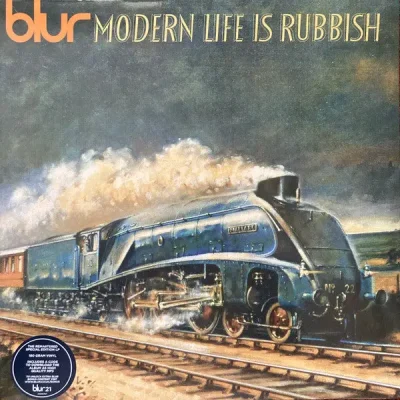
Modern Life Is Rubbish is the second studio album released in 1993. Following a poorly received US tour and a commercial slump after their debut album Leisure, frontman Damon Albarn reimagined the band’s identity. They traded American indie influences for a style popularised by classic British guitar-pop groups like The Kinks and The Small Faces. A dynamic record which ushered in a new era of British pop is that nearly every song is carefully constructed and boasts a killer melody. Tracklist: 1. “For Tomorrow” The track serves as the manifest declaration of Blur’s new creative direction. Driven by Graham Coxon’s clean, jangly guitar work, it details the tedious and melancholic routines of London life. A landmark moment, “quintessential Blur,” that perfectly captured the wistful optimism and urban boredom of its era. 2. “Advert” A frantic, punk-infused track that attacks the consumer capitalism of the early ’90s. Albarn barks lyrics over a chaotic arrangement while Coxon’s abrasive guitar riffs mimic the relentless noise of commercial marketing. An example of the band’s ability to fuse art-punk with sharp social satire. 3. “Colin Zeal” Noteworthy, in establishing Albarn’s Ray Davies-inspired character vignettes. The song is about a fastidious, overly organized, and fundamentally hollow suburban man and the driving bassline and quirky rhythm mimic the ticking clock of Colin’s rigidly structured, anxious life. 4. “Pressure On Julian” One of the noisier, more experimental tracks on the record, heavily drawing from neo-psychedelia and shoegaze remnants. The lyrics focus on childhood stress, expectation, and paranoia. 5. “Star Shaped” An upbeat, melodic pop track on the surface that hides a deeply cynical critique of the 9-to-5 corporate workforce and the futility of suburban adult life. It features a prominent, wonderfully eccentric oboe solo. Commended for its brilliant contrast between bright, cheerful music-hall pop and existential dread. 6. “Blue Jeans” A melancholic ballad built around routine and domestic boredom revered for its understated emotional weight; it showcases the softer, vulnerable side of the band’s songwriting. 7. “Chemical World” (Includes “Intermission”) Confronting the artificiality of processed food, modern hobbies, and city living. It transitions into “Intermission,” a frantic, fast-paced piano piece that spins out of control to mimic the breakneck speed of modern routine. Acclaimed for its tight rhythm section, beefy guitars, and incredible hook. 8. “Sunday Sunday” A brass-heavy, theatrical music-hall track that satirises traditional British Sunday activities—roast dinners, family walks, and reading the papers. Splitting critical reviews as too theatrical or an essential slice of Britpop. 9. “Oily Water” Driven by Dave Rowntree’s dense groove and Coxon’s experimental, shoegaze-esque guitar feedback. Cited by some as a noise-rock standout. 10. “Miss America” A haunting, acoustic-led ballad that features a sparse, creeping bassline and eerie background noises. Nominally a critique of Americanisation and the cult of personality, the track carries a deeply personal, obsessive undertone. 11. “Villa Rosie” An energetic song that paints a surreal portrait of a fictional gentlemen’s club or hideout operating just outside the boundaries of stressful modern life. 12. “Coping” A fast, driving track infused with prominent, new-wave synth pop melodies. The lyrics deal directly with stress and emotional overload. Reviews frequently highlight the excellent “la-la-la” vocal outro as a triumphant highlight. 13. “Turn It Up” An indie rock track that leans closer to the standard guitar-pop formula of the era. considered by some to be a filler track. 14. “Resigned” (Includes “Commercial Break”) The album’s official closer is a weary ballad featuring a distinctive melodica chorus. Celebrated as a beautifully bleak endnote that successfully wraps up the thematic fatigue of the entire album. Critics were divided some found the second half a bit of a slog to get through and the album an overlong, repetitive, one-note piece of Britpop that wears its welcome out Others thought the album successfully uses that fatigue to prove its point.
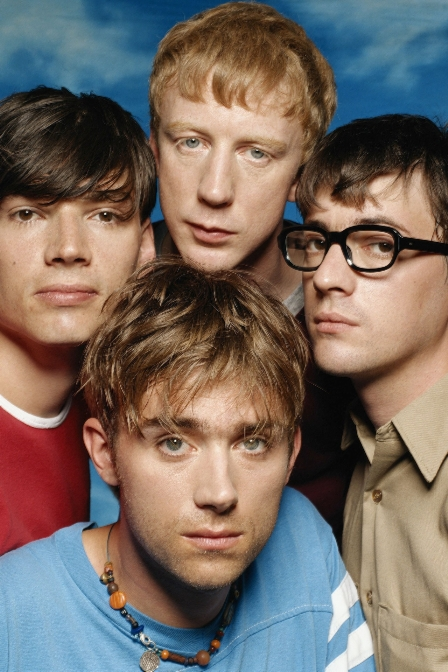
Blur were formed in December 1988 when bassist Alex James joined Damon Albarn’s band, Circus, and they changed the name to Seymour. Already in the band were drummer Dave Rowntree and guitarist Graham Coxon, Albarn’s childhood friend from Essex, who was studying at the University of London’s Goldsmiths College along with Albarn and James. Food Records sought to sign the group. The only concern was that they disliked the band’s name. The group decided on Blur. Food Records finally signed the rechristened band in March 1990. From March to July 1990, Blur toured Britain and testing out new songs. After the band’s third single, “Bang”, performed relatively disappointingly, Food Records were convinced Blur’s best course of action was to continue drawing influence from the Madchester genre. Blur attempted to expand their musical sound, but the recording of the group’s debut album was hindered by Albarn having to write his lyrics in the studio. Although the resulting album Leisure (1991) peaked at number seven on the UK Albums Chart, it received mixed reviews. During a two-month American tour, the band became increasingly unhappy, often venting frustrations on each other, leading to several physical confrontations. The band members were homesick. Blur were in danger of being dropped by Food. By that time, Blur had undergone an ideological and image shift intended to celebrate their British heritage. Blur completed their second album Modern Life Is Rubbish and was released in May 1993. The success of Parklife (1994) revived Blur’s commercial fortunes. Parklife entered the British charts at number one and stayed on the album charts for 90 weeks. Enthusiastically greeted by the music press—the NME called it “a Great Pop Record … bigger, bolder, narkier and funnier [than Modern Life is Rubbish]”—Parklife is regarded as one of Britpop’s defining records. Blur began working on their fourth album The Great Escape at the start of 1995. Albarn’s lyrics for the album consisted of several third-person narratives. The release of the album’s lead single “Country House” played a part in Blur’s public rivalry with Manchester band Oasis termed the “Battle of Britpop” which ultimately outsold Oasis’ “Roll With It”. However, opinion quickly changed and Blur found themselves largely out of favour with the media once again. Blur became perceived as an “inauthentic middle class pop band” in comparison to the “working class heroes” Oasis. Coxon, in particular, began to resent his bandmates: James for his playboy lifestyle, and Albarn for his control over Blur’s musical direction and public image.
After initial sessions in London, the band left to record the rest of the album in Iceland, away from the Britpop scene. The result was Blur, the band’s fifth studio album, released in February 1997. The music press generally applauded the effort. Although the album could not match the sales of its predecessors in Britain, internationally Blur was more successful. In the US, the album received strong reviews.After the success of Blur, the band embarked on a nine-month world tour. Released in March 1999, Blur’s sixth studio album 13 saw them drift still further away from their Britpop-era attitude and sound. Orbit’s production style allowed for more jamming, and incorporated a “variety of emotions, atmospheres, words and sounds” into the mix. 13 was creatively dominated by Coxon. The album received generally favourable reviews from the press. After 13 and the subsequent tours in 1999–2000, band members pursued other projects. Graham Coxon recorded a string of solo albums, while Damon Albarn dedicated his time to Gorillaz, the animated band he had created with Jamie Hewlett.
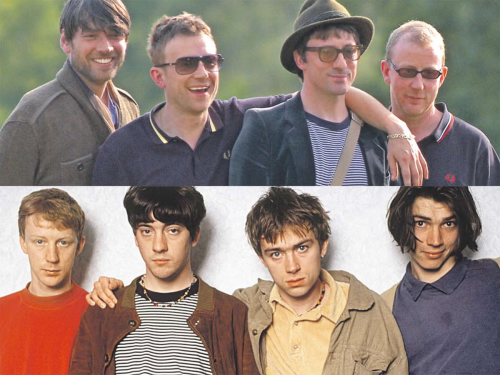
Alex James worked with Fat Les and co-wrote several songs with Sophie Ellis-Bextor and Marianne Faithfull. Think Tank, released in May 2003. Not long after the recording sessions began, Coxon left the group. The resultant album was filled with atmospheric, brooding electronic sounds, featuring simpler guitar lines played by Albarn, and largely relying on other instruments to replace Coxon. The guitarist’s absence also meant that Think Tank was almost entirely written by Albarn. Its sound was seen as a testament to Albarn’s increasing interest in African and Middle Eastern music, and to his complete control over the group’s creative direction. There were some aborted recordings made in 2005 but the band kept a low profile and did no studio or touring work as a three-piece. In December 2008, Blur announced they would reunite and all the shows were well received. Blur headlined the Glastonbury Festival on 28 June, where they played for the first time since their headline slot in 1998. Reviews of the Glastonbury performance were enthusiastic; The Guardian called them “the best Glastonbury headliners in an age”. In April 2015, Blur released their first studio album in twelve years, The Magic Whip and marked the return of Coxon and Stephen Street, Blur’s producer during the Britpop era. The Magic Whip received positive reviews. Blur went on hiatus following the 2015 Magic Whip tour. They briefly reunited in March 2019 for a surprise performance at an Albarn-organized Africa Express event in London. The Ballad of Darren was released in 2023. In December, Albarn announced that Blur would enter another hiatus. However, they went on to play 2024’s Coachella, which drew significant media attention for the lack of crowd interaction during “Girls & Boys” and Albarn’s visible frustration. During the band’s second week Coachella performance on 20 April, Albarn said it was probably the band’s final show.
Sound quality is important and the better online Streaming services will offer superior sound quality. As always, We do encourage you to purchase Favoured albums from good online or High street record stores. Blur – Parklife, Blur, 13 and Modern Life is Rubbish – Label : Food Records
Artists in upcoming issues: Franz Ferdinand, Guns n’ Roses, Led Zeppelin, The Replacements ……Keep Listening!!