
Join the Conversation!!!
We will Feature Up to 4 Albums from Artists representative of a range of the Many sub-genres. We Hope to encourage Listeners of all tastes and passions. So Get your Headphones on and Consider discussing the musical Offering and sharing your views with like-minded peers.
Classical Music – Issue #12

Classical music generally refers to the art music of the Western world.
Classical music is often characterized by formality and complexity in its musical form and harmonic organization. particularly with the use of polyphony, music in which several different tunes are played or sung at the same time. Since the ninth century, it has been primarily a written tradition, spawning a sophisticated notational system. Rooted in the patronage of churches and royal courts in Europe. early medieval music is chiefly religious, monophonic and vocal. The Baroque period (1580–1750) saw the relative standardization of common-practice tonality. Together with, the increasing importance of musical instruments, which grew into ensembles of considerable size. The common-practice period was a period in which the tonal system was regarded as the only basis for composition. The word tonality is sometimes used as a synonym for “key.”. In the shorter but pivotal Classical period (1730–1820), composers such as Mozart created widely admired examples of absolute music. including symphonies, string quartets and concertos. Absolute music (sometimes abstract music) is instrumental music not intended to represent or illustrate something else. The ensuing Romantic music (1800–1910) focused instead on programmatic music. the art song, symphonic poem and various piano genres were important vessels.
Program music is often written so that the notes themselves convey, to some degree, the meaning of what is portrayed. Thus the thunderstorm in Beethoven’s symphony includes loud timpani strokes to convey the thunder. The shrill piccolo music to depict the shrieking winds. During this time virtuosity was celebrated, immensity was encouraged, while philosophy and nationalism were embedded, all aspects that converged in the operas of Richard Wagner. By the 20th century, the prominence of popular music greatly increased. Many Classical composers actively avoided past techniques and genres in the lens of modernism. with some abandoning tonality in place of serialism. a serial pattern in music is merely one that repeats over and over within a composition. The term serial music is often used interchangeably with 12-tone music. However, the latter is more properly an example of the former. others found new inspiration in folk melodies or impressionist sentiments. Trends of the mid-20th century to the present day include New Simplicity, New Complexity, Minimalism, Spectral music. more recently Postmodern music and Postminimalism.
In This Issue We Feature Franz Liszt
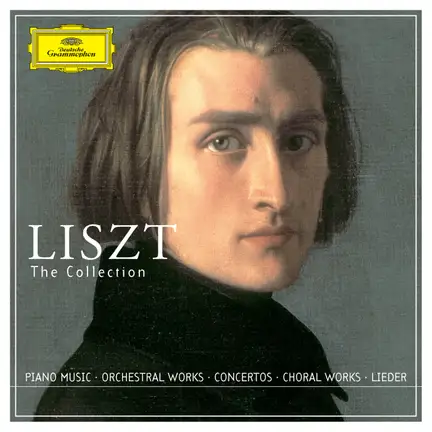
A Faust Symphony in Three Character Pictures (S.108). Liszt crafts a profound psychological exploration of the inner lives of its three central figures of Goethe’s drama across three distinct movements. 1. I. Faust – This massive opening movement captures the striving, conflicted, and deeply intellectual nature of Faust. Revolutionary in that the piece predates by decades the 20th-century serialism and Arnold Schoenberg works and twelve-tone (dodecaphonic) serial technique. 2. II. Gretchen – The second movement shifts into a peaceful, lyrical atmosphere dominated by delicate woodwinds like flutes and clarinets. Beautifully illustrating the moment Faust enters her life and their souls intertwine. 3. III. Mephistopheles – This movement consists almost entirely of diabolical, twisted, and mocking distortions of Faust’s themes from the first movement whilst Gretchen’s theme remains completely untouched by Mephistopheles’ cynical fugues, serving as a shield of purity. Liszt added an essential epilogue whereby a male chorus and a solo tenor arise to sing the sublime closing lines. Hungarian Rhapsody No. 2 in C-sharp minor (S.244/2) is the second and most famous piece in a set of 19 Hungarian Rhapsodies. Breathtaking technical difficulty, intense dramatic contrasts, and massive impact on popular culture. Mazeppa, S. 100, is the dramatic sixth symphonic poem. Romantic program music. A sudden, crashing chord representing the whip crack, swirling string lines imitate the blistering wind and the horse’s gallop, trombones and strings represent the rider’s defiance and six striking strokes of the timpani mark the horse’s collapse. A haunting, silence follows with the sighs of strings and bassoons as Mazepa lies near death. Trumpet fanfares break the gloom, signalling Mazepa’s awakening and rescue and then bombastic march as Mazepa rises to glory combining his original theme with military brass. Mephisto Waltz No. 1, S.514 Technically demanding virtuoso piano work. The piece opens with heavy, percussive empty fifths that mimic tuning of the fiddle. The main theme builds into a breathless, lightning-fast waltz filled with daring leaps, rapid octaves, and dense chord progressions that push a pianist’s technical boundaries. The climactic wind-down introduces trills and delicate upper-register patterns mimicking a nightingale, transitioning the piece into a deeply sensual, shimmering atmosphere.The Piano Sonata in B minor, S. 178, is widely considered one of the most important and revolutionary masterpieces of post-Beethoven Romantic piano literature. Dedicated to Robert Schumann, the work is famous for its massive emotional range, extreme technical difficulty, and unique structural design. The entire piece is spun out from five short melodic fragments introduced right at the beginning. Liszt radically alters their rhythm, harmony, and character throughout the piece—transforming a violent, menacing bass line into a lush, singing melody.Deux Légendes (Two Legends), S. 175, is a masterwork of solo piano literature that brilliantly combines program music, deep religious devotion, and groundbreaking pianistic naturalism. The roots of musical Impressionism. Dedicated to his two patron saints: St Francis of Assisi and St Francis of Paola. 1. Features imitation of birdsong using rapid trills, tremolos, and high-register filigree and a calm, declamatory middle section representing St. Francis’s voice. 2. Employs low, rumbling bass tremolos and sweeping scales to depict the churning, tumultuous ocean currents. An uplifting, majestic theme emerges over the waves, symbolizing the saint’s unshakeable faith.Les préludes (“Preludes” or “The Beginnings”), S. 97, is the third and most famous of Liszt’s thirteen symphonic poems Starts in dreamlike silence. The strings introduce the core 3-note motif, which morphs into a majestic orchestral statement asking life’s grand questions. The core motif transforms into a lyrical, sweeping melody initially voiced by the cellos. A raging storm intervenes depicted by heavy brass, chromatic scales, and agitated rhythms. There follows a gentle horn and woodwind theme to restore the peaceful, quiet of rural life. The pastoral themes are re-energised and transformed into an aggressive, triumphant march. The work closes with an exuberant reprise of the original introductory theme. Liebesträume (Dreams of L ove), S. 541, While many people use the singular term “Liebestraum” to refer specifically to the incredibly famous third piece, the collection actually contains three distinct nocturnes.
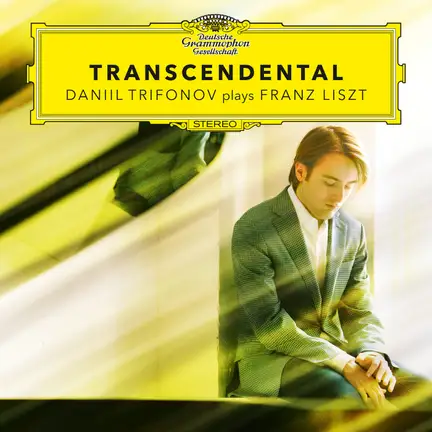
Franz Liszt composed his Trois études de concert (Three Concert Études, S.144) between 1845 and 1849, marking a shift from purely mechanical piano exercises to poetic, expressive concert pieces. • No. 1: “Il lamento” Lyrical, melancholic, and expansive. Features a four-note motif with shifting chromatic harmonies and a long, dramatic arc. No. 2: “La leggierezza” Light, sparkling, and graceful (leggero). Monothematic study built on rapid, rippling chromatic right-hand runs over a steady left-hand pulse. No. 3: “Un sospiro” (“A Sigh”) Romantic, flowing, and ethereal. Utilizes a floating melody with complex hand-crossing patterns whereby the hands alternate or leap gracefully over each other to pick out the melody notes with their thumbs while simultaneously continuing the accompaniment patterns. The Grandes Études de Paganini, S. 141, is a series of six highly challenging piano études. Each étude is a direct transcription or adaptation of Paganini’s music, predominantly pulling from his 24 Caprices for Solo Violin: No. 1 in G minor (“Tremolo”) – focuses on maintaining speed, accuracy, and dynamic control with rapid tremolos. No. 2 in E-flat major (“Andante capriccioso”) – features complex interlocking scales, sudden dynamic jumps, and intricate hand coordination. No. 3 in G-sharp minor (“La Campanella”) – Based on the final movement of Paganini’s Violin Concerto No. 2. By far the most famous of the set, it mimics a ringing bell through colossal hand leaps and rapid-fire repeated notes. No. 4 in E major (“Arpeggio”) – forces the hands to seamlessly trade off continuous arpeggiated movement. No. 5 in E major (“La Chasse”) – mimics the sounds of hunting horns and playful woodwinds, calling for delicate double notes and rapid glissando-like movements. No. 6 in A minor (“Theme and Variations”) – Based on the legendary Caprice No. 24. It presents an aggressive theme followed by 11 punishing variations covering a spectrum of technical trials
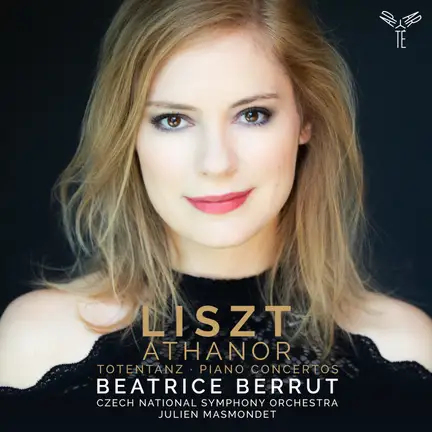
Franz Liszt’s Piano Concerto No. 1 in E-flat major and Piano Concerto No. 2 in A major are two of the most dazzling, structurally innovative, and fiercely virtuosic cornerstones of the Romantic orchestral repertoire. Piano Concerto No. 1 in E-flat major, S.124 – This piece is a tour de force. Its core motif—a powerful, descending orchestral statement answered by explosive piano octaves— returns in various emotional guises across all four movements. I. Allegro maestoso: Opens with a grand, fiery dialogue between orchestra and soloist. II. Quasi adagio: A stunning shift in atmosphere. A deeply expressive, nocturnal song that slowly builds into an intense dramatic climax. III. Allegretto vivace – Allegro animato: A sparkling, playful scherzo that famously integrates a triangle to trade witty lines with the piano. IV. Allegro marziale animato: A relentless, joyful march that pulls all the album’s previous motifs into a unified grand finale. Piano Concerto No. 2 in A major, S.125 – Feels more like a continuous tone poem. Instead of competing with the orchestra, the piano weaves in and out of the texture, serving as both a powerful lead and an accompanying voice.The entire piece develops from a single, gentle opening woodwind melody. . I. Adagio sostenuto assai: The work begins in a dreamlike, impressionistic haze. II. Allegro moderato: Driven by an intense, brooding energy, the cello solos and piano counter-melodies are given plenty of breathing room, underscoring the chamber-music-like intimacy Liszt hid inside this giant orchestral framework. III. Allegro deciso: A highly physical movement that features soaring martial rhythms. IV. Allegro animato: The piece rushes forward in a state of ecstatic transformation, beautifully tying together the architectural logic of Liszt’s late revisions. Totentanz (Paraphrase on “Dies Irae” for Piano and Orchestra, S. 126) is a virtuosic masterpiece for solo piano and orchestra celebrated for its dark, demonic intensity and highly advanced, modernistic orchestration. It opens with a thunderous presentation of the Dies irae theme played by the lower brass and woodwinds alongside clashing piano note repetitions and low timpani thuds. It then moves through a series of highly contrasting variations. The aggressive, cluster-like chords and relentless, rapid repeated notes heavily foreshadowed 20th-century movements. The string section is instructed to play col legno (striking the strings with the wooden stick of the bow), creating a clicking, brittle acoustic effect designed to mimic the shuddering and clanking of skeleton bones.
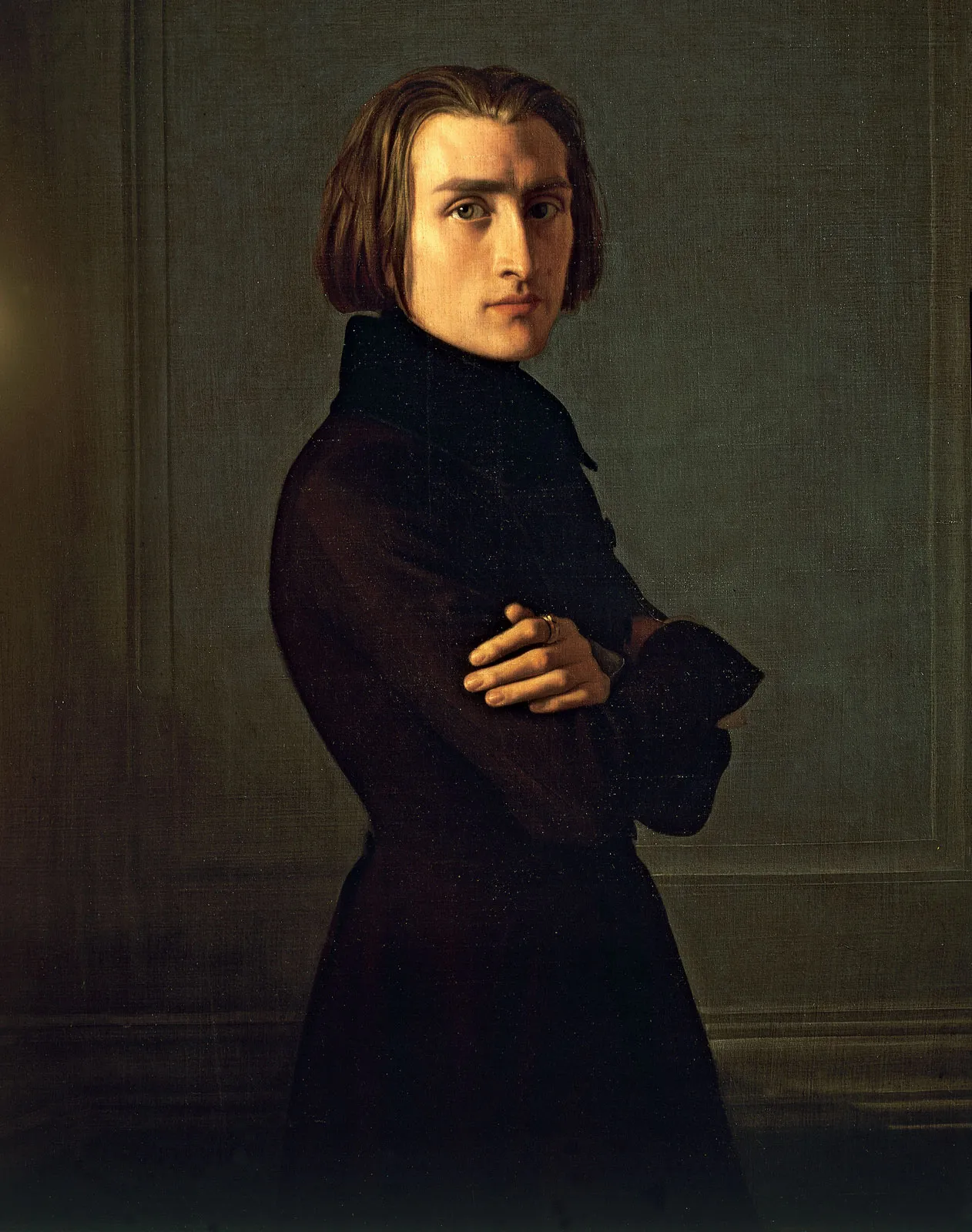
Franz Liszt was born on 22 October 1811, in the village of Doborján (now Raiding, Austria) in Hungary. Liszt’s father was a land steward in the service of Prince Nikolaus II Esterházy; a keen amateur musician, he played the piano, guitar and flute, and knew Joseph Haydn and Johann Nepomuk Hummel personally. A renowned child prodigy, Franz began to improvise at the piano from before the age of five, and his father diligently encouraged his progress. Franz also found exposure to music through attending Mass, as well as travelling Romani bands that toured the Hungarian countryside. His first public concert was in Sopron in 1820 at the age of nine; its success led to further appearances in Pressburg and for Prince Nikolaus’ court in Eisenstadt. The publicity led to a group of wealthy sponsors offering to finance Franz’s musical education in Vienna. Liszt received piano lessons from Carl Czerny, who was so impressed by the initial audition taught Liszt regularly, free of charge, for the next eighteen months, at which point he felt he had nothing more to teach. Liszt remained grateful to his former teacher, later dedicating to him the Transcendental Études on their 1830 republication. Liszt also received lessons in composition from Antonio Salieri. Like Czerny, Salieri was highly impressed by Liszt’s improvisation and sight-reading abilities. Liszt’s public debut in Vienna in December 1822 was a great success. To build on his son’s success, Adam Liszt decided to take the family to Paris, the centre of the artistic world. Having made significant sums from his concerts, Liszt and his family moved to Paris in 1823, with the hope of his attending the Conservatoire de Paris. However, the Conservatoire did not accept foreigners. Nevertheless, Liszt studied under Anton Reicha and Ferdinando Paer, and gave a series of highly successful concerts debuting on 8 March 1824. Accompanied by his father, Liszt toured France and England, where he played for King George IV. Adam Liszt died suddenly of typhoid fever in the summer of 1827, and for the next eight years Liszt continued to live in Paris with his mother. He gave up touring, and in order to earn money, he gave lessons on piano and composition.
Liszt fell very ill, and he underwent a long period of religious doubts and introspection. He stopped playing the piano and giving lessons, and developed an intense interest in religion. He composed practically nothing for several years after his father’s death.After attending a concert featuring Niccolò Paganini in April 1832, Liszt resolved to become as great a virtuoso on the piano as Paganini was on the violin. He dramatically increased his practice and in 1838 published six Études (later revised as Grandes études de Paganini), aiming to represent Paganini’s virtuosity on the keyboard. In 1833, Liszt began a relationship with the Countess Marie d’Agoult, who was married to a French cavalry officer but living independently. In order to escape scandal, they moved to Geneva in 1835 where their daughter Blandine was born. Liszt taught at the newly founded Geneva Conservatoire. For the next four years, Liszt and the countess lived together. In 1835 and 1836 they travelled around Switzerland, and from August 1837 until November 1839 they toured Italy. It was these travels that later inspired the composer to write his cycle of piano collections entitled Années de pèlerinage (Years of Pilgrimage). Their daughter, Cosima, was born in Como in December 1837, and their son Daniel on 9 May 1839 in Rome. Liszt would later spend holidays with Marie and their children on the island of Nonnenwerth on the Rhine in the summers of 1841 and 1843.In May 1844, the couple finally separated. After his separation from Marie, Liszt continued to tour Europe. His concerts in Berlin in the winter of 1841–1842 marked the start of a period of immense public enthusiasm and popularity for his performances. By retiring from the concert platform at the age of 35, while still at the height of his powers, Liszt succeeded in keeping the legend of his playing untarnished. During a tour of Ukraine in 1847, Liszt played in Kiev, where he met the Polish Princess Carolyne zu Sayn-Wittgenstein. In July 1848 Liszt settled in Weimar. At first, after arriving in Weimar, Princess Carolyne lived apart from Liszt, in order to avoid suspicions of impropriety.
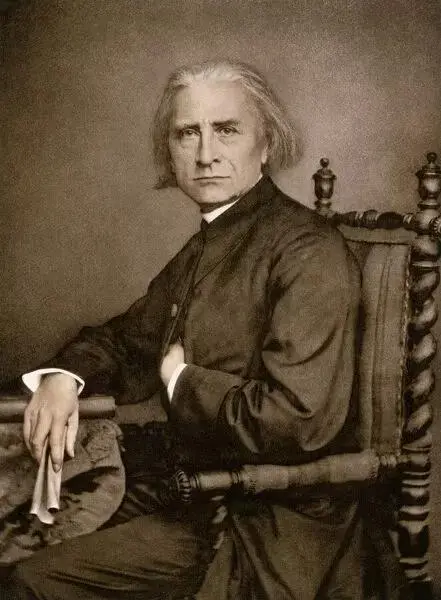
She wished eventually to marry Liszt, but since her husband, Russian military officer Prince Nicholas von Sayn-Wittgenstein, was still alive, she had to convince the Roman Catholic authorities that her marriage to him had been invalid. After a visit to Rome and an audience with Pope Pius IX in 1860, Carolyne finally secured an annulment. It was planned that she and Liszt would marry in Rome on Liszt’s 50th birthday in 1861 but the Vatican stopped the marriage. Carolyne subsequently gave up all attempts to marry Liszt, even after her husband’s death in 1864; she became a recluse.The 1860s were a period of great sadness in Liszt’s private life. He lost his 20-year-old son Daniel to an unknown illness. In 1862 his 26-year-old daughter Blandine also died, having contracted sepsis after surgery shortly after giving birth to a son she named in memory of Daniel. In letters to friends Liszt announced that he would retreat to a solitary living. He moved to the monastery Madonna del Rosario, just outside Rome, where in 1863 he took up quarters in a small, spartan apartment. On 31 July 1865 Liszt received the four minor orders of porter, lector, exorcist and acolyte. After this ordination he was often called “Abbé Liszt”. Grand Duke Charles Alexander had been attempting to arrange Liszt’s return to Weimar ever since he had left, and in January 1869 Liszt agreed to a residency to give masterclasses in piano playing. He was based in the Hofgärtnerei (court gardener’s house), where he taught for the next seventeen years. From 1872 until the end of his life, Liszt made regular journeys between Rome, Weimar and Budapest. Liszt travelled to Bayreuth in the summer of 1886. This was in order to support his daughter Cosima, who was running the festival but struggling to generate sufficient interest. Already frail, in his final week of life Liszt’s health deteriorated further, as he experienced a fever, cough and delirium. He died during the festival, near midnight on 31 July 1886, at the age of 74—officially as a result of pneumonia, which he had contracted prior to arriving in Bayreuth, although the true cause of death may have been a heart attack.
Sound quality is important and the better online Streaming services will offer superior sound quality. As always, We do encourage you to purchase Favoured albums from good online or High street record stores. Liszt The Collection ; Transcendental – Label : Deutsche Grammophon ; Liszt Athanor – Label : Aparté
Artists in upcoming issues: Richard Strauss, Ralph Vaughan Williams, Peter Maxwell Davies……Keep Listening!!