
Join the Conversation!!!
We will Feature Up to 4 Albums from Artists representative of a range of the Many sub-genres. We Hope to encourage Listeners of all tastes and passions. So Get your Headphones on and Consider discussing the musical Offering and sharing your views with like-minded peers.
Jazz Music – Issue #12
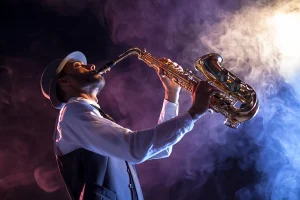
Jazz music is a rich, highly expressive genre characterized by swing rhythms, blue notes, complex chords, call-and-response vocals, and a heavy emphasis on improvisation.
Jazz is a music genre that originated in the African-American communities of New Orleans. Since the 1920s Jazz Age, it has been a major form of musical expression in traditional and popular music. It was developed partially from ragtime and blues. often characterized by syncopated rhythms and polyphonic ensemble playing. incorporating varying degrees of improvisation, often deliberate deviations of pitch, and the use of original timbres. As jazz spread around the world, it drew indigenous musical cultures, which gave rise to different styles. In the 1930s, arranged dance-oriented swing big bands was the prominent styles. Bebop emerged in the 1940s, representing a shift from danceable popular music. Now a more challenging music emerged which was played at faster tempos and used more chord-based improvisation.
Cool jazz developed near the end of the 1940s, introducing calmer, smoother sounds and long, linear melodic lines. Free jazz is a style of avant-garde jazz . This experimental style of jazz improvisation developed in the late 1950s and early 1960s.Jazz fusion appeared in the late 1960s and early 1970s. a Fusion combining jazz improvisation with rock music’s rhythms, electric instruments, and highly amplified stage sound. In the early 1980s, a commercial form of jazz fusion called smooth jazz became successful, garnering significant radio airplay. For almost all of its history it has employed both creative approaches in varying degrees and endless permutations. despite the all these diverse styles, jazz is distinguishable as something separate from all other forms of musical expression. Especially from classical music. The jazz performer is primarily or wholly a creative, improvising composer. On the other hand in classical music the performer typically expresses and interprets someone else’s composition.
In This Issue We Feature Joe Lovano
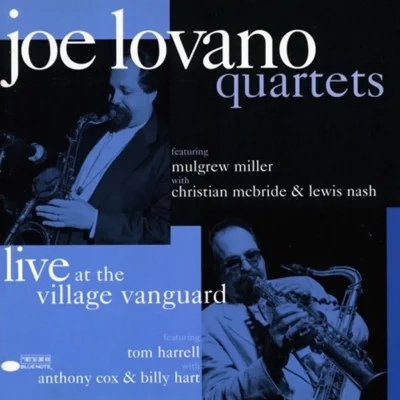
Quartets: Live at the Village Vanguard is a critically acclaimed double live album by American jazz saxophonist Joe Lovano, released on the Blue Note label. Originally released in 1995, the double CD documents two completely different, stellar lineups performing at New York’s legendary jazz venue ten months apart. The release was named Jazz Album of the Year by DownBeat Magazine. Critics praised the stark contrast between the two discs. Reviewers highlighted Disc One for its telepathic, adventurous interplay between Lovano and Harrell over Hart’s elastic drumming, and Disc Two for functioning as a masterclass in modern, straight-ahead blowing. The album shows two distinct, highly creative sides of Lovano’s musicianship across its two discs: Disc 1: The Piano-less Quartet Recorded live on Saturday, 12 March 1994. This set leans toward adventurous, free-wheeling collective exploration. Joe Lovano – Tenor, soprano, and C-melody saxophones, Tom Harrell – Trumpet and flugelhorn, Anthony Cox – Bass, Billy Hart – Drums. Disc 2: The Traditional Quartet. Recorded live primarily on Friday, 20 January and Sunday, 22 January 1995. This set delivers an inventive, deeply swinging approach to straight-ahead post-bop. Joe Lovano – Tenor saxophone, Mulgrew Miller – Piano, Christian McBride – Bass, Lewis Nash – Drums. Key tracks include: “Song and Dance”: A vibrant, Ornette Coleman-influenced closer featuring sparkling interplay between Lovano and Harrell over Billy Hart’s dynamic drumming. “Fort Worth”: Built on a hypnotic bass pedal tone and offbeat syncopation, showcasing an intense tenor solo that stretches the rhythm section. “Birds of Springtimes Gone By”: An exploratory, melodic piece highlighting the telepathic connection between Lovano and Harrell. “Lonnie’s Lament”: A stunning, luxurious and deeply swinging take on John Coltrane’s classic composition. “Reflections”: A masterful and tender interpretation of Thelonious Monk’s ballad. “Little Willie Leaps”: A high-energy, bop-infused showcase of Miles Davis’s tune driven by McBride and Nash. This is mellow, but real jazz, not smooth jazz. A friendly entryway into the jazz door, yet with plenty of depth for the serious jazz head. Fitting an esteemed place – accessible, yet innovative. Not a difficult recommendation to give if you’re after Lovano on top form.
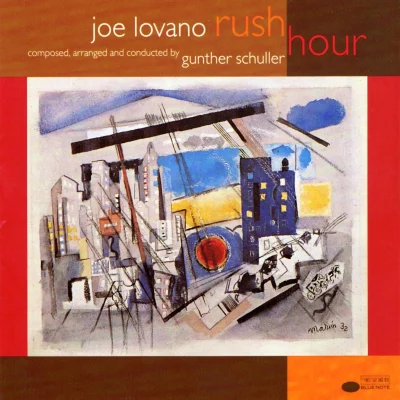
Rush Hour – Joe Lovano with Gunther Schuller. Another excellent release from Lovano during his 90s period with Blue Note, this time he’s playing alongside a full orchestra arranged and conducted by Gunther Schuller (a horn player himself whose other jazz clients included the Modern Jazz Quartet and Dizzy Gillespie). The pair – along with the many featured musicians on this album – tackle Duke Ellington, Thelonious Monk, Charles Mingus and Ornette Coleman, with an arrangement that still sounds modern to this day. Already having established himself as quite the force to be reckoned with by the mid-1990s, Joe Lovano’s Rush Hour still takes the spot as one of the most unique items in his catalogue. The project is widely celebrated for its presentation of “Third Stream” jazz, a style that seamlessly blends classical composition techniques with traditional jazz improvisation. The tracks span a highly diverse range of formats, varying from intimate solo frameworks to full, rich orchestral configurations. Standout Tracks “Rush Hour on 23rd Street” (Gunther Schuller): An ambitious, rhythmically driving piece that embodies the chaotic energy of the album’s title, featuring innovative large-ensemble writing. “Headin’ Out, Movin’ In” (Gunther Schuller): The longest track on the album (over 11 minutes), noted for its Stravinsky-like chamber music approach where instruments dart in and out, leaving ample space for Lovano’s expansive tenor solos. “Kathline Gray” (Ornette Coleman): A gorgeous, modern ballad featuring a scaled-down ensemble with plucked cello and drums that highlights Lovano’s lyrical phrasing. “Wildcat” (Joe Lovano): One of Lovano’s own compositions on the date, offering an energetic contrast with tight, agile ensemble interplay. “Prelude to a Kiss” (Duke Ellington): A classic Ellington standard given a lush, romantic, and traditional orchestral arrangement to anchor the record in jazz history.
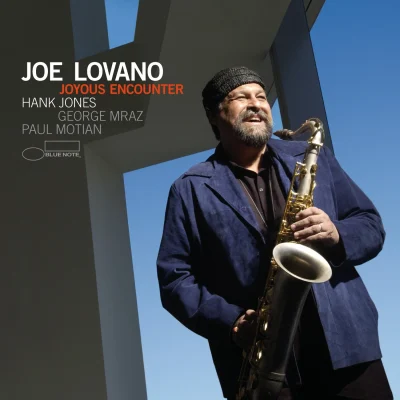
Joyous Encounter – Often hailed as a standout of Lovano’s 2000s output, Joyous Encounter features mostly standards – as well as a handful from Thad and Hank Jones – from funky numbers like the title track or Oliver Nelson’s ‘Six and Four’ to the smoky opener ‘Autumn In New York’. Lovano’s joined here by long-time collaborator Paul Motian on drums, with the quartet completed by pianist Hank Jones and bassist George Mraz – and there’s not much to complain about with that line-up. The new disc is part two of his celebrated 2004 quartet record, I’m All For You: Ballad Songbook. Standout Tracks: “Autumn in New York” – The smoky, elegant album opener. It begins with a beautiful solo piano introduction from Hank Jones before Lovano enters with a remarkably breathy, compressed, and intimate tenor saxophone tone. “Bird’s Eye View” – A brisk and swinging Lovano original. This track shifts the album into a fast-bop gear, giving Lovano room to swerve and feint fluidly over a highly dynamic rhythm section. “Crescent” – The explosive album closer. This interpretation of John Coltrane’s classic provides the session’s highest-energy peak. The quartet drives forcefully “with the pedal to the metal,” leaving critics to marvel at how cohesive the band remains even when emotions run high. “Pannonica” – A superb rendition of Thelonious Monk’s lightly elegiac piece. Lovano’s lifelong fascination with Monk shines here, hinting brilliantly at Monk’s unique compositional style without ever copying it directly. “Six and Four” – An Oliver Nelson composition that injects a deviously modulating, funky blues aesthetic into the session, offering a distinct and bouncy rhythmic contrast to the standards.
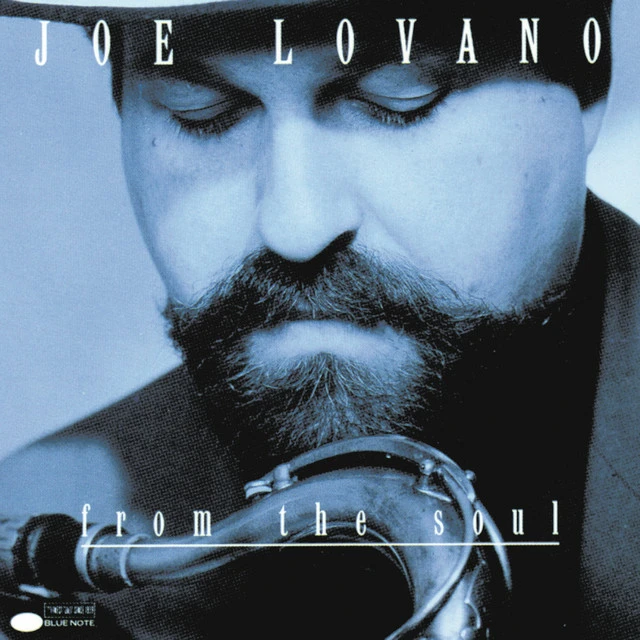
From the Soul – The first of Lovano’s Blue Note recordings also happens to be one of his most fondly-remembered. Joe Lovano’s 1992 album From the Soul is widely regarded as a post-bop jazz masterpiece, capturing a unique, highly inventive studio session that stands out as one of the most consistently creative recordings of his career. Lovano assembled an unlikely powerhouse studio band: Joe Lovano: Tenor and soprano saxophones, delivering dynamic solos, Michel Petrucciani: Piano, Dave Holland: Double bass, Ed Blackwell: Drums. From the Soul has them taking on a mixture of Lovano originals and standards (including one Coltrane tune), with swinging romantic tracks like ‘Body and Soul’ or ‘Portrait of Jenny’ to more explosive tunes like the opening ‘Evolution’. “Lines and Spaces”: A dynamic original highlighting Lovano’s intricate phrasing and tone. “Central Park West”: A gorgeous and deeply felt interpretation of John Coltrane’s composition. “Work”: A nimble and energetic take on Thelonious Monk’s tune. Critics describe the playing as hard-edged and explosive. Blackwell laying down his signature polyrhythmic “bombs,” to inject sudden, powerful accents (the “bombs”) that interacted directly with the soloist’s improvisations. These unexpected snare snaps and bass drum pops added intense syncopated tension, breaking up the predictable rhythm and driving the music forward with explosive energy, while Petrucciani and Holland weave intricate, abstract counterpoint behind Lovano’s soaring, dynamic tenor saxophone solos.
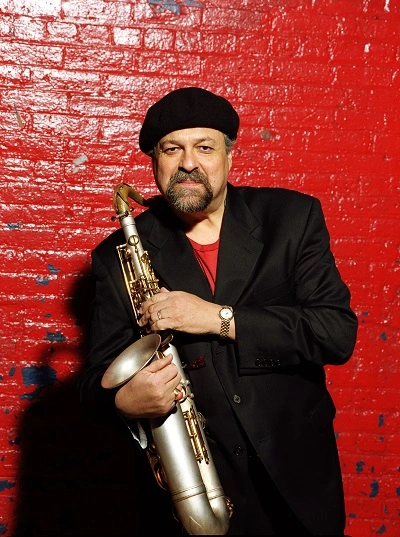
Lovano was born in Cleveland, Ohio, United States, to Sicilian-American parents; his father was the tenor saxophonist Tony (“Big T”) Lovano. Lovano’s father exposed him to jazz throughout his early life, teaching him the standards, as well as how to lead a gig, pace a set, and be versatile enough to find work. Lovano started on alto saxophone at age six and switched to tenor saxophone five years later. After graduating he went to Berklee College of Music, where he studied under Herb Pomeroy and Gary Burton. Lovano received an honorary doctorate of music from the college in 1998. After Berklee he worked with Jack McDuff and Lonnie Smith. He spent three years with the Woody Herman orchestra, then moved to New York City, where he played with the big band of Mel Lewis. He often plays lines that convey the rhythmic drive and punch of an entire horn section. In the mid-1980s Lovano began working in a quartet with John Scofield and in a trio with Bill Frisell and Paul Motian. In 1990 Lovano joined Blue Note Records. Many outstanding releases followed, including the highly diverse Rush Hour (tracks range from solo to big band), collaborations with saxophonists Joshua Redman (Tenor Legacy) and Greg Osby (Friendly Fire), 52nd Street Themes (with a nonet), and four albums featuring the classic pianist, Hank Jones. In the late 1990s, he formed the Saxophone Summit with Dave Liebman and Michael Brecker (later replaced by Ravi Coltrane). Streams of Expression (2006) was a tribute to both cool jazz and free jazz. Lovano and pianist Hank Jones released an album together in June 2007, entitled Kids. In 2008 Lovano formed the quintet Us Five with Esperanza Spalding on bass, pianist James Weidman, and two drummers, Francisco Mela and Otis Brown III. .
Folk Art was an album of compositions by Lovano that the band hoped to interpret in the spirit of the avant-garde jazz and loft jazz of the 1960s. Bird Songs (2011) was a tribute to Charlie Parker. West African guitarist Lionel Loueke appeared on the album Cross Culture (Blue Note, 2013). Lovano played reed and percussion instruments he had collected since the 1970s. Peter Slavov replaced Esperanza Spalding on six tracks, all of them written by Lovano except for “Star Crossed Lovers” by Billy Strayhorn. In recent years Lovano has released three records with trumpeter Dave Douglas in a co-led group called Sound Prints. He has also moved over to ECM records, largely adopting the mellow vibe and use of space characteristic of the label. He is a high-profile guest on the acclaimed Arctic Riff (2020) by Polish pianist Marcin Wasilewski. Lovano has taught at the Berklee College of Music. He taught Jeff Coffin after Coffin was given a NEA Jazz Studies Grant in 1991. He also taught Melissa Aldana, who graduated in 2009
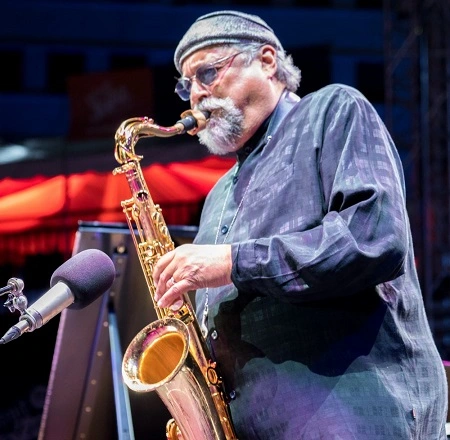
Sound quality is important and the better online Streaming services will offer superior sound quality. As always, We do encourage you to purchase Favoured albums from good online or High street record stores. Quartets ; Joyous Encounter ; Rush Hour ; From The Soul – Label : Blue Note
Artists in upcoming issues: Lester Young, Jaco Pastorius, Phronesis……Keep Listening!!