Rock Music – Issue #12

Rock music’s history is glorious. But who are it’s greatest rock bands and artists?
Over the years Many Disparate rock music sub-genres have emerged. hybrids like blues rock, folk rock, country rock, Progressive Rock, Psychedelic Rock, Glam Rock, Heavy Metal, Punk, Electronic, Etc. Have their Fans and Critics. From the ’90s alternative Rock achieves dominance. New genres, like grunge, Britpop, Hip Hop and indie Rock enter the mainstream. each with their own Unique Characteristics, Style, and Cultural Significance. Rock music has long been linked with political activism. Together with changes in social attitudes to race, sex, and drug use. Rock Music has assimilated cultural and social Movements – mods, rockers, Punks and the hippie movement for Example. the music both reflects society and influences society.The evolution of Rock Music has been inextricably linked to technological advancements. from the invention of the electric guitar to the rise of digital streaming platforms. Thus Music became ubiquitous, whether in public places or in the home. Music is a form of human conversation

Music Remains deeply personal, We hope to Highlight albums that evoke images, memories, and emotions to spark debate and Broaden your Horizons, step out of Your comfort zone and expand your music taste and experiences.
Join the Conversation!!!
We will Feature Up to 4 Albums from Artists representative of a range of the Many sub-genres. We Hope to encourage Listeners of all tastes and passions. So Get your Headphones on and Consider discussing the musical Offering and sharing your views with like-minded peers.
In Issue #12, We Feature David Bowie
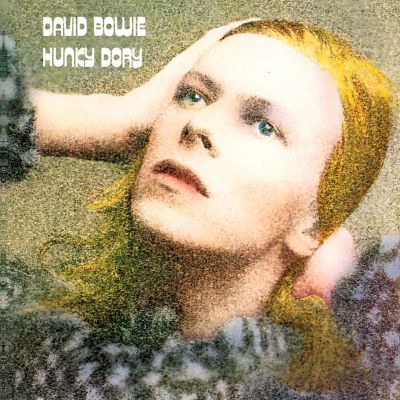
Hunky Dory (1971) is widely considered pivotal in his career, shifting from the heavy, guitar-driven hard rock of The Man Who Sold the World to a kaleidoscopic, piano-led art pop masterpiece. The album laid the thematic and musical groundwork for the legendary Ziggy Stardust era. Tracklist: 1. “Changes” One of the most iconic album openers in rock history. Driven by a stuttered vocal delivery, bright piano, and Bowie’s own saxophone work. It perfectly captures the restless, compulsive nature of artistic and personal reinvention. 2. “Oh! You Pretty Things” A masterclass in contrasting tones, blending with a whimsical, infectious pop chorus . Wakeman’s cabaret-style piano bounces brilliantly beneath lyrics inspired by Bowie’s thoughts on evolution and his family. 3. “Eight Line Poem” A minimalist, atmospheric breather. Bowie’s sparse piano and Mick Ronson’s weeping, country-tinged guitar web together a surreal, brief picture. Its casual intimacy is highly effective. 4. “Life on Mars?” The absolute crown jewel of the record. Built out of soaring string arrangements, a grand cinematic piano performance by Wakeman, and a flawless vocal take. 5. “Kooks” A delightfully sweet, acoustic folk-pop song dedicated to his newborn son. It is an affectionate, light-hearted look at unconventional parenting that brings a grounded warmth to an otherwise deeply cerebral album . 6.”Quicksand” A stunningly heavy, acoustic-driven epic with layered guitars and a profound sense of existential dread. 7. “Fill Your Heart”: A cover song that is an upbeat, theatrical track complete with bouncing strings and a vaudeville layout. 8. “Andy Warhol” This track opens with studio banter before breaking into a distinctive, flamenco-style acoustic guitar riff. It serves as a strange, hypnotic tribute to the pop-art pioneer. 9. “Song for Bob Dylan” overtly addresses Dylan’s shifting musical identity. Bowie mimics Dylan’s trademark nasal rasp. Ronson’s rock guitar begins to take a bigger stance here, creating a bridge to Bowie’s rockier future. 10. “Queen Bitch” A ferocious, heavy-riffing tribute to The Velvet Underground and Lou Reed. Driven by Mick Ronson’s crunchy, unfiltered guitar work, A blueprint for the Ziggy Stardust proto-punk sound that would ignite the glam rock movement months later. 11. “The Bewlay Brothers” The album ends on its most enigmatic and haunting note. A dense, unsettling folk track full of impenetrable imagery and distorted vocal effects.
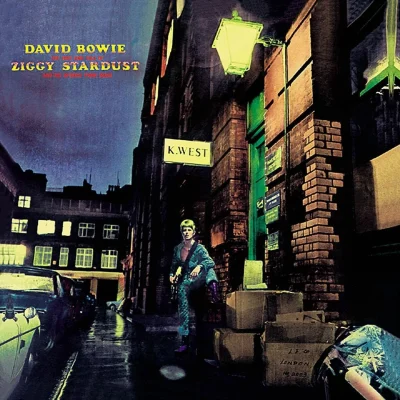
The Rise and Fall of Ziggy Stardust and the Spiders from Mars, is widely celebrated as one of the great concept albums in rock history. A loose rock opera, it follows an androgynous alien rock star sent to Earth as a messianic figure five years before an impending apocalypse. Backed by his legendary band, the Spiders from Mars, Bowie crafts a tight, flawless 11-track sequence spanning glam rock, art rock, and proto-punk. Tracklist: 1. “Five Years” The perfect apocalyptic opener. Driven by a fading, rhythmic drumbeat and slow-building piano chords, it sets a grim, mundane world facing sudden destruction. Bowie’s vocal performance is raw and desperate, building to a sobbing, dramatic crescendo . 2. “Soul Love” A catchy melody with a jaunty acoustic guitar rhythm and a charming saxophone solo. Beneath its uplifting vibe, it contains tragic, bittersweet vignettes about different types of love in a doomed world. 3. “Moonage Daydream” The true introduction to the Ziggy Stardust persona. This space-age anthem boasts massive drum fills, blistering electric guitars, and an iconic, punchy opening hook. It finishes with a chaotic, sprawling guitar solo by Mick Ronson that feels like floating through the cosmos. 4. “Starman” The commercial heart of the album. Acting as a literal message of hope broadcasted over the radio by Ziggy to Earth’s youth, the track features a soaring acoustic pre-chorus and an unforgettable, Morse-code-like string section that makes it one of pop-rock’s finest singles. 5. “It Ain’t Easy” A cover track, this serves as a gospel-tinged cabaret rock intermission but Bowie’s soaring vocal dynamics and the band’s gritty backing choruses keep the momentum high. 6. “Lady Stardust” A gorgeous, piano-led ballad that channels the theatrical side of glam rock. It pays homage to the androgynous, boundary-pushing nature of Ziggy’s live performances and the transfixed adoration of his audience. 7. “Star” An energetic, upbeat rocker showcasing the precise rhythm section of the Spiders from Mars. It captures Ziggy’s ambition and desire for fame, serving as the frantic bridge into his absolute peak celebrity status. 8. “Hang on to Yourself” Fast-paced, urgent, and loaded with driving guitar riffs, this track relies heavily on early proto-punk energies. 9. “Ziggy Stardust” Built around one of Mick Ronson’s most recognizable, sharp guitar riffs, the album’s title track tells the story from the perspective of his bandmates. It outlines fracturing of the group as Ziggy’s stardom swallows him whole. 10. “Suffragette City” A relentless, horn-infused, high-energy rock number stands as a masterclass in classic, rebellious glam rock swagger. 11. “Rock ‘n’ Roll Suicide” The cinematic and emotional finale. It follows a washed-up, fractured icon walking the streets in total isolation before breaking into an orchestral, life-affirming crescendo.
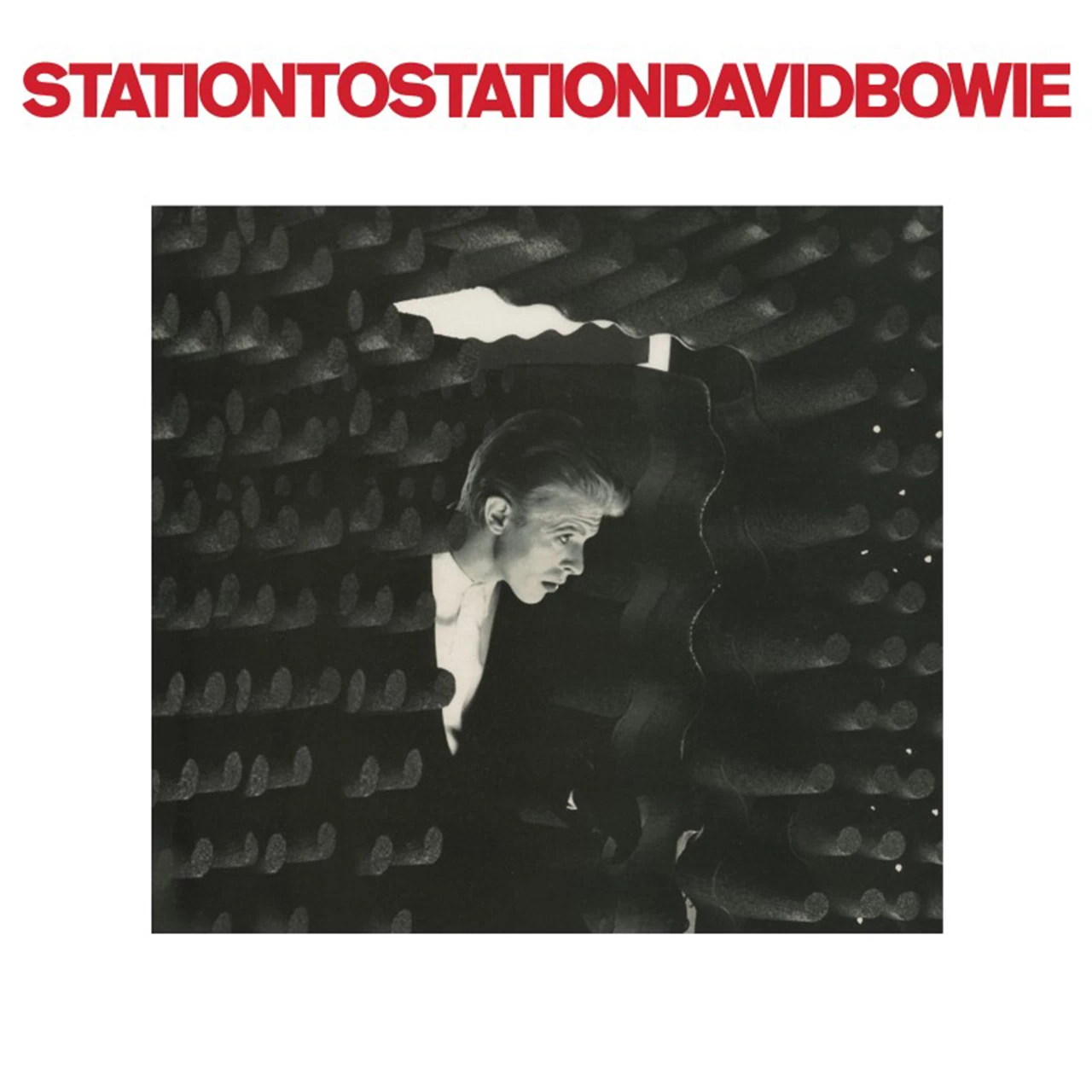
Released in 1976, Station to Station is widely regarded as one of his greatest artistic triumphs.The album introduces his chilling, emotionally detached alter-ego: The Thin White Duke. Despite containing only six tracks, the record feels vast, blending art-rock, krautrock, funk, and occult paranoia into a cohesive masterpiece. Tracklist: 1. “Station to Station” The epic title track opens with the famous, panning sound effect of a steam train building momentum, followed by Earl Slick’s abrasive, feedback-laden guitar work. Dealing with cocaine-fuelled paranoia and occult imagery, the song shifts dynamically halfway through from a slow, ominous march into a driving, ecstatic proto-punk and disco-funk climax. 2. “Golden Years” A masterful refinement of soul and funk styles. Driven by a tight, infectious groove from rhythm guitarist Carlos Alomar, it features rich doo-wop backing vocals and a rare sense of musical warmth. Functions perfectly as a pop hit while maintaining the album’s underlying glaze of theatrical camp. 3. “Word on a Wing” A deeply emotional and ambiguous spiritual ballad, backed by Roy Bittan’s elegant piano work and shimmering synthesizers, Bowie delivers one of his most passionate vocal performances on the record. 4. “TVC 15” The track leans heavily into a syncopated, ragtime-infused rhythm with driving saxophone accents, and complex vocal arrangements. 5. “Stay” is anchored by a ferocious, interlocking guitar duel and riffs that border on hard rock. 6. “Wild Is the Wind” This noir-esque ballad provides a devastating emotional release. A vocal performance—soaring, desperate, and utterly grand—bringing a brilliant, earth-shaking conclusion to a flawless six-track run.
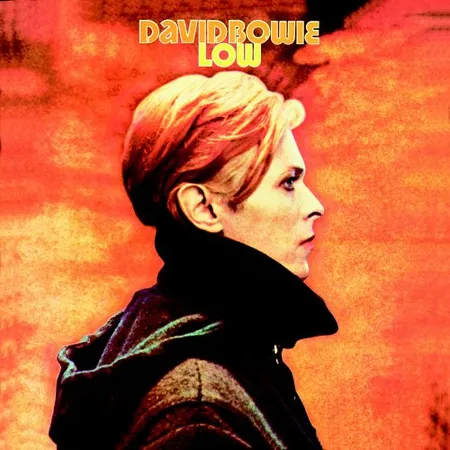
Low is widely celebrated as one of the most innovative and influential records in rock history. The album is famously split into two distinct halves: Side One features fragmented, paranoid, and avant-garde pop songs, while Side Two consists of sweeping, cinematic ambient instrumentals. Tracklist: 1. Speed of Life – Bowie’s synthesizer work front and centre, immediately signalling that he has abandoned traditional pop structures. 2. Breaking Glass – A jagged, brief art-funk groove lasting under two minutes. It matches disjointed, paranoid lyrics with aggressive guitar lines. 3. What in the World – Featuring backing vocals from Iggy Pop and a frantic blend of bleeping, video-game-like synths and a chugging rock rhythm. 4. Sound and Vision – Upbeat, infectious, and bouncy funk-pop track; lyrically, however, it is deeply downbeat. 5. Always Crashing in the Same Car – A haunting, mid-tempo track that serves as a literal and metaphorical retelling of a real-life incident. It captures the exhausting feeling of repeating the same self-destructive mistakes. 6. Be My Wife – Despite its traditional rock framework, Bowie’s vocals sound profoundly lonely, desperate, and detached, making a plea for domestic stability that feels completely out of reach. 7. A New Career in a New Town – A bittersweet, triumphant instrumental dominated by a soaring harmonica melody played by Bowie, the track captures the anxiety and hope of leaving the trauma of Los Angeles behind for a fresh start in Europe. 8. Warszawa – The emotional centrepiece of the album. A multi-layered piece using sweeping synthesizers to build a feeling of profound, desolate sadness. 9. Art Decade – A slower, more minimalist instrumental that captures the fading grandeur and cultural isolation of West Berlin. 10. Weeping Wall – An almost entirely solo track by Bowie, who plays all instruments. The repetitive, shifting percussive patterns are designed to directly evoke the physical presence and psychological weight of the Berlin Wall. 11. Subterraneans – This jazz-tinged ambient closer features a mournful saxophone performance from Bowie. It stands as a final, deeply moving tribute to the people trapped behind the Iron Curtain in East Berlin.un.
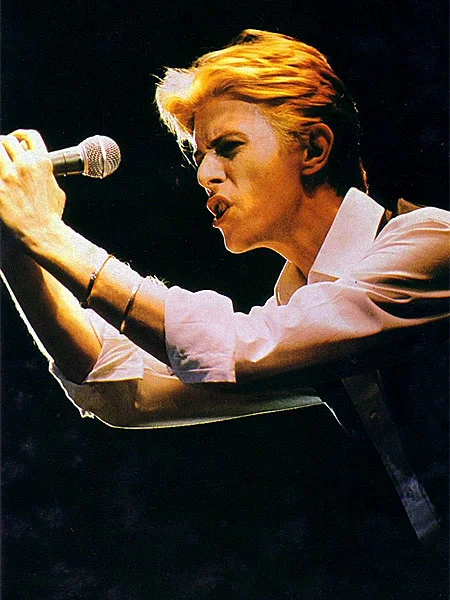
David Robert Jones was born on 8 January 1947 in Brixton, London. His mother, Margaret Mary “Peggy” (née Burns), was a waitress at a cinema in Royal Tunbridge Wells. His father, Haywood Stenton “John” Jones, was a promotions officer for the children’s charity Barnardo’s.Bowie later studied art, music and design. After Burns introduced him to modern jazz, his enthusiasm for players like Charles Mingus and John Coltrane led his mother to give him a Grafton saxophone in 1961. He was soon receiving lessons from baritone saxophonist Ronnie Ross.He received a serious injury at school in 1962 when his friend George Underwood punched him in the left eye during a fight over a girl. After a series of operations during a four-month hospitalisation, the damage could not be fully repaired and Bowie was left with a permanently dilated pupil; his eye later became one of Bowie’s most recognisable features. Despite their altercation, Bowie remained on good terms with Underwood, who went on to create the artwork for Bowie’s early albums. Early bands he played with provided him with an introduction into the showy worlds of pop and mod. Dissatisfied with Davy (and Davie) Jones, which in the mid-1960s invited confusion with Davy Jones of the Monkees, he took on the stage name David Bowie after the 19th-century American pioneer James Bowie and the knife he had popularised. his album debut, David Bowie, an amalgam of pop, psychedelia and music hall, failed to chart. It was his last release for two years. In September, Bowie recorded “Let Me Sleep Beside You” and “Karma Man”, both rejected by Deram and left unreleased until 1970. however, The tracks marked the beginning of Bowie’s working relationship with producer Tony Visconti which, with large gaps, lasted for the rest of Bowie’s career.
it was not until 1969 that his leap onto the charts would begin, with the legendary single Space Oddity. Bowie met Angela Barnett in April 1969. They married within a year. Her impact on him was immediate—he wrote his 1970 single “The Prettiest Star” for her—and her involvement in his career was far-reaching. The Man Who Sold The World was the first David Bowie album recorded as an entity unto itself and marks ground zero of the first definitive creative stretch to come. Mick Ronson’s guitars are often referred to as the birth point of heavy metal, and certainly the auspicious beginnings of glam rock can be traced here. Mercury financed a coast-to-coast publicity tour across the US in which Bowie, between January and February 1971, was interviewed by the media. Exploiting his androgynous appearance, he wore a blue dress during interviews, Bowie’s observation of two seminal American proto-punk artists led him to develop a concept that eventually found form in the Ziggy Stardust character. 1972 would be the year that Bowie ascended to international superstardom. The Rise and Fall of Ziggy Stardust and The Spiders from Mars—a record without which any Greatest Albums of All Time list is simply incomplete. In the summer of 1974, he undertook his most ambitious US tour yet, with an enormous set and choreographed tableaus. After a break in Philadelphia, where Bowie recorded new material, the tour resumed with a new emphasis on soul. The Philadelphia recording sessions produced the album Young Americans (1975).
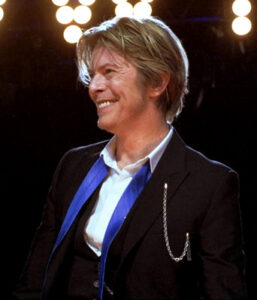
Bowie’s interest in the music he’d heard in America, soon became more than a homage. In 1975 not long after Young Americans’ release, Bowie moved to Los Angeles. The album Station to Station (1976), produced by Bowie and Harry Maslin developed the funk and soul of Young Americans with synthesiser-heavy arrangements which were influenced by electronic and German krautrock. Bowie’s cocaine addiction during this period was at its peak; he often did not sleep for three to four days at a time during Station to Station’s recording sessions and later said he remembered “only flashes” of its making.in May 1976. Never one to stay in one place too long, shortly after his tour finished, David relocated to the Schonenberg section of Berlin. The subsequent albums, ‘Low’, ‘Heroes’, and ‘Lodger’ provided an atmospheric counterpoint to the emerging punk scene in London. The album, “Low” (1977), was recorded in France and took influence from krautrock and experimental music, featuring short song-fragments and ambient instrumentals. Echoing Low’s minimalist, instrumental approach, “Heroes” (1977) incorporated pop and rock to a greater extent, seeing Bowie joined by guitarist Robert Fripp. It was the only album of the trilogy recorded entirely in Berlin. Incorporating ambient sounds from a variety of sources including white noise generators, synthesisers and koto. The final piece in what Bowie called his “triptych”, Lodger (1979) eschewed the minimalist, ambient nature of its two predecessors, making a partial return to the drum- and guitar-based rock and pop of his pre-Berlin era. The result was a complex mixture of new wave and world music, in places incorporating Hijaz Non-Western scales. The three albums were later adapted into classical music symphonies by American composer Philip Glass for his first, fourth and twelfth symphonies.Scary Monsters (and Super Creeps) (1980) produced the number one single “Ashes to Ashes”. While Scary Monsters used principles established by the Berlin albums, it was considered by critics to be far more direct musically and lyrically. The album’s hard rock edge included conspicuous guitar contributions from Fripp and Pete Townshend. Bowie achieved “the perfect balance” of creativity and mainstream success.. Let’s Dance shattered the silence in April 1983. Bowie’s first release for EMI, Co-produced by Chic’s Nile Rodgers, Let’s Dance would in short order become the most commercially successful album of his career. Followed by Tonight (1984), another dance-oriented album, which found Bowie collaborating with Pop and Tina Turner. His final solo album of the decade was 1987’s Never Let Me Down, where he ditched the light sound of his previous two albums, instead combining pop rock with a harder rock sound. Wanting to completely rejuvenate himself following the critical failures of Tonight and Never Let Me Down, Bowie turned off the solo star spotlight with the formation of his new band, Tin Machine. Later, Like his audience and his critics, Bowie himself became increasingly disaffected with his role as just one member of a band. 1993 brought the long-awaited return of David Bowie, solo artist, with Black Tie White Noise reassuring fans that Bowie’s creative curiosity was insatiable as ever. Reuniting Bowie with Eno, the quasi-industrial Outside (1995) was originally conceived as the first volume in a non-linear narrative of art and murder. Featuring characters from a short story written by Bowie, the album achieved UK and US chart success and yielded three top 40 UK singles. Incorporating experiments in jungle and drum ‘n’ bass, Earthling (1997) was a critical and commercial success in the UK and the US. Reality (2003) was the 24th studio album by Bowie, It features a straightforward, energetic rock sound designed to be easily replicated in a live setting. An accomplished actor Bowie starred in The Man Who Fell To Earth in 1976 and Labyrinth in 1986. Bowie starred on Broadway in The Elephant Man. Over the next decade, Bowie alternated between acting and music. In 2004 he suffered a heart attack while on stage in Germany but made a full recovery. In the years following his recuperation from the heart attack, Bowie reduced his musical output, making only one-off appearances on stage and in the studio. In 2006 he was a recipient of the Grammy Lifetime Award. For several years he kept a low profile until the release of his 2013 album The Next Day. In 2016 he released his final album Blackstar which New York Times critic Jon Pareles found to be ‘strange, daring and ultimately rewarding…. with a mood darkened by bitter awareness of mortality’. On January 10, 2016, David Bowie died peacefully surrounded by his family after a courageous 18-month battle with cancer. His body of work, partly comprising 26 albums, multi-generational influence and legacy of fearless innovation and endless reinvention will live on forever.
Sound quality is important and the better online Streaming services will offer superior sound quality. As always, We do encourage you to purchase Favoured albums from good online or High street record stores. David Bowie – Record Label : RCA
Artists in upcoming issues: The Stranglers, The Ramones, Blur, Elvis Costello,……Keep Listening!!