Rock Music – Issue #3
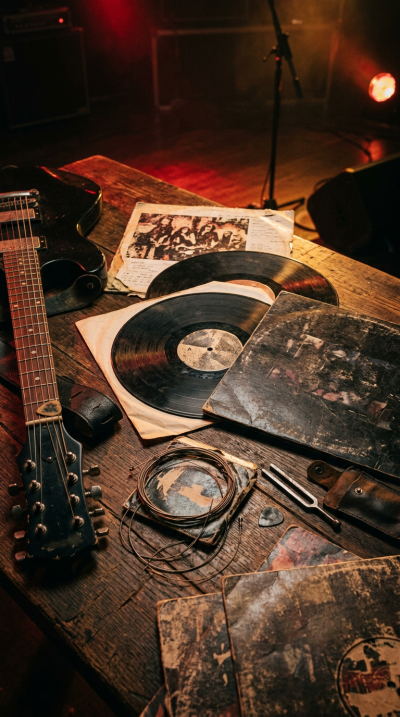
Rock music’s history is glorious. But who are it’s greatest rock bands and artists?
Over the years Many Disparate rock music sub-genres have emerged. hybrids like blues rock, folk rock, country rock, Progressive Rock, Psychedelic Rock, Glam Rock, Heavy Metal, Punk, Electronic, Etc. Have their Fans and Critics. From the ’90s alternative Rock achieves dominance. New genres, like grunge, Britpop, Hip Hop and indie Rock enter the mainstream. each with their own Unique Characteristics, Style, and Cultural Significance. Rock music has long been linked with political activism. Together with changes in social attitudes to race, sex, and drug use. Rock Music has assimilated cultural and social Movements – mods, rockers, Punks and the hippie movement for Example. the music both reflects society and influences society.The evolution of Rock Music has been inextricably linked to technological advancements. from the invention of the electric guitar to the rise of digital streaming platforms. Thus Music became ubiquitous, whether in public places or in the home. Music is a form of human conversation

Music Remains deeply personal, We hope to Highlight albums that evoke images, memories, and emotions to spark debate and Broaden your Horizons, step out of Your comfort zone and expand your music taste and experiences.
Join the Conversation!!!
We will Feature Up to 3 Albums from Artists representative of a range of the Many sub-genres. We Hope to encourage Listeners of all tastes and passions. So Get your Headphones on and Consider discussing the musical Offering and sharing your views with like-minded peers.
In Issue #3, We Feature Patti Smith
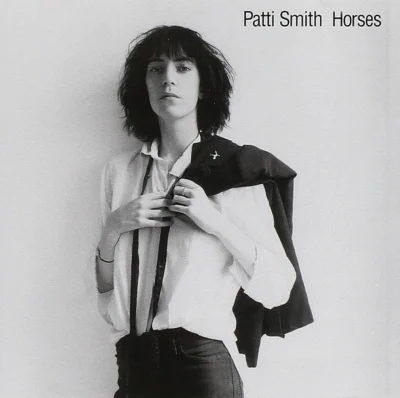
Horses is the seminal debut studio album, released in November 1975, renowned for its fusion of poetry and raw, three-chord rock and roll that helped launch the punk rock movement. The album was produced by John Cale of The Velvet Underground and is widely considered a masterpiece and a highly influential work. Cited as the first punk rock album, as well as one of the key recordings of the punk movement. Tracklist: 1.”Gloria” (Part One: “In Excelsis Deo” / Part Two: “Gloria”) – Opens with the iconic line, “Jesus died for somebody’s sins but not mine”. A radical, transgressive reimagining of the Van Morrison classic. 2. “Redondo Beach” – A stark contrast blending a breezy, upbeat reggae rhythm with a dark narrative about suicide and mourning. 3. “Birdland” – A sprawling, improvisational piece inspired by Peter Reich’s memoirs about his father, Wilhelm Reich. 4. “Free Money” – A driving, straight-ahead rock anthem fuelled by frantic piano work and themes of desperate financial escapism. 5. “Kimberly” – Dedicated to Smith’s younger sister, blending mystical, atmospheric imagery with a charging garage-rock pulse. 6.”Break It Up” – Co-written with Tom Verlaine of Television (who provides the soaring guitar work), channelling a primal, cathartic cry for liberation. 7.”Land” (Part One: “Horses” / Part Two: “Land of a Thousand Dances” / Part Three: “La Mer(de)” – The album’s 3-movement centrepiece. Follows a protagonist named “Johnny” through a violent assault that dissolves into an ecstatic hallucination of dance oldies. 8. “Elegie” A solemn, poetic farewell to rock icons like Jimi Hendrix, recorded at Hendrix’s own Electric Lady Studios.
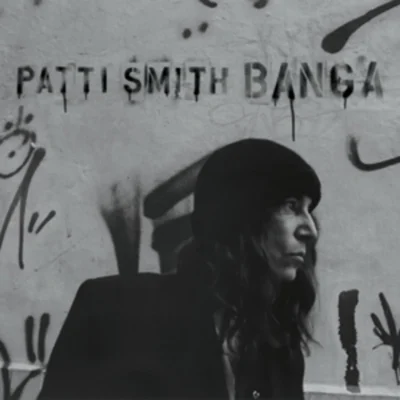
Banga is the eleventh studio album released in 2012. The album is a captivating blend of rock, punk, and poetry, reflecting Smith’s observations on a world “rife with chaos and beauty”. Reviewers highlighted Smith’s storytelling and the album’s range of human experience. Banga was released to widespread critical acclaim. Critics noted the album successfully balances powerful rock anthems and introspective ballads, showcasing Smith’s iconic vocals and lyrical depth. 1.Amerigo – Pensive mid-tempo ballad utilizing strings and spoken-word; details Amerigo Vespucci. 2. April Fool – The album’s perkier, highly accessible lead single featuring Tom Verlaine. 3.Fuji-San – A dramatic prayer-song reacting to the 2011 Japanese earthquake and tsunami. 4. This Is the Girl – A breezy, 1950s girl-group styled elegy for the late Amy Winehouse. 5. Banga – The blistering, punk-edged title track named after Pontius Pilate’s dog. 6. Maria – A lush, emotionally heavy ballad written for the actress Maria Schneider. 7. Mosaic – An acoustic Americana track driven by a prominent mandocello riff. 8. Tarkovsky (The Second Stop Is Jupiter) – A forceful, psychedelic jazz improvisation on a theme by Sun Ra. 9. Nine – A glowering, country-tinged rock track written as a birthday gift for Johnny Depp. 10. Seneca A slower, eccentric piece continuing the album’s literary tone. 11. Constantine’s Dream – A 10-minute keynote raga and spoken-word improvisation on art and faith. 12. After the Gold Rush – A tender, naive piano-led cover of the classic Neil Young track.
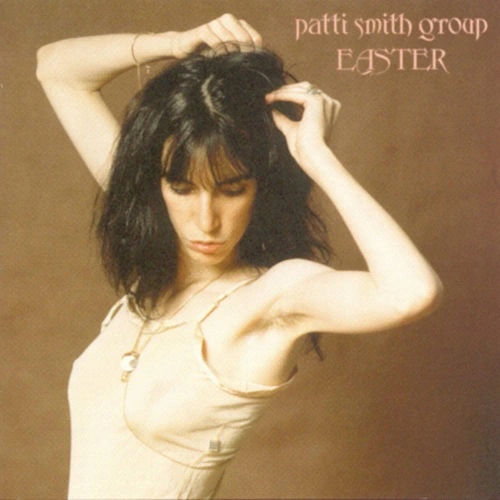
Easter released in March 1978. It is considered the group’s commercial breakthrough, featuring a mix of punk, rock, folk, and spoken word is. Easter is rife with sacred imagery and religious themes. Most of the songs are ceremonial, celebratory and rebellious. The album was highly acclaimed upon its release due to its commercial sound “Because the Night”- Co-written with Bruce Springsteen, this transcendent radio-friendly anthem became Smith’s ultimate commercial crossover and top-ten hit. It pairs soaring romantic urgency with tight, driving mainstream rock. Other key tracks include: “Rock N Roll Nigger”- A ferocious, politically volatile garage-punk track meant to subvert social expectations and reclaim outsider status. It remains the record’s most controversial and abrasive piece. “25th Floor”- A gritty, urban-anxiety rocker featuring a mean guitar riff that positions the Patti Smith Group as the rightful heirs to the Velvet Underground. “Space Monkey”- Blends a haunting Doors-like organ intro with a chaotic, theatrical New York Dolls-esque finale, balancing poetic narrative with rough-edged instrumentation. “Privilege (Set Me Free)” – A driving, faith-exploring cover (based on Psalm 23) capturing Smith’s deeply spiritual yet iconoclastic worldview. “We Three”- A tender, slow-burning torch ballad anchored by grand piano that showcases Smith’s softer, cinematic storytelling. “Easter”- The evocative title track co-written with drummer Jay Dee Daugherty. It invokes Arthur Rimbaud’s poetic mysticism with a soaring, emotional climax.
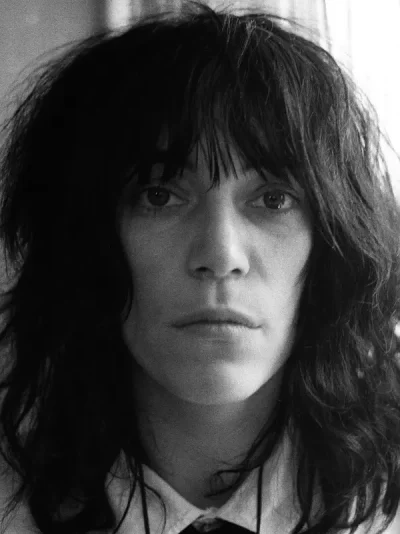
Smith was born on December 30, 1946, in Chicago, to Beverly Smith, a jazz singer turned waitress, and Grant Smith, a Honeywell machinist. Patti is the eldest of four children. Her family is of partially Irish ancestry (though in her 2025 memoir Bread of Angels, Smith revealed that she learned at age 70 that Grant Smith was in fact not her biological father and her patrilineal lineage is Ashkenazi Jewish). When Smith was four, the family moved from Chicago to the Germantown section of Philadelphia, finally settling in Deptford Township, New Jersey. In 1964, Smith graduated from Deptford Township High School, and began working in a factory. She briefly attended Glassboro State College, now Rowan University, in Glassboro, New Jersey. In 1969, Smith went to Paris with her sister, and started busking doing performance art. When Smith returned to Manhattan, she lived at the Hotel Chelsea with Robert Mapplethorpe, the photographer. In 1969, Smith also performed in the one-act play Cowboy Mouth, which she co-wrote with Sam Shepard. She wrote several poems about Shepard and her relationship with him. In 1971, she was romantically involved with Allen Lanier, Blue Öyster Cult’s keyboardist. She contributed lyrics to several Blue Öyster Cult songs. Smith was also a rock music journalist, writing periodically for Rolling Stone and Creem. In 1973, Smith teamed up again with musician and rock archivist Lenny Kaye, and later added Richard Sohl on piano. The trio developed into a full band The Patti Smith Group. In 1975, the Patti Smith Group was spotted by Clive Davis, who signed them to Arista Records. Later that year,
The Patti Smith Group recorded their debut album, Horses, produced by John Cale amid some tension. The album fused punk rock and spoken poetry As punk rock grew in popularity, The rawer sound of the group’s second album, Radio Ethiopia, reflected this. Considerably less accessible than Horses, Radio Ethiopia initially received poor reviews. However, several songs have stood the test of time. The Patti Smith Group produced two further albums. Easter, released in 1978, was their most commercially successful record and Wave (1979) which was less successful. Through most of the 1980s, Patti lived St. Clair Shores, Michigan, and was semi-retired from music. She ultimately moved back with her family in to New York City. Michael Stipe of R.E.M. and Allen Ginsberg, whom she had known since her early years in New York City, urged her return to live music and touring. She toured briefly with Bob Dylan in December 1995, which is chronicled in a book of photographs by Stipe. In 2002, Smith released Land (1975–2002), a two-CD compilation that includes a cover of Prince’s “When Doves Cry”. Smith’s 11th studio album, Banga, was released in June 2012. American Songwriter wrote that, “These songs aren’t as loud or frantic as those of her late 70s heyday, but they resonate just as boldly as she moans, chants, speaks and spits out lyrics with the grace and determination of Muhammad Ali in his prime. It’s not an easy listen—the vast majority of her music never has been—but if you’re a fan and/or prepared for the challenge, this is as potent, heady and uncompromising as she has ever gotten, and with Smith’s storied history as a musical maverick, that’s saying plenty”
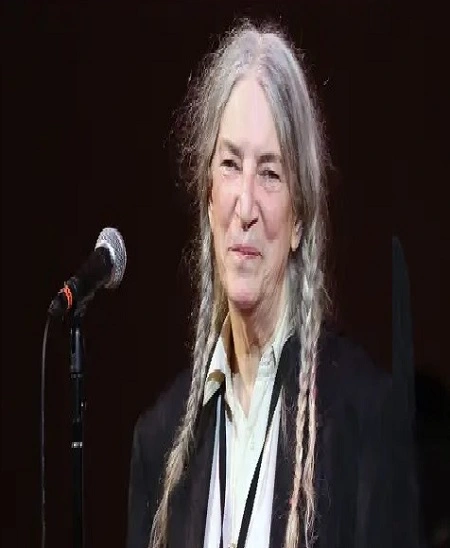
Sound quality is important and the better online Streaming services will offer superior sound quality. As always, We do encourage you to purchase Favoured albums from good online or High street record stores. Patti Smith and Patti Smith Group albums have been released by Arista and Columbia Records
Artists in upcoming issues: Bruce Springsteen, Radiohead, Swans, Elvis Costello……Keep Listening!!