In This Issue #11 We Highlight 4 Artists And Some Significant Works
Join the Conversation!!!

We will Feature Up to 4 Albums from Artists representative of a range of the many sub-genres. We Hope to encourage Listeners of all tastes and passions. So Get your Headphones on and consider discussing the musical offering and sharing your views with like-minded peers.
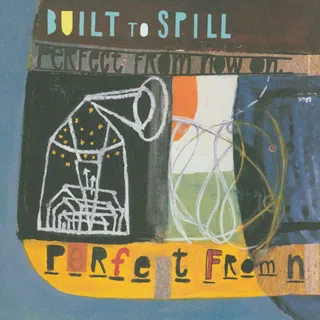
Perfect from Now On was released to widespread critical acclaim. Martsch wanted Built to Spill’s popularity to spread word-of-mouth rather than being promoted heavily, making the songs long and unconventional on purpose in order to prevent them from being played on the radio.Tracklist: 1. “Randy Described Eternity” a mellow, spacey jam that serves as the perfect tone-setter. .2. “I Would Hurt a Fly” begins as a tense, jittery rock track then transforms into a haunting chamber-pop cello solo near the middle with an incredibly raw, distorted guitar breakdown which stands as one of the best moments in the band’s history. 3. “Stop the Show” an eerie, textured atmosphere utilizing Moog synths, heavy reverb, and John McMahon’s weeping cello then the band shifts tempos and time signatures, building an unpredictable, explosive climax.4. “Made-Up Dreams” Slowing down the pacing, a patient piece in which instruments swirl into an atmospheric, psychedelic trance accompanying Martsch’s weary vocal delivery. 5. “Velvet Waltz” Martsch’s guitar-playing truly take centre stage. The sound is simultaneously massive and incredibly intimate. 6. “Out of Site” opening minutes of deceptive calmness before a highly complex, layered soundscape. 7. “Kicked It in the Sun” the song builds structural tension over several minutes through repeating guitar motifs, finally bursting into an absolute avalanche of soaring, emotional multi-guitar interplay. 8. “Untrustable / Part 2 (About Someone Else)” a finale of philosophical lyrics, atmospheric swirls, and a heavy presence of strings that elevate the guitar work.
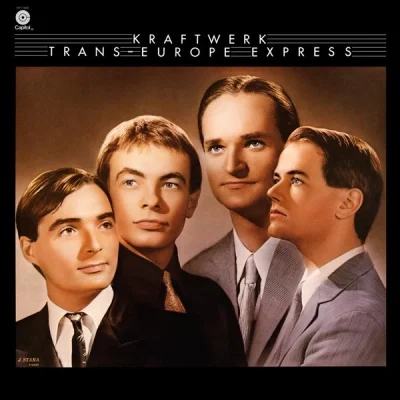
Trans-Europe Express is the sixth studio album recorded in 1976. It saw the group refine their melodic electronic style, with a focus on sequenced rhythms, minimalism, and occasionally manipulated vocals. Its status as modern electronic music’s birth certificate and value as a work of art should not be understated. Tracklist:1. “Europe Endless” a bright, cascading, and disarmingly optimistic track full of sweeping arpeggios. It celebrates a romantic, borderless vision of European identity. 2. “The Hall of Mirrors” a slow, icy, and contemplative track focusing on identity, illusion, and stardom. It is celebrated for its eerie, highly atmospheric production. 3. “Showroom Dummies” driven by a heavy, cybernetic hand-clap beat, this track tells a whimsical, dark narrative about department store mannequins coming to life to go dancing at a club. 4. “Trans-Europe Express” the legendary title track mimics the rhythmic, hypnotic momentum of a cross-continent train trip. 5. “Metal on Metal” an extension of the title track’s sequence. It strips back the melody to emphasize hard industrial clanging, metallic thuds, and a locomotive pace. 6. “Franz Schubert” a stunning, melodic piece of electronic classical music that serves as a dynamic homage to the historic Austrian composer. 7. “Endless Endless” a brief, echoing vocoder outro that mirrors the beginning of the album to provide a perfect conceptual loop.
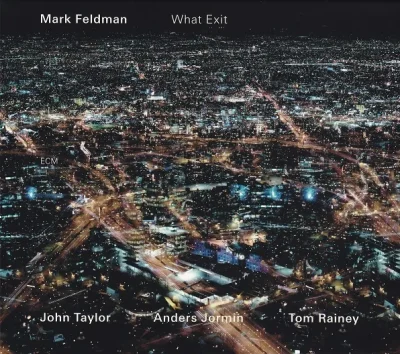
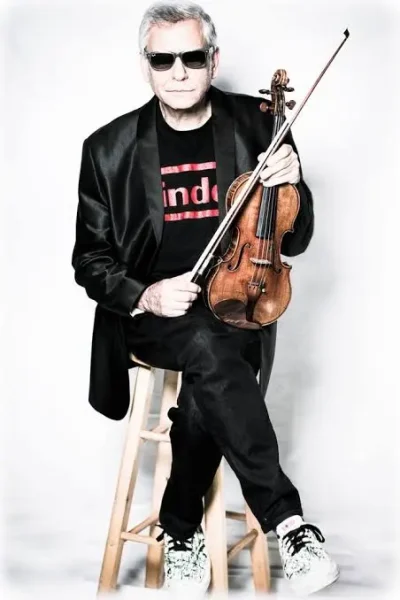
What Exit is an album by violinist Mark Feldman released on ECM . The quartet features rhythm section John Taylor, Anders Jormin, and Tom Rainey. The compositions are Feldman originals, filled with subtle traces of his diverse stylistic influences and showcase his superb skill on the violin. The Guardian’s John Fordham observed, “Contemporary jazz/classical violin might be a bit spiky for some, but the musicianship and the conversational skills are remarkable.” Key tracks include “Arcade” appropriately titled, filled as it is with spontaneous sounds, which after a while take on a cadence of their own in the interest of play. The cerebral challenges of this introduction are rewarded by “Father Demo Square,” second of the album’s eight Feldman originals. Moving from explicit clarity to buried complexities. The memorial tune “Everafter” balances cinematic foreboding with understated grandeur. “Ink Pin,” a brilliant track boasting the special combinatory force of Jormin and Feldman, gilding the frame from start to finish. The Brazilian flavour of “Maria Nuñes” adds spice to the album whilst the tenderness of “Cadence” tips the scales yet again toward shadow, giving way at last to the light of the title track. There is much to absorb and re-absorb..
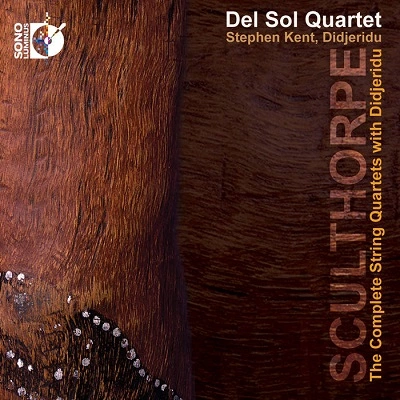
String Quartet No. 16 (2005) is a moving work for string quartet with an optional didgeridoo. The piece reflects on human suffering and hope. Loneliness: Explores the isolation of detention. Anger: Captures the frustration and turmoil of the situation. Yearning: A more melodic section expressing deep longing. Trauma: Represents the psychological toll on the detainees. Freedom: Concludes the work with a sense of release. String Quartet No. 18 (2010) is a work for two violins, viola, and cello, often featuring an optional didgeridoo. The quartet features emotional, environmental, and historical themes, with sections reflecting a “dying” or “lost” land.
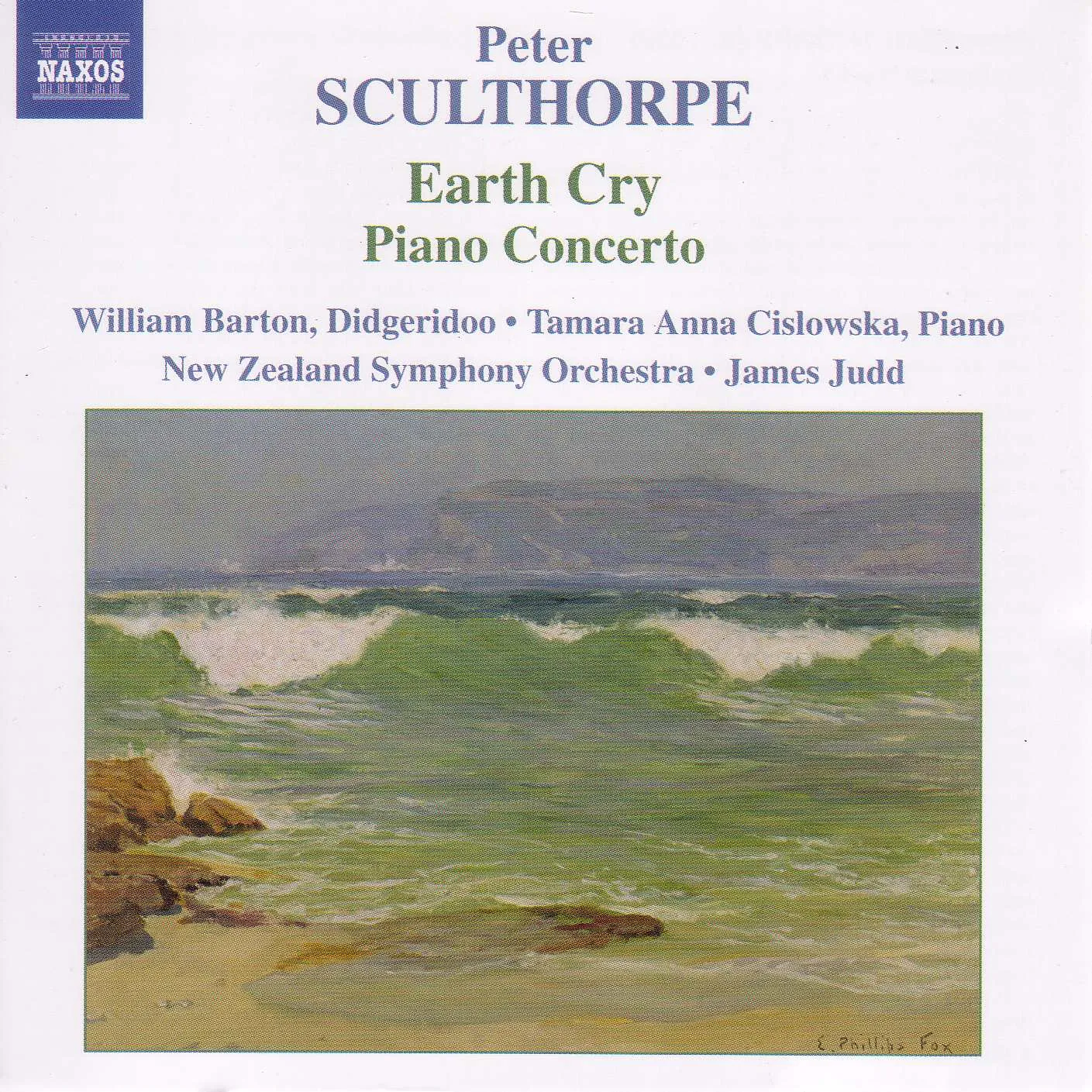
Memento Mori (1993) is a powerful, single-movement orchestral composition inspired by the tragic history of Easter Island. The work features the Dies irae plainchant, reflecting on the island’s lost civilization and offering a musical lament for the planet. Kakadu is one of his most famous orchestral compositions and is a musical celebration of the Kakadu National Park.The work reflects the wilderness landscape, its cycle of life and death, and the changing seasons from the dry to the wet. It blends “landscape” style with the rhythms and contours of Aboriginal chant. The outer sections are energetic and dance-like, featuring vibrant orchestral colours around a central more introspective section, featuring a prominent cor anglais solo.Earth Cry (1986) is a major orchestral work reflecting a need for Australians to listen to the “cry of the earth”. It typically consists of quick, ritualistic sections framed by slower, supplicatory music and an extended coda. The music uses “pounding drums,” string “shrieks,” and sounds derived from Australian wildlife to portray a vast, lonely, and ancient outback. Piano Concerto (1983) a significant and frequently performed work. It is notable for its single-movement structure and its integration of Australian and Asian musical influences.
It is helpful to research the artist, using sources like Wikipedia , Music Magazine Reviews (Pitchfork, Rolling stone, NME etc.,) Artist Websites, etc…A synopsis of the life and music of this Issue’s featured artists appears below.
This Week’s Artists
Mark Feldman
Mark Feldman (born 1955 in Chicago) is an American jazz violinist. His work blends classical technique with jazz improvisation and contemporary music. He has performed with John Zorn, John Abercrombie, The Masada String Trio, Dave Douglas, Uri Caine, and Billy Hart. He was a member of the Civic Orchestra of Chicago and played in many bar bands in Chicago. He played on over 200 recordings in Nashville as a studio musician, was a member of the Nashville Symphony. In 2003, he was soloist with Netherlands Radio Philharmonic Orchestra in Guus Janssen’s Violin Concerto and with the WDR Jazz Orchestra in Concerto for Violin and Jazz Orchestra by Bill Dobbins. At New York’s Lincoln Center he performed in duo with pianists Paul Bley and Muhal Richard Abrams. He has recorded with Michael Brecker, Lee Konitz, Joe Lovano, and Chris Potter and has played on over 100 recordings in New York City as a soloist in contemporary music and modern jazz. Feldman has released several albums, including Music for Violin Alone (Tzadik, 1995); Book of Tells (Enja, 2000); What Exit (ECM, 2006 with British pianist John Taylor; To Fly to Steal (Intakt, 2010) with bassist Thomas Morgan and drummer Gerry Hemingway; and Oblivia (Tzadik, 2010) with his wife, Swiss pianist Sylvie Courvoisier. Firmly established as one of jazz’s finest string players, his musical explorations establish a climate often associated with contemporary composition, yet include a sense of spontaneous ensemble interaction so critical to the jazz language.
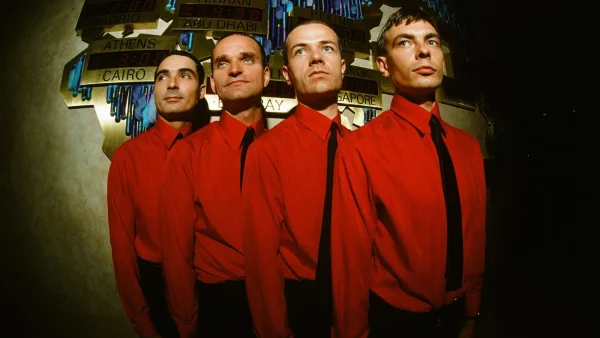
Trans-Europe Express (1977): A highly influential concept album that became a blueprint for early hip-hop and techno. The Man-Machine (1978): Featured the iconic hit “The Model,” which reached number one on the UK singles chart in 1982. Computer World (1981): Prophetic in its themes of global computerisation and digital communication (e.g., “Computer Love”).
KRAFTWERK
Kraftwerk is a German electronic band formed in Düsseldorf in 1970 by Ralf Hütter and Florian Schneider. Widely considered innovators and pioneers of electronic music, Kraftwerk was among the first successful acts to popularise the genre. Wolfgang Flür joined in 1973 and Karl Bartos in 1975. On commercially successful albums such as Autobahn (1974), Trans-Europe Express (1977), The Man-Machine (1978), and Computer World (1981), Kraftwerk developed a self-described “robot pop” style that combined electronic music with pop melodies, sparse arrangements, and repetitive rhythms, while adopting a stylised image including matching suits. Throughout their career, Kraftwerk have pushed the limits of music technology with some notable innovations, such as home-made instruments and custom-built devices. The group has always perceived their Kling Klang Studio as a complex music instrument, as well as a sound laboratory; Florian Schneider in particular developed a fascination with music technology, with the result that the technical aspects of sound generation and recording gradually became his main fields of activity within the band. Alexei Monroe called Kraftwerk the “first successful artists to incorporate representations of industrial sounds into non-academic electronic music” They are globally recognised for pioneering the “robot pop” style, which laid the foundation for modern genres like synth-pop, techno, hip-hop, and house music.The band’s most influential work was produced during their “classic” period from 1974 to 1981: Autobahn (1974): Their international breakthrough featuring the 22-minute title track that mimics the experience of driving on a German motorway. Trans-Europe Express (1977): A highly influential concept album that became a blueprint for early hip-hop and techno.
BUILT TO SPILL
Built to Spill is an American indie rock band that formed in Boise, Idaho, in 1992. Centred on lead vocalist and guitarist Doug Martsch, the only permanent member, Built to Spill has released nine albums since its inception. Martsch originally envisioned the band to feature a changing set of backing musicians for each album, but eventually settled with a stable lineup for over a decade before returning to his original plan in 2012. Current Lineup: Doug Martsch, Melanie Radford (bass), and Teresa Esguerra (drums). The band have received consistent critical acclaim throughout their career, and their 2009 release There Is No Enemy became Built to Spill’s highest-charting album of their career. Built to Spill are generally labelled as an indie rock band. Tim Sendra of AllMusic named Built to Spill “one of the most popular and influential indie rock bands”, and noted the band’s stylistic evolution from “sparse lo-fi” early in their career towards a sound described as “sophisticated emo” later on. T Notable albums include Perfect from Now On (1997): Their major-label debut, known for its sprawling, complex songs; Keep It Like a Secret (1999): Featuring the popular track “Carry the Zero,” this album brought significant critical and commercial success. Ancient Melodies of the Future (2001): a fifth album containing the latest set of beautiful, unencumbered, unpretentious melodies. When the Wind Forgets Your Name (2022): Their latest studio release and first with Sub Pop Record

PETER SCULTHORPE
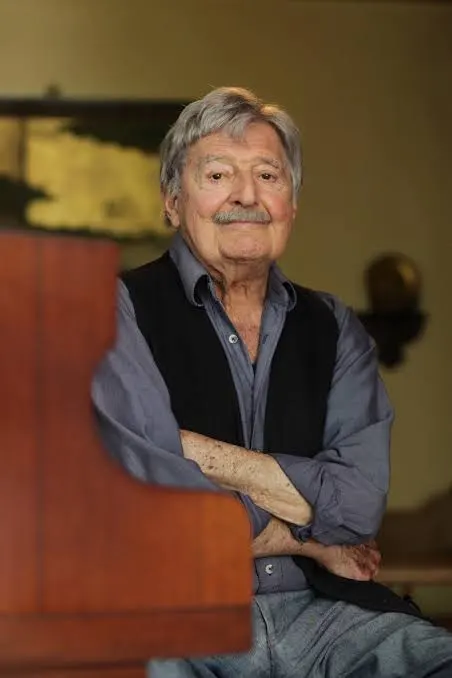
Peter was born in Launceston, Tasmania, and grew up in the nearby village of St Leonards, where his parents ran the general store. His mother encouraged her son to write and paint. He began piano lessons at the age of eight: after his first lesson, he spent the next week writing music. Peter carried on composing, first in secret, then with his parents’ approval. At the age of 16 he went to Melbourne University to study piano. His work was often characterised by its distinctive use of percussion. From the start of his career, he set out to create music that would not depend on European manners and cultural traditions, but would be specifically Australian in idiom. Peter believed that Australia is primarily a visual culture, dominated by its landscape. His own music, with its blocks of non-developing material and its overall flatness and scarcity of dramatic gestures, even resembles the landscape in the look of the notes on the page. For melodic inspiration, he turned first to Asia – Indonesia and Japan – and then, in the second half of his life, to the music of indigenous Australians. Much of his later work addressed climate change, the war in Iraq, and the plight of asylum seekers in detention centres (specifically String Quartet No. 16). Major Works include: Kakadu (1988): An orchestral piece inspired by the northern Australian wilderness. Earth Cry (1986): Often featuring the didgeridoo, this work expresses a deep concern for the Australian environment. Sun Music Series: A collection of orchestral works commissioned in the 1960s that helped establish his international reputation. String Quartets: He composed 18 string quartets, many of which use unusual timbral effects to mimic natural Australian sounds. Rites of Passage (1972–73): An unconventional opera (or music theatre piece) that uses Latin and Indigenous Arrernte (pronounced arrunda) text.
Sound quality is important and the better online Streaming services will offer superior sound quality. As always, We do encourage you to purchase favoured albums from good online or High Street record stores.
In further issues we will continue to bring you the music of popular genres to listen, review and evaluate.
Issue #12(coming soon) features Iron Maiden, Lucy Railton, Dave Brubeck and Jonathan Harvey