In This Issue #12 We Highlight 4 Artists And Some Significant Works
Join the Conversation!!!

We will Feature Up to 4 Albums from Artists representative of a range of the many sub-genres. We Hope to encourage Listeners of all tastes and passions. So Get your Headphones on and consider discussing the musical offering and sharing your views with like-minded peers.
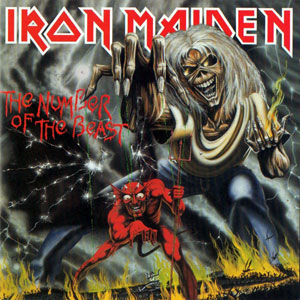
The Number of the Beast, released in March 1982, is widely considered one of the most influential heavy metal albums of all time. Recorded at Battery Studios in London and produced by Martin Birch, it marked the legendary debut of vocalist Bruce Dickinson and the final album featuring drummer Clive Burr. Replacing Paul Di’Anno, Dickinson’s operatic, commanding delivery expanded Iron Maiden’s songwriting boundaries. The title track, with its spoken-word Book of Revelation intro and soaring operatic vocals from Bruce Dickinson, and “Run to the Hills” driven by Steve Harris’s signature galloping bassline and an unforgettable high-energy chorus became immediate commercial staples. Meanwhile, the progressive closer “Hallowed Be Thy Name” is routinely cited by critics and fans alike as one of the greatest heavy metal tracks ever recorded building from a slow melodic intro into a fast, multi-layered masterpiece.
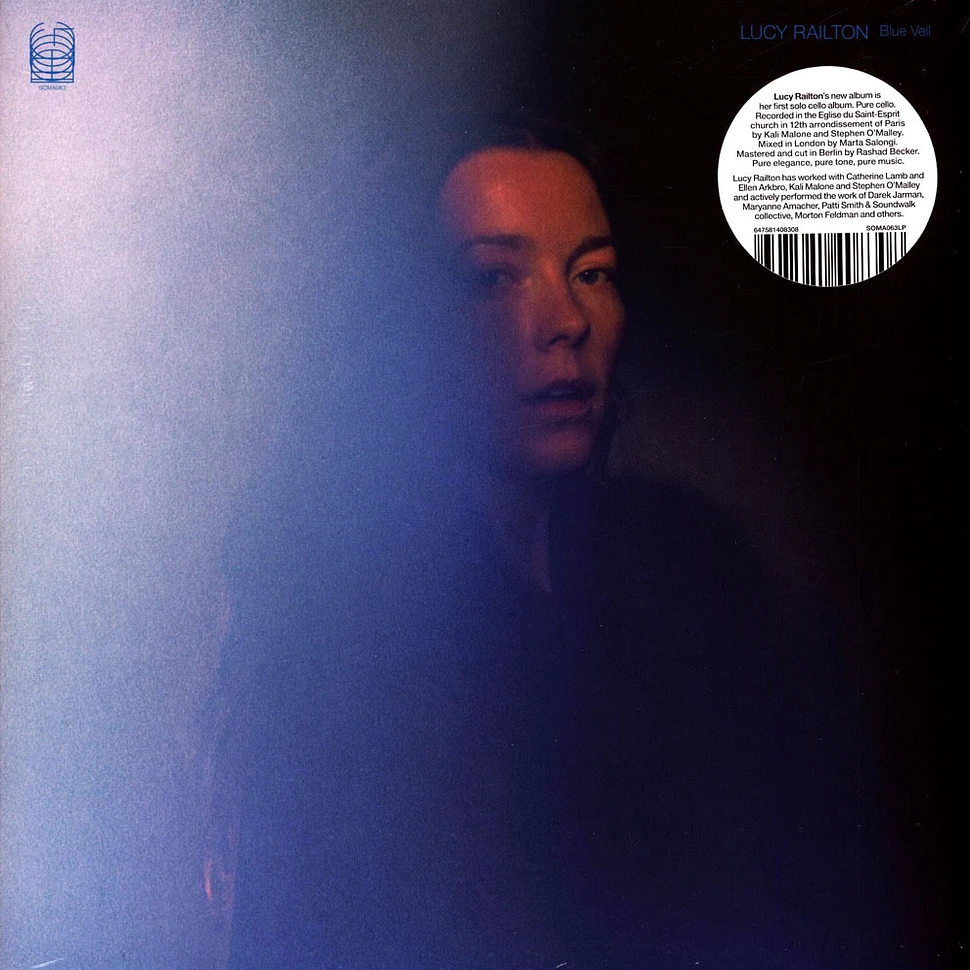
Blue Veil is the acclaimed solo studio album by British cellist and composer Lucy Railton, released in April 2025 The album consists of solo acoustic cello exploring microtonality, just intonation, and high-precision harmonic resonance. The cello is entirely unembellished by electronics or effects pedals. It emphasizes the physical friction of the bow, extreme proximity, and dense acoustic overtones. Key Standout Movements: “Phase I” (04:19) & “Phase II” (04:32): These initial tracks set the tone for the entire project, establishing the slow-bowing techniques and microtonal intervals that define the album’s minimalist landscape. “Phase III” (08:58): This is the primary single and preview track released ahead of the album. Described by Stereogum as a dense, nine-minute plunge into a “haunted meditative state,” it serves as the emotional and structural anchor of the album’s first half. “Phase VII” (09:11): The longest composition on the album. It delivers the final, deep-listening culmination of the record’s raw cello drones and natural church reverberations.
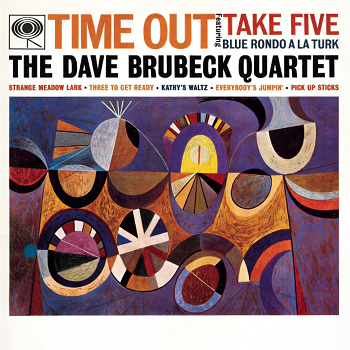
Released in 1959,Time Out by The Dave Brubeck Quartet is one of the most commercially successful and influential albums in jazz history. An experimental departure from traditional jazz rhythms. It focused heavily on unconventional, complex time signatures that Brubeck encountered while touring Eurasia..Tracklist: 1. “Blue Rondo à la Turk” – Turkish-influenced folk motif that seamlessly transitions into a cool, blues-driven tempo. 2. “Strange Meadow Lark” – Features a lush, free-form piano introduction that settles into a calm, lyrical ballad. 3. “Take Five” – Driven by an unwavering, hypnotic piano vamp and features a legendary drum solo by Joe Morello. 4. “Three to Get Ready” – A cinematic, witty waltz that alternates metrical patterns every two bars. 5. “Kathy’s Waltz” – Inspired by Brubeck’s daughter, it toys with polyrhythms and cross-rhythms. 6. “Everybody’s Jumpin'” – A lively, bouncing track built around a flexible 6-beat framework. 7 “Pick Up Sticks” – Closes the album with a steady, driving bass line that grounds complex time experimentation.
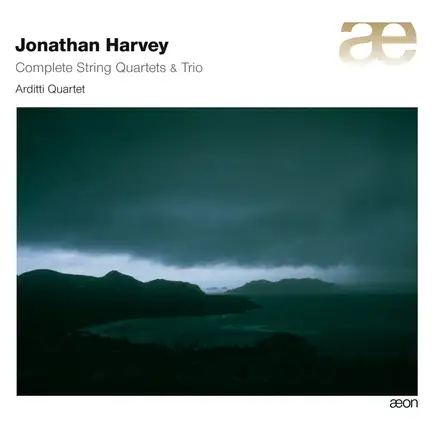
The complete string quartets comprise four landmark works that span Harvey’s career, highlighting his deep fascination with spectralism, the physical nature of sound, and Buddhist philosophy. String Quartet No. 1 (1977): A continuous, one-movement piece generated entirely from a simple unison melody.
String Quartet No. 2 (1988): This quartet structures complex pitch variations and features a famous, highly expressive melody written for the cello in its highest register. String Quartet No. 3 (1995): A brilliant exploration of extended performance techniques. It uses microtonal tunings, harmonic trills, and col legno battuto (striking strings with the wood of the bow) to make the acoustic instruments mimic electronic transformations. String Quartet No. 4 (2003): Written for string quartet and live electronics uses real-time sound sampling and a multi-speaker setup drawing heavy inspiration from the Buddhist cycle of reincarnation (bardos). String Trio acts as a lighter, highly energetic companion piece in his chamber music catalogue
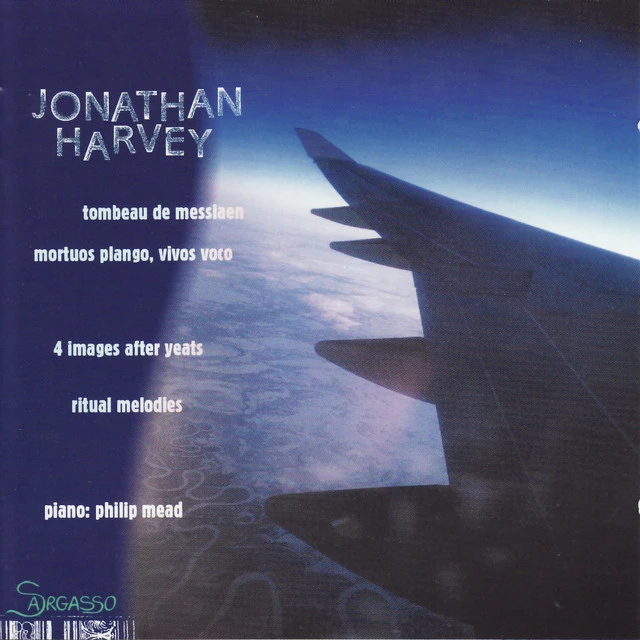
4 Images after Yeats is a prominent 1969 composition for solo piano. The work is deeply structured around themes and structural principles drawn from the mythology and poetry of William Butler Yeats.Movement I: Focuses on fluid, resonant, and suspended pitch structures.
Movement II: Explores darker, percussive elements and virtuosic piano registers. Movement III & IV: Conclude the work with intricate harmonic relationships, utilizing the full dynamic spectrum of the instrument. Mortuos Plango, Vivos Voco (“I Mourn the Dead, I Call the Living”) is a landmark electroacoustic musical composition it is widely considered a masterpiece and a classic of early computer music.
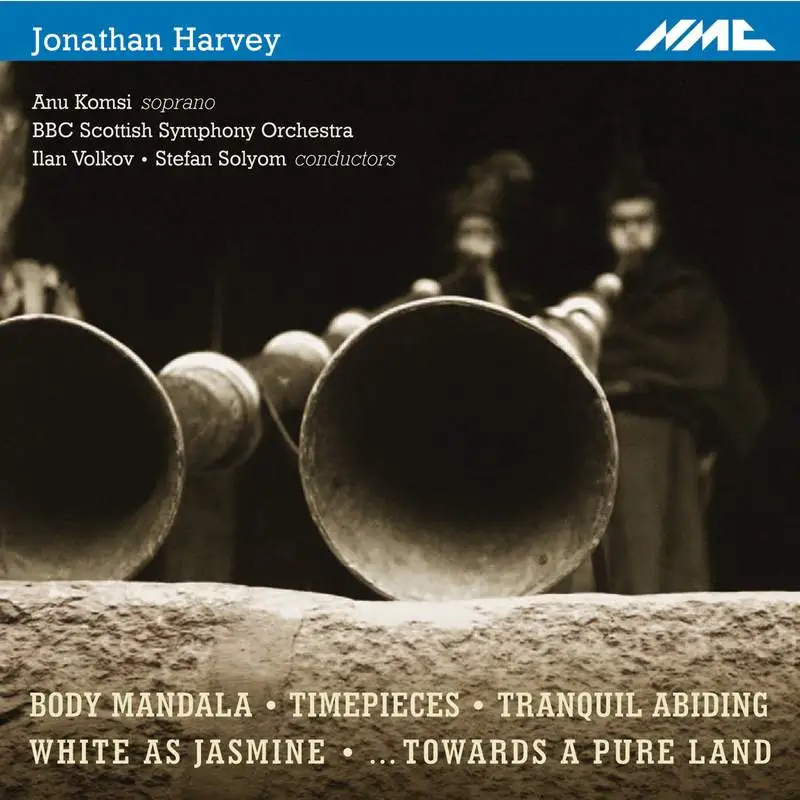
Timepieces is an orchestral composition which features two conductors beating different tempi simultaneously, causing instrumental groups to constantly reform and reconfigure the listener’s perception of time passing.owards a Pure Land The work is a musical reflection of Harvey’s deep immersion in Buddhist spirituality, specifically drawing on the concept of a “Pure Land”—a state of mind beyond suffering where there is no grasping.
Tranquil Abiding is scored for chamber orchestra and Harvey overlays increasingly elaborate and fractured melodic fragments, driving the orchestra through a natural, organic trajectory before dissolving into a clear, peaceful conclusionTo evoke the visceral weight of Buddhist ritual, Body Mandala mimics the intense, “raucous” colors of traditional Tibetan instruments. The work avoids electronics and instead generates highly complex acoustic textures using a massive, uniquely augmented orchestral layout.T
It is helpful to research the artist, using sources like Wikipedia , Music Magazine Reviews (Pitchfork, Rolling stone, NME etc.,) Artist Websites, etc…A synopsis of the life and music of this Issue’s featured artists appears below.
This Week’s Artists
DAVE BRUBECK
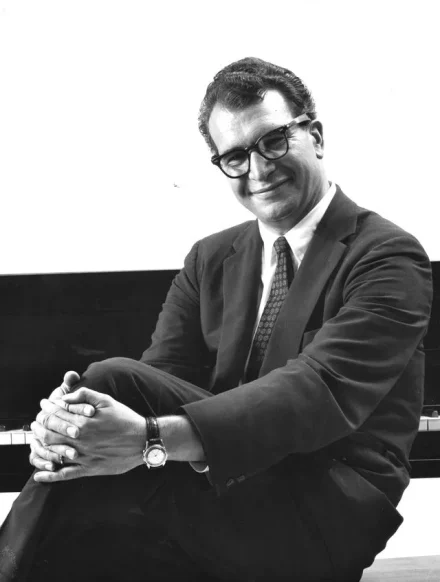
David Warren Brubeck (1920 –2012) was an American jazz pianist and composer. Often regarded as a foremost exponent of cool jazz, Brubeck’s work is characterized by unusual time signatures and superimposing contrasting rhythms, meters, and tonalities, and combining different styles and genres, such as classical, jazz, and blues. He grew up in the rural town of Ione, California. His father, Peter Howard “Pete” Brubeck, was a cattle rancher. His mother, Elizabeth taught piano. After graduating in 1942, Brubeck was drafted into the United States Army. He created one of the U.S. armed forces’ first racially integrated bands, “The Wolfpack”. In the military in 1944, Brubeck met Paul Desmond. While on active duty, he had received two lessons from Arnold Schoenberg at UCLA in an attempt to connect with high modernist theory and practice. After serving nearly four years in the army, he returned to California for graduate study at Mills College in Oakland. He was a student of composer Darius Milhaud’s. In 1949, Coronet Records were to make the first recording of Brubeck’s octet and later his trio. In 1951, Brubeck organized the Dave Brubeck Quartet, with Paul Desmond on alto saxophone. The two took up residency at San Francisco’s Black Hawk nightclub and had success touring college campuses, recording a series of live albums. Brubeck was featured on the cover of Time in November 1954, the second jazz musician to be featured, following Louis Armstrong in February 1949. In 1959, the Dave Brubeck Quartet recorded Time Out. The album, which featured pieces entirely written by members of the quartet, notably uses unusual time signatures—especially for jazz—about which Columbia Records was enthusiastic, but was nonetheless hesitant to release. Time Out was followed by several albums with a similar approach. These albums (except Time In) were also known for using contemporary paintings as cover art.
LUCY RAILTON
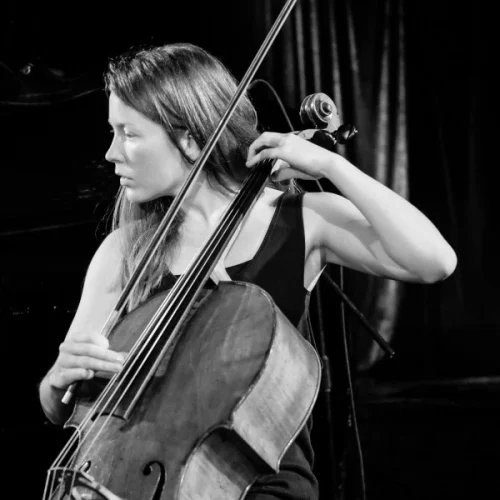
Railton studied cello at the New England Conservatory in Boston, and at the Royal Academy of Music in London, where she graduated in 2008.In the field of improvisational music. During the same year, she established the new music series Kammer Klang, and she later co-founded the London Contemporary Music Festival. For the last 2 decades, her work has moved freely between Classical and contemporary music, electronic composition, improvisation and popular music performance, as well as writing for dance, film and visual art installations. Her solo album Blue Veil is a deeply intimate, meditative set of compositions for solo cello, released this year on the label Ideologic Organ. Railton has undertaken collaborations and shared performances and also appeared on recordings by numerous jazz, folk, electronic, and indie rock artists. In addition, Railton has worked as a soloist and chamber musician, alongside playing with ensembles such as London Sinfonietta. In her programs as a soloist, she has interpreted canonical works, such as those by J.S. Bach or Giacinto Scelsi, as well as pieces by lesser-known and younger composers.
IRON MAIDEN
Iron Maiden is an iconic English heavy metal band formed in 1975 by bassist Steve Harris. Celebrated as pioneers of the New Wave of British Heavy Metal, they have sold over 130 million albums and are known for their “galloping” rhythm, historical lyrics, and famous mascot, Eddie. In the 50 years since bassist Steve Harris’ vision was birthed in the humble working-class sprawl of East London, Iron Maiden have grown to become nothing less than an institution. By 1980 Iron Maiden had already earned themselves a cast-iron reputation for ferocious live shows and a fiercely loyal following to match. Inspired by heavy rock and tempered by the heat of the burgeoning New Wave of British Heavy Metal, theirs was an upward ascent that would culminate in a landmark self-titled album debut which would immediately elevate them above their peers and serve as the prologue to a truly remarkable story that has captured the imagination of music lovers of every country, colour and creed. Emblazoned with the totemic image of Eddie, a ghoulish yet undeniably handsome and mysterious figure whose tantalizing image would go on to feature on every album and countless t-shirts hence, it was nothing less than a groundbreaking statement of intent. Many more would follow. The rapturous response to 1981’s follow-up Killers would confirm the growing suspicion that this was a band in a class of its own, and ensuing tours of Japan and the States as well as the UK and Europe would affirm both Maiden’s international appeal and their relentless commitment to reach fans wherever they are.
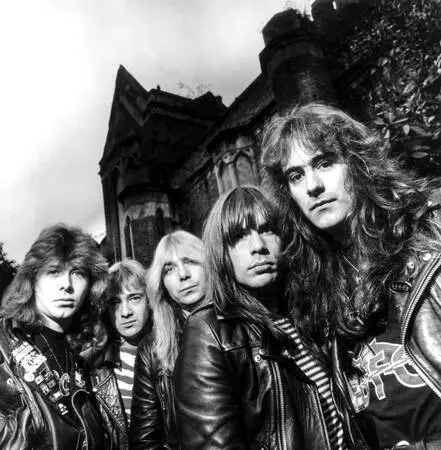
However, it was really the release of their third album – 1982’s incendiary The Number Of The Beast – and a bold line-up change which would see original singer Paul Di’Anno replaced by ex-Samson frontman Bruce Dickinson that would set the scene for the epic chapters to come.It would kick off a decade of now-classic annual releases and relentless touring that would come to epitomise what Maiden are so well known for. That marvellous decade would also yield seven new studio albums, seven world tours and one of the most revered and influential concert albums of all time; the seminal Live After Death. What makes these qualities even more notable is that they developed almost entirely without the acknowledgement of mainstream media.
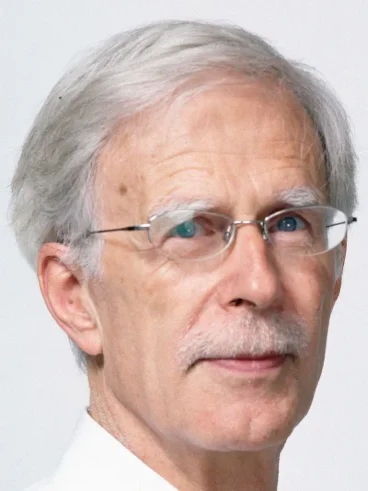
He worked closely with the famous IRCAM institute in Paris and produced seminal electronic-acoustic works. such as Mortuos Plango, Vivos Voco and the opera Wagner Dream.
JONATHAN HARVEY
Jonathan Harvey can be thought of as an English Stockhausen: he is perhaps best known for integrating electronically generated sound with live music in the service of a mystical outlook with many (especially non-Western) philosophical influences. However, Harvey’s large output also contains many accessible choral pieces and acoustic avant-garde works for orchestra or chamber ensemble. While a student at Cambridge, Harvey studied composition privately with Erwin Stein and Hans Keller (following the advice of Benjamin Britten), from whom he learned the basics of serial technique. In 1966, Harvey had a “Stockhausen conversion,” and the German composer’s alternately complex and simple textures had an immediate influence on him, most apparently in the instrumental pieces written from the late-’60s through the 1970s, such as Quantumplation (1973) for chamber ensemble. Harvey spent much of the 1980s at IRCAM, the new-music research centre in Paris under the direction of Pierre Boulez. In the first compositional result of this period, Mortuos plango, vivos voco (1980), Harvey combined the sound of his son’s singing with that of a bell at Winchester Cathedral, with an effect similar to that of Stockhausen’s Gesang der Jünglinge. Another important composition was Ritual Melodies (1990) for tape, in which Harvey continually transforms synthesized instrumental and vocal sounds and their associated melodies. Harvey has taught in various English and American universities, and in 1995 began teaching composition at Stanford University in California..
Sound quality is important and the better online Streaming services will offer superior sound quality. As always, We do encourage you to purchase favoured albums from good online or High Street record stores.
lron Maiden – Perfect From Now On – Label : Warner Bros.
Lucy Railton – Blue Veil – Label : Ideologic Organ
Dave Brubeck – Time Out – Label : Columbia
Jonathan Harvey – Sring Quartets – Label :Aeon ; 4 Images after Yeats – Label : Sargossa ; Timepieces – Label : NMC
In further issues we will continue to bring you the music of popular genres to listen, review and evaluate.
Issue #13(coming soon) features Dire Straits,William Basinski, Louis Sclavis and Carl Maria von Weber.