In This Issue #21 We Highlight 4 Artists And Some Significant Works
Join the Conversation!!!
We will Feature Up to 4 Albums from Artists representative of a range of the many sub-genres. We Hope to encourage Listeners of all tastes and passions. So Get your Headphones on and consider discussing the musical offering and sharing your views with like-minded peers.
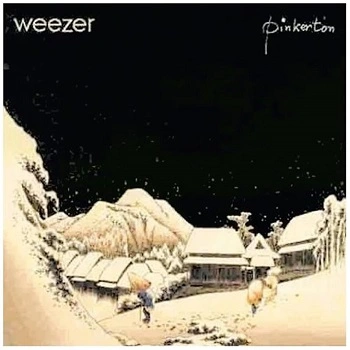
Pinkerton was self-produced, featuring a rougher, more abrasive sound, intending to better capture the band’s live sound. It came to be considered among Weezer’s best work by fans and critics. Tracklist: 1. Tired of Sex: Heavy, abrasive, feedback-laden opener. Cuomo juxtaposes rock-star excess with intense emotional isolation. 2. Getchoo: Frantic, distorted garage rock with world-music-inspired verses. Obsessive longing, desperation. 3. No Other One: A heavy, mid-tempo rocker.Trapped in a relationship out of fear of being alone. 4. Why Bother? : Fast, punchy, power-pop-punk energy. Cynicism and emotional self-defence. 5. Across the Sea: Melancholic, swelling, and deeply emotional Cuomo projecting his own loneliness onto a distant stranger. 6. The Good Life: Funk-inflected, high-energy alternative rock anchored by a massive, screaming chorus.. 7. El Scorcho: Chaotic, loose instrumentation featuring goofy/raw pseudo-rapping and a chaotic, explosive guitar solo. Shyness, self-deprecation. 8. Pink Triangle: Driving, hook-heavy power pop. Falling head-over-heels for a woman only to realize she is a lesbian. 9. Falling for You: Relentless, fast-paced guitar work. Acute self-hatred and imposter syndrome. 10. Butterfly: A stark, gentle acoustic album closer providing a fragile, bittersweet landing after 32 minutes of emotional wreckage.
Tired Of SexGetchooNo Other OneWhy Bother?Across The SeaThe Good LifeEl ScorchoPink TriangleFalling For YouButterfly
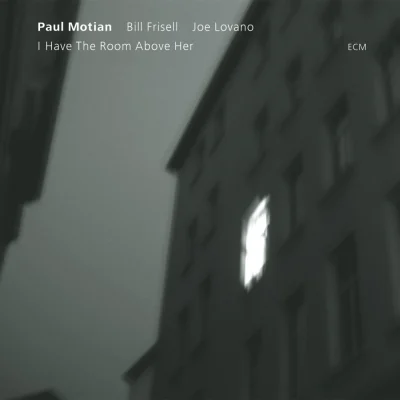
I Have the Room Above Her is a masterclass in contemporary chamber jazz. It features the legendary, long-running trio of Paul Motian (drums), Bill Frisell (guitar), and Joe Lovano (tenor saxophone). The album’s core musical identity is defined by its lack of a traditional bass and piano. Without a bassist to anchor the time or a pianist to lock in the chords, the trio relies on an almost telepathic, conversational interplay where time is elastic, and space is heavily emphasized. The repertoire is predominantly composed of Motian’s fragmented, folk-like originals, accented by two carefully chosen external pieces. Standouts and structures of the album’s tracklist: 1. “Osmosis Part III” & “Osmosis Part I”: Ambient, meditative, and neo-folk. Acting as textural bookends across the record, the Osmosis pieces emphasize pure sound and timbre over complex jazz chord progressions. In Part III, the album opens “mid-sentence,” featuring Frisell’s tasteful, ambient electronic looping and delayed chords that construct a foggy background. Lovano plays with a soft, mournful lyricism while Motian’s brushes flutter subtly, establishing the album’s mood of “subtraction” and essentiality. 2. “I Have the Room Above Her”: Sleepwalking, deconstructed romantic ballad. Analysis: This track is a rare Jerome Kern and Oscar Hammerstein ballad. Motian plays oblique cross-rhythms with cymbals and brushes. Lovano plays a caressing, unaccompanied-style solo that floats across the bar-lines, while Frisell shadows him flawlessly. 3. “Dance”: Angular, avant-garde bop, and Ornette Coleman-esque. Features a skippy melody advancing in clipped, unison note clusters. Frisell throws in sly quotes from 1950s bebop, and the trio attempts to genuinely swing while maintaining a completely free chorus structure. Lovano pushes his tenor saxophone softly to the top register of his horn. 4. “The Riot Act” & “The Bag Man”: Narrative, dry, and cerebral interplay. These Motian originals rely heavily on silence. Motian’s drumming is minimalist—sometimes described as a steady heartbeat, other times abstract and tumbling—letting Lovano and Frisell chew on fragmented, twisting melodies. 5. “Dreamland”: Ambient jazz with a country-and-western tinge. The album closes with a composition by Thelonious Monk. The trio gives it an unexpected treatment.
Osmosis Part IIISketchesOdd Man OutShadowsI Have The Room Above HerOsmosis Part IDanceHarmonyThe Riot ActThe Bag ManOne In ThreeDreamland
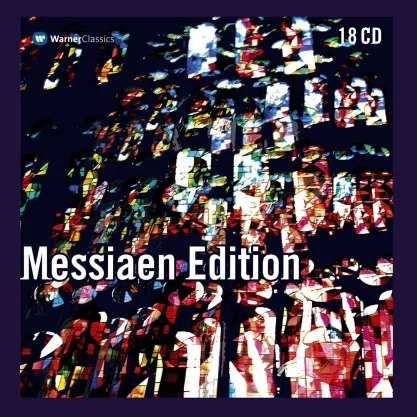
Olivier Messiaen’s Quatuor pour la fin du temps (Quartet for the End of Time) is one of the most significant masterworks of 20th-century chamber music. Written in 1940–1941 while Messiaen was imprisoned at the German prisoner-of-war camp Stalag VIII-A in Görlitz, Germany. The work is scored for violin, cello, clarinet, and piano—because these were the instruments available among the fellow captive musicians. The piece draws its theological concept from the Book of Revelation (Chapter 10), in which an angel declares: “There will be no more Time.” Structurally, Messiaen avoids traditional classical forms, choosing instead an eight-movement tracklist that represents the seven days of Creation plus an “eighth day” representing eternity and Christ’s Resurrection. I. Liturgie de cristal (Crystal Liturgy): Full quartet featuring stylized birdsong (clarinet as blackbird, violin as nightingale)over the cello and piano to evoke infinity. II. Vocalise, pour l’ange qui annonce la fin du temps: Full quartet contrasting explosive, apocalyptic outer sections with a serene middle vocalise. III. Abîme des oiseaux (Abyss of Birds): Solo clarinet monologue contrasting the desolation of time with the hope of birdsong through extreme dynamic control. IV. Intermède (Interlude): Clarinet, violin, and cello offering a lighter, traditional 2/4 movement functioning as a classical scherzo. V. Louange à l’éternité de Jésus (Praise to the Eternity of Jesus): Cello and piano featuring a slow, suspended melody over steady pulsating chords representing eternity. VI. Danse de la fureur, pour les sept trompettes (Dance of Fury): Full quartet playing in strict monophonic unison in rhythms to convey aggressive timelessness. VII. Fouillis d’arcs-en-ciel, pour l’ange..(Tangle of Rainbows): Full quartet acting as an emotional climax recalling earlier themes of fury and birdsong. VIII. Louange à l’immortalité de Jésus (Praise to the Immortality of Jesus): Violin and piano companion to movement five, ascending into the extreme register to symbolize divine ascension and the erasure of time./ Turangalîla-Symphonie (1946–1948) is a monumental 10-movement masterpiece exploring cosmic love, joy, and time. Structurally, it superimposes an avant-garde framework over the “skeleton” of a traditional four-movement symphony (an opening Allegro, a Scherzo, a slow movement, and a Finale). 1. Introduction: The entry point to the sonic universe the heavy, block-like “Statue” theme booms from the trombones, contrasted directly by the gentle, woodwind-led “Flower” theme. 2. Chant d’amour 1 (Love Song 1): This movement is characterized by a frantic, passionate energy. Features a fast, aggressive trumpet and piano refrain alternates with a lyrical, soaring expression of the “Love” theme shared by the strings and the electronic ondes Martenot. 3. Turangalîla 1: The first of three specialized rhythmic and texture studies. It opens like chamber music, featuring a solo clarinet in a rhythmic dialogue with the ondes Martenot. 4. Chant d’amour 2: The “Scherzo” equivalent of the symphony. Structurally complex, features an extensive, virtuosic piano cadenza mimicking highly detailed birdsong. 5. Joie du sang des étoiles (Joy of the Blood of the Stars): The ecstatic centrepiece and climax of the first half. A wild, frenzied, and celebratory dance. The piano and ondes Martenot perform frantic glissandos over a blazing orchestral texture.6. Jardin du sommeil d’amour (Garden of Love’s Sleep): A presentation of the “Love” theme played by the strings and ondes Martenot. In the background, the piano delicately murmurs stylized birdsong accompanied by soft, shimmering metallic percussion. 7. Turangalîla 2: The second rhythmic study; this section is harsh, metallic, and aggressively discordant. The piano dominates with pointillistic, percussive clusters, creating a sense of inescapable cosmic destruction.8. Développement de l’amour (Development of Love): Showcasing massive walls of brass sound balanced by chaotic, multi-layered polyrhythms in the percussion section. 9. Turangalîla 3: The final rhythmic study; an exercise in orchestral colour and geometry. This movement is a masterclass in woodwind and percussion writing. 10. Final: The rousing, triumphant finale. Constructed loosely around a highly modified sonata form, the finale brings the work to a glorious, blinding finish.
Quatuor pour la fin du Temps I Liturgie de cristalQuatuor pour la fin du Temps II Vocalise, pour l’ange qui annonce la fin du tempsQuatuor pour la fin du Temps III Abîme des oiseauxQuatuor pour la fin du Temps IV IntermèdeQuatuor pour la fin du Temps V Louange à l’éternité de JésusQuatuor pour la fin du Temps VI Danse de la fureur, pour les sept trompettesQuatuor pour la fin du Temps VII Fouillis d’arcs-en-ciel, pour l’ange qui annonce…Quatuor pour la fin du Temps VIII Louange à l’immortalité de JésusTurangalîla-symphonie – I IntroductionTurangalîla-symphonie – II Chant d’amour 1Turangalîla-symphonie – III Turangalîla 1Turangalîla-symphonie – IV Chant d’amour 2Turangalîla-symphonie – V Joie du sang des étoilesTurangalîla-symphonie – VI Jardin du sommeil d’amourTurangalîla-symphonie – VII Turangalîla 2Turangalîla-symphonie – VIII Développement de l’amourTurangalîla-symphonie -IX Turangalîla 3Turangalîla-symphonie -X Final
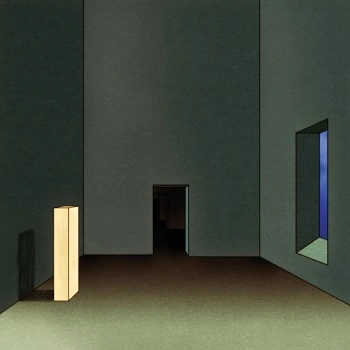
R Plus Seven stands as a landmark shift in modern electronic music. Lopatin crafted a clinical, hyper-fragmented masterpiece. The album relies heavily on pristine, uncanny MIDI presets, procedural composition, and sudden jump-cuts. R Plus Seven operates like an auditory tour through an architectural blueprint, where each room introduces self-contained motifs that are constantly interrupted, glitched, or reframed. 1. Boring Angel – Opens with grand, tension-building church organ chords. At the 90-second mark, a cascading arpeggio and heavily chopped vocal melodies burst through, creating a brilliant collision between solemn gravitas and frantic energy. 2. Americans – Highly cinematic and foreboding yet dreamlike. It shifts rapidly between crisp, wooden mallet percussion flourishes, sudden silences, and disjointed audio micro-samples. 3.He She – One of the most glitch-heavy tracks in Lopatin’s discography. It acts as a choppy vocal collage built entirely out of pitch-shifted vowels and a strange, metallic string twang that resembles a synthetic banjo. 4. Inside World – Shifting into deeply ethereal territory, this track recontextualises cheap, corporate, and New Age synth textures, bathing them in a sterile, fluorescent digital hue. 5. Zebra – Built around a glossy, rapidly firing staccato synth progression. Processed human choir voices gradually ebb and flow over the top, slowly disintegrating into a dark, foggy, and ambient outro. 6. Along – Noted by critics as one of the most structurally cohesive and deceptively beautiful movements on the record, blending minimal melodic threads into a lush electronic atmosphere. 7. Problem Areas – The quintessential track for the album’s aesthetic. It heavily utilizes plastic-sounding MIDI woodwinds and digital instruments, creating a sterile space that feels like the background music to a corporate instructional video. 8. Cryo – Leans hard into the album’s underlying themes of cryogenics and morphogenesis. It features cold, suspended synth frequencies that simulate a frozen, isolated environment. 9. Still Life – A highly atmospheric piece layered with refracted snippets of spoken word and haunting, late-track vocalizations that disorient the listener. 10. Chrome Country – A triumphant closer and a masterpiece of modern electronic music. It stretches youthful, robotic choir vocals over shifting analog chords and piano motifs, building into neoclassical terrain reminiscent of Philip Glass before fading out on a bed of church organs..
Boring AngelAmericansHe SheInside WorldZebraAlongProblem AreasCryoStill LifeChrome Country
It is helpful to research the artist, using sources like Wikipedia , Music Magazine Reviews (Pitchfork, Rolling stone, NME etc.,) Artist Websites, etc…A synopsis of the life and music of this Issue’s featured artists appears below.
This Week’s Artists
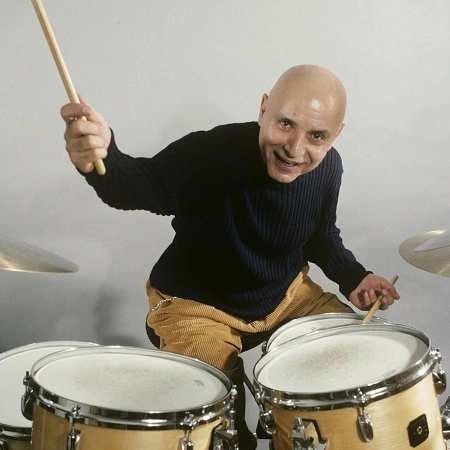
Paul Motian (March 25, 1931 – November 22, 2011) fundamentally transformed jazz drumming from a strict timekeeping role into an impressionistic, conversational, and textural art form, His compositions and style continue to be celebrated through archival releases (such as Hamburg ’72 and When Will the Blues Leave) and all-star tributes like Jakob Bro and Joe Lovano’s Once Around the Room: A Tribute to Paul Motian.
Paul Motian
Motian was born in Philadelphia, Pennsylvania and raised in Providence, Rhode Island. He was of armenian descent. After playing guitar in his childhood, Motian began playing the drums at age 12, eventually touring New England in a swing band. During the Korean War he joined the Navy and attended the United States Naval School of Music in Washington, D.C. until 1954. He also attended the Manhattan School of Music. Motian first came to prominence in the late 1950s in the piano trio of Bill Evans and later was a regular in pianist Keith Jarrett’s band for about a decade (c. 1967–1976). The drummer began his career as a bandleader in the early 1970s. Perhaps his two most notable groups were a longstanding trio with guitarist Bill Frisell and saxophonist Joe Lovano. Despite his important associations with pianists, Motian’s work as a leader since the 1970s rarely included a pianist in his ensembles and relied heavily on guitarists. Motian’s first instrument was the guitar, and he retained an affinity for the instrument: in addition to his groups with Frisell, his first two solo albums on ECM featured Sam Brown, and his Electric Bebop Band featured two and occasionally three electric guitars. The group was founded in the early 1990s, and featured a variety of young guitar and saxophone players. He played an important role in freeing jazz drummers from strict time-keeping duties. Motian was a pioneer of “broken time,” a style where the drummer provides texture and colour rather than a continuous, driving beat. His original pieces are often described as terse, mysterious, and lyrical. His career spanned over 60 years, during which he evolved from a tasteful sideman into a visionary bandleader and composer
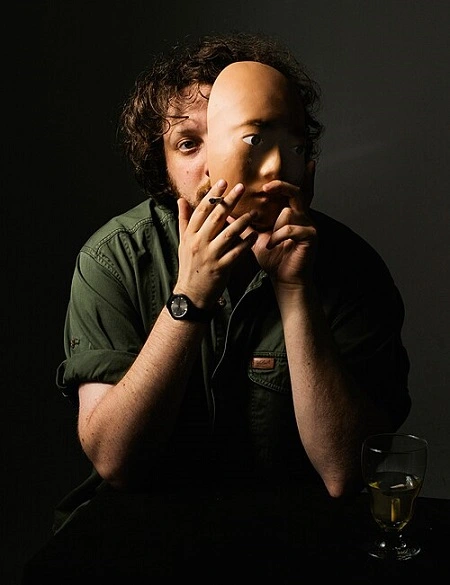
Oneohtrix Point Never (OPN) is the alias of Daniel Lopatin (born 1982), a highly influential American electronic musician, composer, and producer known for his experimental and genre-defining soundscapes.
Oneohtrix Point Never
Lopatin was born and raised in Massachusetts, and is the son of Russian-Jewish emigrants both with musical backgrounds. Some of his first experiments with electronic music were inspired by his father’s music collection and his Roland Juno-60 synthesizer, an instrument that Lopatin would inherit and go on to use extensively in his own music. During his high school years, Lopatin played synthesizer in groups with friends and future collaborator Joel Ford. Later, he moved to Brooklyn, New York, to attend graduate school at Pratt Institute, studying archival science; the field of study would go on to influence aspects of his music and artistic practice. During that time, he also became interested and involved in Brooklyn’s Underground noise music scene. Lopatin initially released music under a number of aliases, before adopting the pseudonym Oneohtrix Point Never, a verbal play on the name of the Boston FM radio station Magic 106.7.Drawing inspiration from 1970s and 80s synthesizer music, new-age and contemporary developments in noise music. Lopatin released a series of cassette and CD-R projects interspersed with a trilogy of full-length albums.much of this material was eventually collected on the 2009 compilation Rifts, which brought him critical acclaim. Over the past two decades, Lopatin has become one of the most quietly influential figures in modern music. His early Eccojams helped spark the vaporwave movement; albums like R Plus Seven and Garden of Delete redefined ambient and experimental music for the digital age. Beyond his solo work, he has collaborated with The Weeknd, Charli XCX, Iggy Pop, David Byrne and Anohni. Daniel Lopatin has released other critically acclaimed works, each with their own overarching idea including Returnal, Replica and his recent releasesAgain(2023) and Tranquilizer (2025). Lopatin also has an all-consuming obsession with nostalgia and forgotten pop cultural artefacts: he’s made albums based around warped loops of 80s pop hits, preset sounds on obsolete synthesisers and recordings of US radio stations. Changing formats, discarding the musical genres in which they previously specialised in favour of the current vogue. Lopatin has composed scores for several films, notably for the Safdie brothers’ Good Time (2017) and ‘Uncut Gems‘ (2019), the former of which earned him a Soundtrack Award at the 2017 Cannes Film Festival.
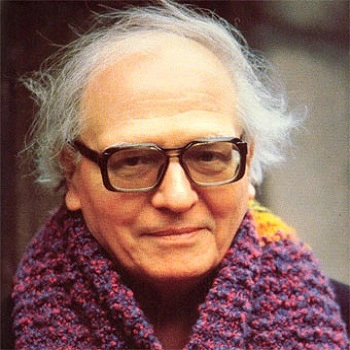
Olivier Messiaen (1908–1992) left a revolutionary legacy as a French composer, organist, ornithologist, and one of the most influential composition teachers having taught at the Paris Conservatoire for decades, mentoring a generation of avant-garde and experimental heavyweights including Pierre Boulez, Karlheinz Stockhausen, Iannis Xenakis, and George Benjamin. century.
Olivier Messiaen
Messiaen entered the Conservatoire de Paris at age 11 and studied with Paul Dukas, Maurice Emmanuel, Charles-Marie Widor and Marcel Dupré, among others. He was appointed organist at the Église de la Sainte-Trinité, Paris, in 1931, a post he held for 61 years, until his death. He taught at the Schola Cantorum de Paris during the 1930s. After the fall of France in 1940, Messiaen was interned for nine months in the German prisoner of war camp Stalag VIII-A, where he composed his Quatuor pour la fin du temps (Quartet for the End of Time) for the four instruments available in the prison—piano, violin, cello and clarinet. Messiaen’s music is rhythmically complex (he was interested in rhythms from ancient Greek and from Hindu sources), and is harmonically and melodically based on modes of limited transposition, which were Messiaen’s own innovation. . He travelled widely, and he wrote works inspired by such diverse influences as Japanese music, the landscape of Bryce Canyon in Utah, and the life of St. Francis of Assisi. Much of Messiaen’s music was inspired by Roman Catholic theology, interpreted in a quasi-mystical manner, 1932; Apparition of the Eternal Church, 1943: Visions de l’amen for two pianos, 1944; Twenty Looks upon the Infant Jesus). La Transfiguration de Notre Seigneur Jésus-Christ for orchestra and choir in 1969. Among his most important orchestral works is the Turangalîla-Symphonie (1948) in 10 movements—containing a prominent solo piano part and using percussion instruments in the manner of the Indonesian Gamelan orchestra, along with an ondes martenot (an electronic instrument). Also notable is Chronochromie for 18 solo strings, wind, and percussion (1960). (1953; The Awakening of the Birds), (1956; Exotic Birds), and (1959; Catalogue of Birds) incorporate meticulous notations of birdsong. He composed an opera, St. François d’Assise, which premiered at the Paris Opera in 1983. Messiaen found birdsong fascinating; he believed birds to be the greatest musicians and considered himself as much an ornithologist as a composer. He notated birdsongs worldwide, and he incorporated birdsong transcriptions into a majority of his music. His innovative use of colour, his personal conception of the relationship between time and music, his use of birdsong, and his intent to express profound religious ideas, all combine to make it almost impossible to mistake a composition by Messiaen for the work of any other western composer
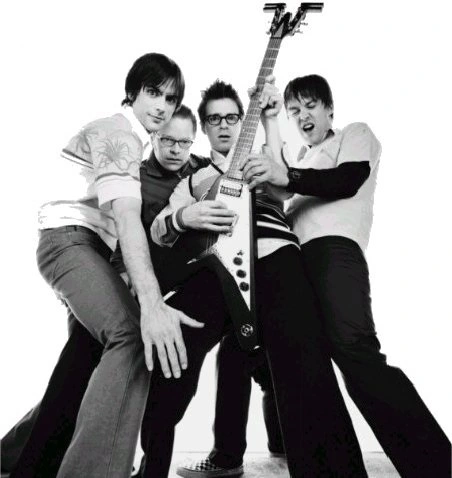
Weezer
They began by making clever and often nostalgic music with a contemporary twist: they were sharp but never too “arch.” Despite lineup changes and public fallings-out, notably between Rivers Cuomo and former bassist Matt Sharp, the band has maintained a consistent presence in the music scene. Weezer is known for their hit singles and critical acclaim, balancing mainstream success with their unique musical style. Since 2001, the band has consisted of Rivers Cuomo (lead vocals, guitar, keyboards), Patrick Wilson (drums, backing vocals), Brian Bell (guitar, keyboards, backing vocals), and Scott Shriner (bass guitar, keyboards, backing vocals). After signing to Geffen Records in 1993, Weezer released their acclaimed self-titled debut album, also known as ‘the Blue Album’.Weezer’s second Album, ‘Pinkerton’ (1996), featuring a darker, more abrasive sound, was a commercial failure and initially received mixed reviews, but achieved cult status and acclaim years later. Both the Blue Album and Pinkerton are now frequently cited among the best albums of the 1990s.Subsequent albums explored various sounds, including the pop-oriented ‘Green Album’, the hard rock ‘Maladroit’, the mainstream pop ‘Pacific Daydream’, and a return to their 90s rock style in ‘Everything Will Be Alright in the End’ and ‘the White Album’. In 2022, the band released a series of four EPs tied to the seasons ( Spring, Summer, Autumn, Winter) each exploring a different emotion and musical style.
Weezer is an American alternative rock band from Los Angeles, California formed in 1992. Known for their fusion of power pop, geek rock, and emo influences.
NOTES
Sound quality is important and some streaming services will offer superior sound quality. We do encourage you to purchase albums from good online record stores. alternatively, stream the music of favoured artists from those better online streaming services.
Olivier Messiaen – Quartet for the End of Time / Turangalîla-Symphonie – Label : Warner Classics
Paul Motian – I Have the Room Above Her – Label : ECM
Oneohtrix Point Never – R Plus Seven – Label : Warp Records