In This Issue #23 We Highlight 4 Artists And Some Significant Works

We Aim to Encourage Listeners of all Tastes and Passions. So get your Headphones on and consider Discussing the Musical offering and Sharing your views with like-minded Peers

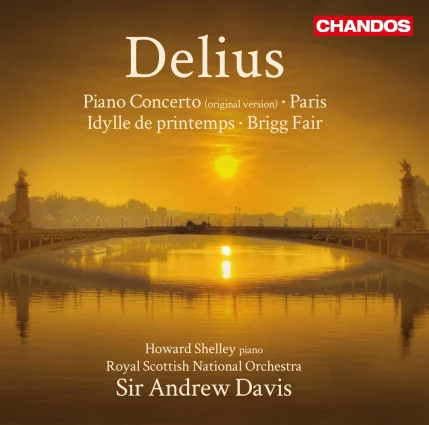
Paris: The Song of a Great City a large-scale orchestral nocturne. It captures his personal impressions of the French capital during La Belle Époque. Early as it is, Paris carries all of Delius’s trademark qualities. It is a deeply atmospheric, impressionistic tone picture—mostly quiet and reflective, but interspersed with exciting waves of raw emotion. The first movement starts slowly with low strings and winds to create the atmosphere of the evening mist and the quiet yet mysterious mood of the sleeping city. As the night progresses, the texture brightens dramatically. Oboes and clarinets sound out street cries and active motifs, representing the vibrant pulse of Parisian nightlife, dance halls, and cafes. Interwoven with the bustling, hedonistic crowd scenes are lush, intimate lyrical interludes that reflect personal romance and the bittersweet yearning for an unattainable past. The piece winds down as church bells ring out, the crowds disperse, and the sounds of awakening streets signal the return of morning, closing with echoes of the opening movement.Piano Concerto in C minor is a rare and unique contribution to the British/European romantic concerto repertoire. Unlike a traditional, high-octane virtuoso Delius approaches the genre with a lyrical, anti-virtuosic, and impressionistic mindset. Dissatisfied with the original structure, Delius heavily revised and condensed the piece into its well-known single-movement form (though it retains contrasting internal sections. The original structure: First Movement (Allegro ma non troppo): Opens with a memorable six-bar orchestral theme that remained largely intact through all subsequent revisions. Second Movement (Largo / Slow Movement): Features lyrical expansion, inwardness, and delicate, rhapsodic exchanges between the piano and woodwinds. It acts as a calm, contemplative center that feels more spacious than the compressed single-movement redesign. Third Movement (Finale – Discarded in 1907): The most dramatic difference is this lost movement. Delius later recycled its most haunting melodic idea for his 1916 Violin Concerto. The Florida Suite (Tropical Scenes for Orchestra) is his first major orchestral work. It was inspired by his time managing an orange plantation along the St. Johns River in Florida (1884–1885) and his subsequent music studies in Leipzig. The suite comprises four linked, atmospheric movements: 1. Daybreak – Dance: Opens with quiet, shimmering colours representing sunrise, leading into a lively dance theme.2. By the River: Features warm, hushed, and fluid lyricism with delicate woodwind and string writing capturing the slow flow of the water.

Paris- The Song of a Great City- 1 Adagio
Paris- The Song of a Great City- 2 Vivace – Adagio con espressione – Con grazia
Paris- The Song of a Great City- 3 Molto adagio – Allegretto grazioso – Tempo di marcia
Paris- The Song of a Great City- 4. Adagio molto
Piano Concerto in C Minor, RT VII/4: I. Allegro ma non troppo
Piano Concerto in C Minor, RT VII/4: II. Largo
Piano Concerto in C Minor, RT VII/4: III. Maestoso con moto moderato
Florida – Suite For Orchestra: 1. Daybreak
Florida – Suite For Orchestra: 2. By The River
Florida – Suite For Orchestra: 3. Sunset
Florida – Suite For Orchestra: 4. At Night
Violin Concerto
Idylle Printemps
Brigg Fair
Cello Sonata in One Movement
Summer Night on the River
On Hearing The First Cuckoo In Spring
A Song before Sunrise

3. Sunset – Near the Plantation: A mellow, nostalgic panel reflecting the end of the day over the southern landscape. 4. At Night: A quiet, nocturnal epilogue blending dreamy harmonies and gentle orchestral textures. Violin Concerto: It is an intimate, continuous single-movement work that trades traditional virtuosic showmanship for deep, expressive lyricism. The violin enters almost immediately with a sweeping, chromatic motif filled with intense yearning and passion followed by a more intimate, chamber-music-like environment. A joyful orchestral tutti bursts forth to launch an Allegretto finale. A spirited, dance-like theme peaks in intensity before the entire piece gradually winds down to a whisper. It ends with a breathtaking pianissimo fade out rather than a typical roaring climax.Idylle de printemps (1889) An exquisite, lambent, and highly rewarding tone painting. It is an indispensable piece for understanding Delius’s stylistic evolution, serving as a sonic bridge between the conservative German training he was moving past to foster his voice in a musical impressionism deeply connected to the divine in nature.Brigg Fair: An English Rhapsody in 1907, inspired by a Lincolnshire folk song. The work treats the folk theme to a peaceful introduction, a series of varied character studies (lilting dances, funereal marches, pastoral interludes), and rich romantic climaxes rather than a rigid classical symphonic. Cello Sonata A rare, rhapsodic single-movement work that breaks away from traditional multi-movement sonata structures. The piece opens with a rich, expansive sweep of cello melody from the lower strings that provides the primary thematic material for the entire work. The piano functions as an equal and atmospheric partner rather than just accompaniment. In a rare departure for Delius—who typically favoured quiet, fading endings—the sonata concludes with a triumphant coda.development.On Hearing the First Cuckoo in Spring / Summer Night on the River Two Pieces for Small Orchestra. The central theme of “On Hearing the First Cuckoo in Spring” is based on a Norwegian folk melody. The piece opens with radiant, veiled strings and luminous woodwinds. A soft, two-note call representing the cuckoo is introduced characteristically by the clarinet. Critics often note that “Summer Night on the River” encapsulates Delius’s entire aesthetic—listening to it feels like floating leisurely down a quiet stream.A Song Before Sunrise. Admirers emphasize its transparent woodwind writing and subtle shifting colours that evoke the exact crispness of dawn breaking over the countryside reflecting Delius’s fascination with natural, atmospheric transitions.

It is helpful to research the artist, using sources like Wikipedia , Music Magazine Reviews (Pitchfork, Rolling stone, NME etc.,) Artist Websites, etc…A synopsis of the life and music of this Issue’s featured artists appears below.

This Week’s Artists

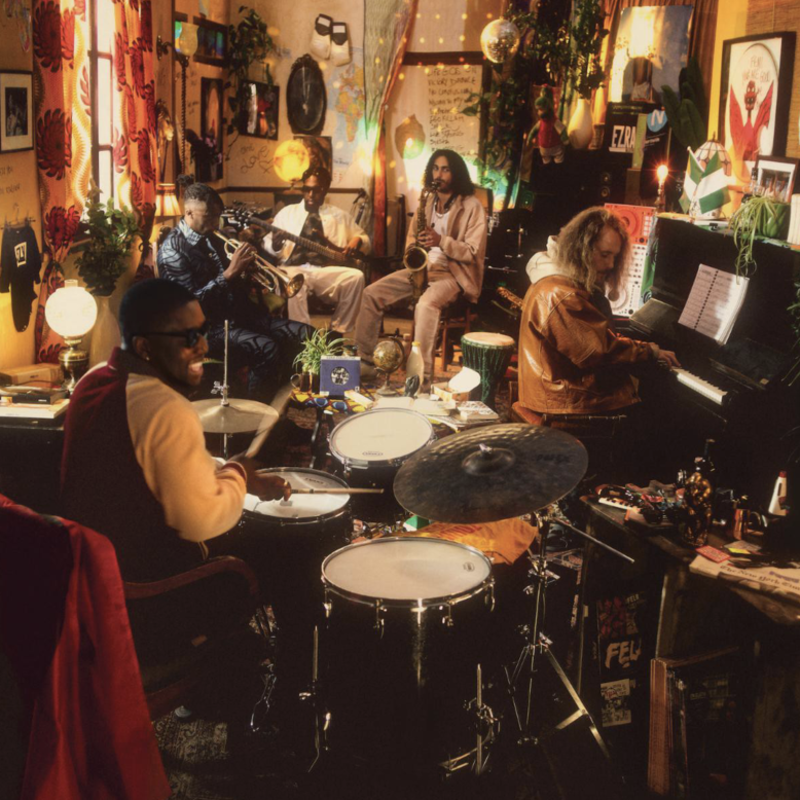
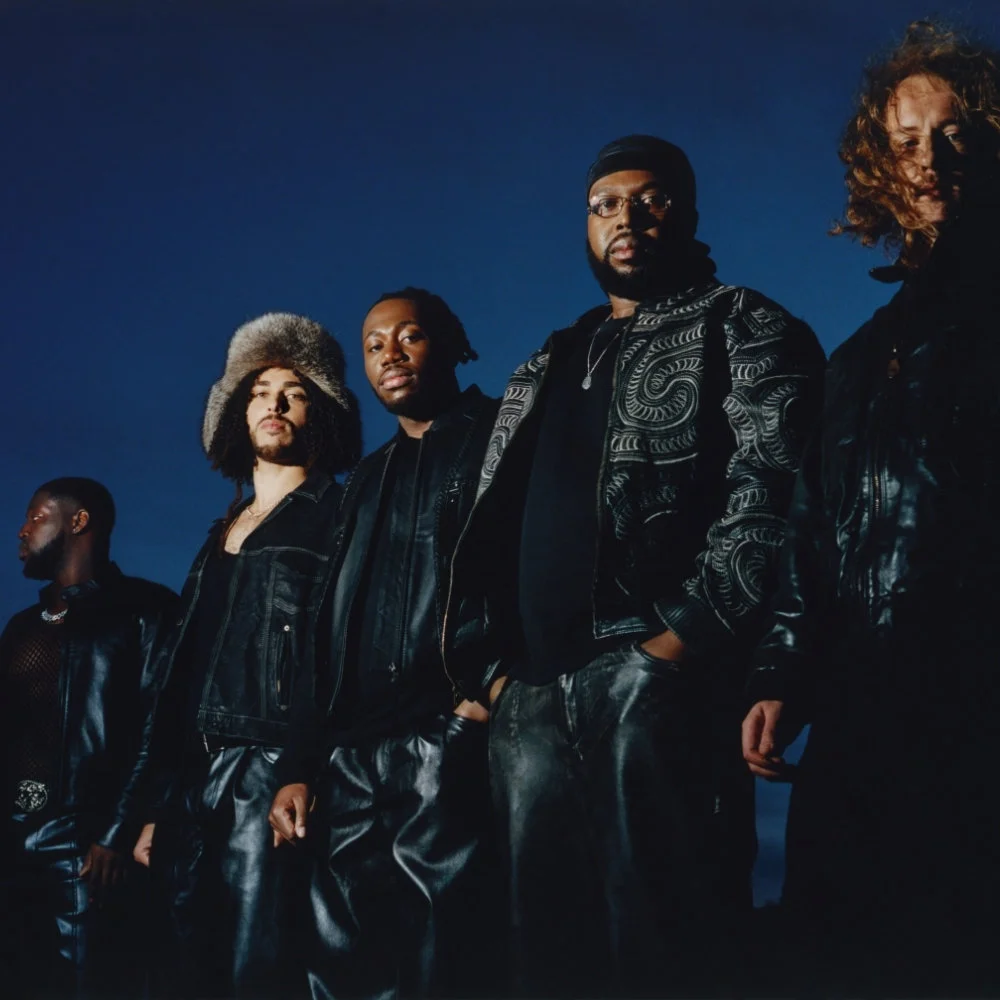
Ezra Collective are a British jazz quintet composed of drummer and bandleader Femi Koleoso, bassist TJ Koleoso, keyboardist Joe Armon-Jones, trumpeter Ife Ogunjobi, and tenor saxophonist James Mollison. The group fuses elements of afrobeat, calypso, reggae, hip-hop, soul and jazz, and frequently collaborates with fellow London-based jazz musicians such as Nubya Garcia and Moses Boyd. They were the recipients of the 2023 Mercury Music Prize. At the Brit Awards 2025, the Ezra Collective became the first jazz band to win the “Group of the Year” accolade.

Ezra Collective

The London-based quintet formed in 2012 by brothers Femi Koleoso (drums) and TJ Koleoso (electric bass), together with James Mollison (sax), Joe Armon-Jones (keyboards) and Dylan Jones (trumpet). Jones has since been replaced by Ife Ogunjobi. The members of Ezra Collective met at the jazz programme Tomorrow’s Warriors, run by Gary Crosby and Janine Irons. Their name is a reference to the Biblical prophet Ezra and his practice of studying the works of the greats who came before him – something the band wished to emulate within jazz. The jazz group has claimed that they faced challenges in succeeding as young jazz musicians in London, with Femi Koleoso saying: “I saw jazz music as an elite art form that I didn’t have access to.” He puts down the group’s success as being able to freely express their musical influences from their youth. The band has said that Robert Glasper, and Kendrick Lamar’s To Pimp a Butterfly provided early inspiration for their “template” as a jazz band. The band’s 2019 instrumental single “Quest for Coin” was premiered as the “Hottest Record in The World” on Annie Mac on BBC Radio 1. In 2019, Ezra Collective released their debut LP You Can’t Steal My Joy, which featured British musicians Jorja Smith and Loyle Carner. In 2022, the band released its second LP, Where I’m Meant to Be, involving a mix of both instrumental tracks and lyrical collaborations. Critical reception was widely positive, with Kate Hutchinson from The Guardian writing that the “exceptional album could be the one to cross over to the big league.” The band won the 2023 Mercury Prize for their album Where I’m Meant To Be, making them the first jazz act to win the award in its 31-year history. Following the announcement, Femi Koleoso highlighted the band’s youthful origins. Alexis Petridis lauded the winning album “It’s approachable and celebratory without in any way seeming lightweight or drifting too far from the band’s roots: an album that people who don’t normally consider themselves jazz fans might fall for, but still resolutely a jazz album.” On 28 June, Ezra Collective performed at Glastonbury Festival 2025

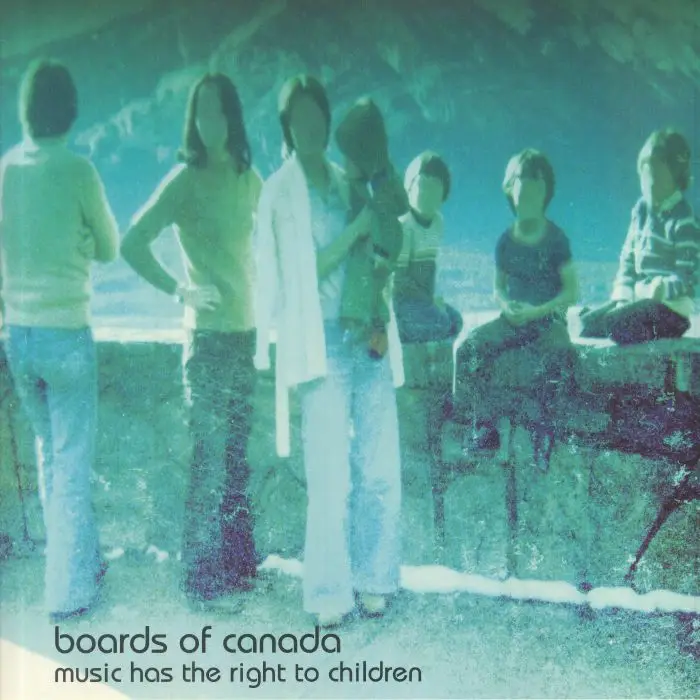
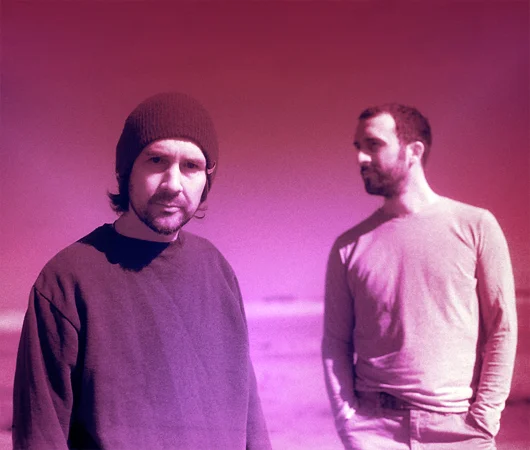
Boards Of Canada

Scottish duo Boards of Canada have become one of the most lauded and loved electronic acts in recent years. Brothers Mike Sandison (born Michael Peter Sandison, 14 July 1971) and Marcus Eoin (born Marcus Eoin Sandison, 27 May 1973) were brought up in Cullen, Moray. From 1979 to 1980, they lived in Calgary, Canada, while their father, who worked in construction, took part in the project to build the Saddledome. They spent their teenage years living in Balerno. They attended the University of Edinburgh. Marcus dropped out before completing his degree. The duo did not reveal that they were brothers until a 2005 interview with Pitchfork, as they had wanted to avoid comparisons with another electronic sibling duo, Orbital. Growing up in a musical family, the brothers first played instruments at a young age. They experimented with recording techniques from around the age of 10, using tape machines to layer cut-up samples of found sounds over compositions of their own. In their teens they participated in a number of amateur bands. However, it was not until 1986 when Marcus was invited to join Mike’s band as a bassist that Boards of Canada was born. With frequent line-up changes, Boards of Canada eventually had comprised as many as fourteen different members. By 1989, the band had been reduced to three core members, Mike, Marcus and Chris Horne. With various collaborators, Mike, Marcus and Chris created their own studio. In early 1996, Chris Horne departed, and Boards of Canada became a duo. The duo’s preoccupation with memory, nostalgia, past aesthetics, and public broadcasting presaged the 2000s electronic movement known as hauntology. Their sound is an organic and melodic form of downbeat, dreamlike electronica. Their music is hazy and nostalgic, almost psychedelic, almost shamanistic. Their music is instantly recognizable due to these few unique elements: use of analog synthesizers, reel-to-reel tape machines, and intentional audio degradation to make their music sound like old 1970s documentaries and public broadcast television. Their tracks often weave in field recordings of children playing, mathematical concepts, nature imagery, and cryptic, esoteric or occult references. The melodies evoke a profound sense of childhood memory, comfort, and slight unease. The duo has been described as cryptic and reclusive; they have made extensive use of subliminal messaging and unconventional promotional methods, and they rarely grant interviews or appear publicly, having not performed live since 2001. Their solitude has only increased the mystery around the group, and whilst they have influenced scores of like-minded travellers who have replicated their sound nothing quite has the distinct graininess and dreaminess of the original. After releasing several early EPs, the group signed to Warp Records in 1998 and released their debut album Music Has the Right to Children to widespread critical acclaim; it is now considered a landmark album in electronic music. This was followed by their second studio album Geogaddi (2002), which adopted a darker tone and references to religious cults and esoteric subjects. Their third studio album The Campfire Headphase (2005), emphasized more organic instrumentation and conventional song structures. After a seven-year hiatus, the duo returned in 2013 with their fourth studio album Tomorrow’s Harvest, which drew inspiration from film scores. Following another hiatus, they released their fifth studio album, Inferno, in 2026.

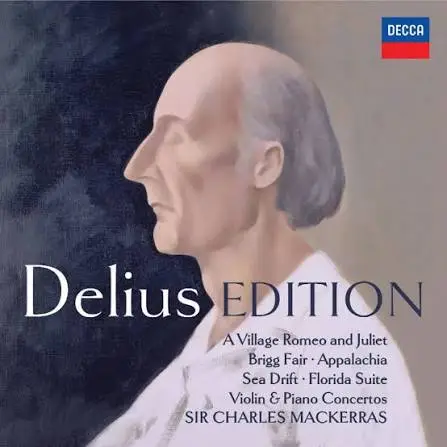
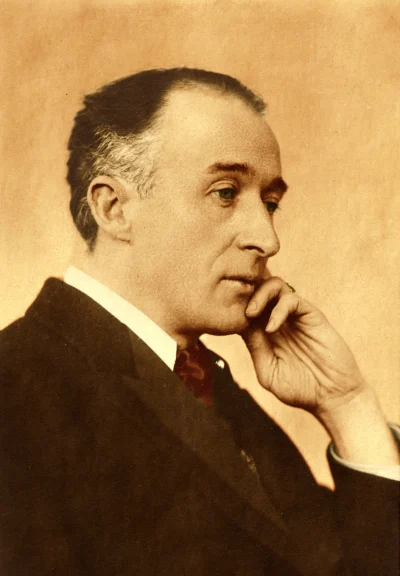
Frederick Delius (1862–1934) rests on his position as one of the most distinctive and fiercely independent voices in early 20th-century music. Defying the traditional boundaries of his era, Delius crafted a unique, highly atmospheric musical language that blended late-Romanticism with Impressionism, characterised by lush orchestration and fluid, chromatic harmonies.

Frederick Delius

Delius was born in Bradford in Yorkshire. He was the second of four sons – there were also ten daughters – born to Julius Delius (1822–1901) and his wife Elise Pauline, (1838–1929). Julius moved to England to further his career as a wool merchant, and became a naturalised British subject in 1850. He married Elise in 1856.The Delius household was musical; famous musicians such as Joseph Joachim and Carlo Alfredo Piatti were guests, and played for the family.  Despite his German parentage, the young Fritz was drawn to the music of Chopin and Grieg rather than the Austro-German music of Mozart and Beethoven, a preference that endured all his life. The young Delius was first taught the violin by Rudolph Bauerkeller of the Hallé Orchestra, and had more advanced studies under George Haddock of Leeds. Although Delius achieved enough skill as a violinist to set up as a violin teacher in later years, his chief musical joy was to improvise at the piano. Julius Delius assumed that his son would play a part in the family wool business. Julius Delius soon recognised that there was no prospect that his son would succeed in the family business, but he remained opposed to music as a profession, and instead sent him to America to manage an orange plantation. Delius was in Florida from the spring of 1884 to the autumn of 1885. He continued to be engrossed in music, and in Jacksonville he met Thomas Ward, who became his teacher in counterpoint and composition. While in Florida, Delius had his first composition published, a polka for piano called Zum Carnival. In 1886, Julius Delius finally agreed to allow his son to pursue a musical career, and paid for him to study music formally. Delius returned to Europe and enrolled at the conservatoire in Leipzig, Germany. Important to Delius’s development was meeting the composer Edvard Grieg in Leipzig. Grieg, recognised Delius’s potential. After leaving Leipzig in 1888, Delius moved to Paris where his uncle, Theodore, took him under his wing and looked after him socially and financially. Delius’s Paris years were musically productive. It is generally believed that during this period he contracted the syphilis that caused the collapse of his health in later years. In 1897, Delius met the German artist Jelka Rosen, who later became his wife. They married in 1903 and, apart from a short period when the area was threatened by the advancing German army during the First World War, Delius lived in Grez for the rest of his life. By 1907, thanks to performances of his works in many German cities, Delius was, as Thomas Beecham said, “floating safely on a wave of prosperity which increased as the year went on”. In 1909, Beecham conducted the first complete performance of A Mass of Life, the largest and most ambitious of Delius’s concert works. In the early years of the 20th century, Delius composed some of his most popular works, including Brigg Fair (1907), In a Summer Garden (1908, revised 1911), Summer Night on the River (1911), and On Hearing the First Cuckoo in Spring (1912). By the end of the war, Delius and Jelka had returned to Grez. He had begun to show symptoms of syphilis that he had probably contracted in the 1880s. He took treatment at clinics across Europe, but by 1922 he was walking with two sticks, and by 1928 he was paralysed and blind. A young English admirer, Eric Fenby, learning that Delius was trying to compose by dictating to Jelka, volunteered his services as an unpaid amanuensis. For five years, from 1928, he worked with Delius, taking down his new compositions from dictation, and helping him revise earlier works. Delius died at Grez on 10 June 1934, aged 72. Beecham stresses Delius’s role as an innovator: “The best of Delius is undoubtedly to be found in those works where he disregarded classical traditions and created his own forms”. Fenby echoes this: “the people who really count are those who discover new ways of making our lives more beautiful. Frederick Delius was such a man”.


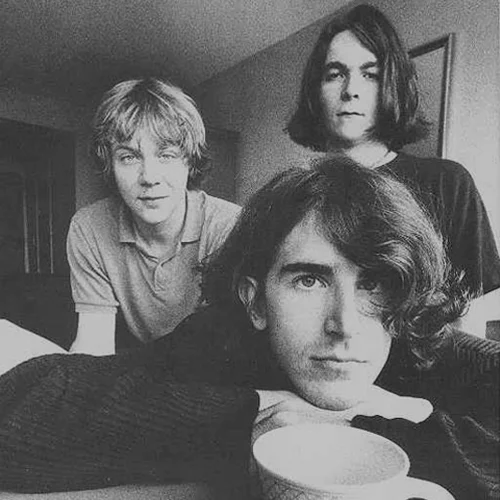
Sebadoh

American alt-rockers Sebadoh are a cult band who have never forced a way into the public’s conscience. Instead, they undermine traditional rock in a way that is so powerful and innovative that it motivates and influences an entire age group to think or act differently. Since the band’s inception in 1987, they have traced a line from the awkwardness of adolescence to the confusion of adulthood, distilling punk rock and homespun folk with enough intrinsic songcraft skill to make mighty engaging pop records when it so chooses. The band’s early output, such as The Freed Man and Weed Forestin’ (both released 1990), as well as Sebadoh III (1991), was typical of this style. Following the release of Bubble & Scrape in 1993, Gaffney left the band. His replacement and erstwhile stand-in, Bob Fay, appeared on Bakesale (1994) and Harmacy (1996), but was fired before the sessions for the band’s major label release The Sebadoh (1999), featuring drummer Russ Pollard. The band then paused recording for 14 years. The group, fronted by Barlow and now featuring drummer Bob D’Amico, returned in 2012 with Secret EP and, in 2013, a full-length album titled Defend Yourself, which were both self-recorded. The album Act Surprised followed in 2019. Barlow and Eric Gaffney released the Weed Forestin’ cassette in 1987 on Homestead Records under the name Sebadoh, which was a nonsense word Barlow often muttered in his recordings. Homestead Records released The Freed Man and Weed Forestin’ (both released 1990) albums.

Jason Loewenstein joined summer 1989, the first release that he played on being the “Gimme Indie Rock” single in 1991. Only ten ‘band’ shows were performed throughout Western Massachusetts, Boston, and New York over the period 1989–1990 before the third album, Sebadoh III, was released. After touring with Firehose in 1991, they signed to Sub Pop (Domino in the UK and City Slang in Germany) in 1992, and released the two EPs Rocking the Forest and Sebadoh vs. Helmet just two months apart. Their fourth album Bubble & Scrape was released in April 1993. The same year, the band’s “Soul and Fire” EP humorously described the band’s musical goal as “driving dozens of college-age lemmings off the cliff of limited imagination.” Following Bubble & Scrape (1993) Gaffney left the band. Gaffney’s replacement, Bob Fay, appeared on Bakesale (1994) and the follow-up Harmacy in 1996. Gaffney had quit the band three times between 1990 and 1993, being replaced each time by Fay. Fay was fired before the sessions for The Sebadoh (1999) and replaced by Russ Pollard, a friend of Loewenstein’s from Louisville. The band went on a tour to promote this album, including a stop in Toronto in March. The band then went on hiatus, with Barlow concentrating on his other project, the Folk Implosion, and Loewenstein working on material for his debut solo album At Sixes and Sevens, released in 2002. The two reunited to play concerts in late 2003 and early 2004. In March 2007, the “Sebadoh Classic” lineup of Barlow, Gaffney and Loewenstein went on tour together for the first time in fourteen years. The reunion tour continued into 2008. In 2011, Sebadoh toured in support of reissues for their Bakesale and Harmacy albums. Taking the place of Gaffney on drums was Bob D’Amico. Their eighth studio album, Defend Yourself, came out on Joyful Noise Recordings in September 2013. The band announced that their ninth studio album Act Surprised will be released on May 24, 2019, via Dangerbird Records.


NOTES

Sound quality is important and some streaming services will offer superior sound quality. We do encourage you to purchase albums from good online record stores. alternatively, stream the music of favoured artists from those better online streaming services.

Frederick Delius – Delius (Piano Concerto, etc.,) – Label : Chandos ; Delius Edition (Florida Suite, etc.,) – Label : Decca

Ezra Collective – Where I’m Meant To Be – Label : Partisan Records

Boards of Canada – Music Has the Right to Children – Label : Skam Records

Sebadoh – Bakesale – Label : Sub Pop

In further issues we will continue to Bring you the music of Popular genres to listen, review and evaluate.