In This Issue #4 We Highlight 4 Artists And Some Significant Works
Join the Conversation!!!

We will Feature Up to 4 Albums from Artists representative of a range of the many sub-genres. We Hope to encourage Listeners of all tastes and passions. So Get your Headphones on and consider discussing the musical offering and sharing your views with like-minded peers.
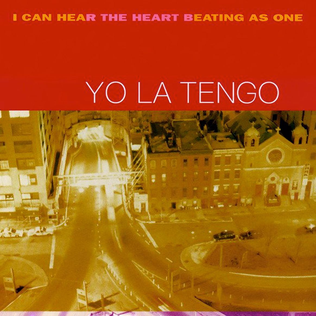
I Can Hear the Heart Beating as One, 1997 was their first true masterpiece. arrived in the spring of 1997 and boasted a wide, eclectic range of styles and influences, Yo La Tengo had always had the covers repertoire of a jukebox, and here they channelled that into their own songwriting. a 68-minute epic that made room for Krautrock, electronic, psychedelia, Anita Bryant covers, and a great deal more along with their trademark noise pop. The album is a critical favourite, combined clean melodic lines with feedback-laced, densely layered sound and gently ironic lyrics. The critical consensus highlights several key tracks that define the record’s eclectic genius :“Little Honda”: A blissed-out, heavily distorted cover of the Beach Boys track, allowing Ira Kaplan to let loose with manic live guitar energy.“Autumn Sweater”: Widely considered one of the band’s signature songs, it is a masterclass in tension and subtlety. Built around an amped-up church organ and a mesmerizing, driving drum beat, it perfectly captures the cozy, introverted vulnerability of romance. “Sugarcube”: The album’s most direct and propulsive indie rock anthem. Featuring a massive, fuzzy guitar riff reminiscent of Pavement or Sonic Youth, it wraps a sweet, earnest vocal melody in glorious distortion. “Deeper into Movies”: Often cited by critics as one of the finest tracks Yo La Tengo ever recorded. Inspired by My Bloody Valentine, it delivers a breathless tsunami of guitar feedback overlaid with beautiful, indistinguishable vocal harmonies. “We’re an American Band”: A late-album psych-folk epic that slowly builds from a sleepy, wistful resonance into a chaotic, soaring guitar solo. “Stockholm Syndrome”: A beautiful, acoustic-tinged folk ballad sung by bassist James McNew, bringing a clean, youthful, and comforting vibe to the record’s midsection. Clocking in at 68 minutes, the album transitions effortlessly between quiet, intimate moments and massive walls of feedback.
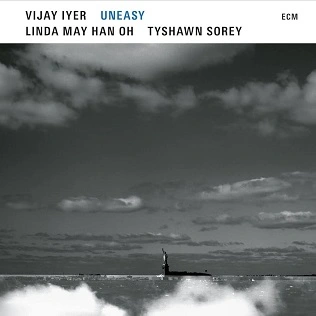
Vijay Iyer’s 2021 album Uneasy is a tense, brilliant jazz trio recording with bassist Linda May Han Oh and drummer Tyshawn Sorey that explores political and emotional unrest through fluid, modern improvisation. The album features ten tracks—eight originals by Iyer and two inventive covers. Critics have praised the trio for playing together with the deep intuition of a single organism..Key Tracks include: “Entrustment”: The hymn-like closing processional that uses a steady, widening drone to bring a sense of calm resolution. “Uneasy” (Title Track): A nine-minute centrepiece that starts in a dark, pensive mood before shifting into a fast, stormy rhythm. “Configurations”: A groove-driven, intricate piece that updates an older Iyer composition with sharp, engaging interplay. “Augury”: A quiet, emotional solo piano piece featuring flowing, waterfall-like scale patterns. “Night and Day”: A fresh, rhythmic take on the Cole Porter standard played in an unusual 7/8 time signature. “Drummer’s Song”: A polyrhythmic tribute to late pianist Geri Allen that turns a short calypso tune into an expansive group showcase. “Combat Breathing” & “Children of Flint”: Socially conscious originals dealing with civil rights and American injustice, built on tight, driving rhythms. The result is a set of modern piano jazz that covers a remarkable range and features three brilliant musical imaginations that play well together. A triumph of small-group interchange and fertile invention.
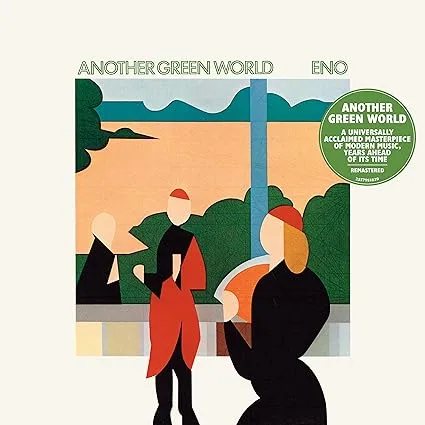
Another Green World is the third solo studio album by Brian Eno, released by Island Records in November 1975. The album marked a transition from rock-based music towards his late 1970s ambient work. Predominantly instrumental tracks, with notable fragment of minimalism and the avant-garde.The album received plaudits by critics as a “universally acknowledged masterpiece” 1. “Sky Saw”: Driven by Phil Collins’ steady drumming and Percy Jones’ fretless bass, Eno features John Cale’s weeping viola alongside harsh, abrasive guitars that literally sound like a saw cutting through the mix. It bridges the instrumental texture with stream-of-consciousness singing. 2. “Over Fire Island”: A brief, atmospheric piece where Collins’ tight rhythm pattern is punctuated by Eno darting in and out with sliding synthesizers and radio-static tape effects. 3. “St. Elmo’s Fire”: One of the album’s vocal pop highlights. It features an astonishingly light, complex, and frantic “snake guitar” solo by King Crimson’s Robert Fripp that acts as the track’s explosive emotional climax.
4. “In Dark Trees”: A solo effort by Eno that builds a dark, dense, and slightly creepy electronic environment. It sounds remarkably organic despite being completely synthetic. 5. “The Big Ship”: A soaring, anthemic instrumental. It begins on a single chord and slowly accumulates countermelodies and waves of synthesizers, building cinematic tension and pure emotional release. 6. “I’ll Come Running”: A deliberate tonal shift into a breezy, almost silly pop track with a bouncy piano and an oddly endearing vocal delivery. 7. “Another Green World”: The brief title track is a masterfully simple, circular theme played entirely by Eno. It evokes a deep sense of peaceful nostalgia and landscape. 8. “Sombre Reptiles”: This instrumental relies heavily on synthetic percussion and processed elements to create an organic, living ecosystem of sound. 9. “Little Fishes”: A quiet, meditative instrumental that uses sparse keyboard work and subtle sound treatments to evoke the imagery of its title.
10. “Golden Hours”: A gorgeous, slow-motion vocal track. It features Robert Fripp’s delicate guitar work and John Cale’s viola, capturing a dizzying, dreamlike atmosphere where time seems to slow down. 11. “Becalmed”:Emotional ambient track. Built entirely from overlapping keyboards, it is a deeply moving piece. 12. “Zawinul/Lava”: An instrumental nod to jazz-fusion pioneer Joe Zawinul, blending soft textures, fender rhodes piano, and a slow, evolving electronic pulse. 13. “Everything Merges with the Night”: A gentle, acoustic-guitar-driven vocal track. 14. “Spirits Drifting”: The album closes with a haunting, completely beatless instrumental piece solidifying the arrival of ambient music.
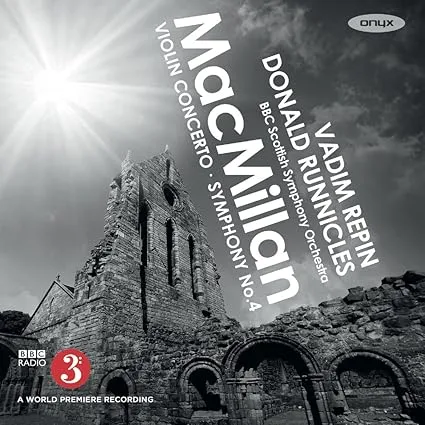
Symphony 4.The symphony is composed in one continuous movement and is a very spiritual and heavily emotional work with melodic allusions to a 16th-century mass by Renaissance composer Robert Carver. MacMillan defines it by a fascination with music of ritual, using four different elements (defined as rituals of movement, exhortation, petition and joy).
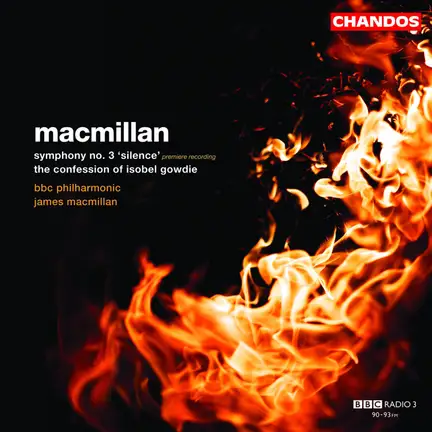
Symphony No. 3 (also known as Symphony No. 3: “Silence”) Explores the theological concept of God’s silence in the face of human suffering, torture, and genocide.The composition opens by recreating the distinct, breathy timbre of the shakuhachi (a traditional Japanese bamboo flute), which gradually shifts into the distinctively intense, “keening” Celtic string slides characteristic of MacMillan’s Scottish heritage.
.
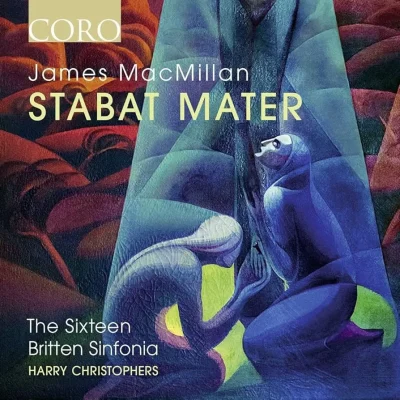
Sir James MacMillan’s Stabat Mater is a widely acclaimed 2015 choral masterpiece scored for mixed chorus and string orchestra. Recognized as a modern landmark in sacred music. Stabat mater is profound and deeply moving. MacMillan, a devout Catholic, crafts a deeply personal narrative focusing on Mary’s agony at the foot of the cross. The composition is famous for its powerful emotional contrasts—juxtaposing aggressive, violent, and angry string dissonances with sections of fragile, naively beautiful choral writing. The Confession of Isobel Gowdie is a breakthrough 1990 orchestral workconceived the piece as a Requiem for Isobel Gowdie, a young woman from Nairn, Scotland, who was executed for witchcraft in 1662 during the post-Reformation witch-hunts. Musically, the composition balances intense, violent sections that convey the frenzy and sadism of the witch trials with deeply reflective outer sections rooted in traditional Scottish chants, folk elements, and religious litanies
It is helpful to research the artist, using sources like Wikipedia , Music Magazine Reviews (Pitchfork, Rolling stone, NME etc.,) Artist Websites, etc…A synopsis of the life and music of this Issue’s featured artists appears below.
This Week’s Artists
VIJAY IYER
Vijay Iyer is a composer, pianist, bandleader, producer, writer, and professor based in New York City. Born in Albany and raised in Fairport, New York, he is the son of Tamil Indian immigrants to the United States. He received 15 years of classical training on violin beginning at the age of three. He began playing the piano by ear in his childhood and is mostly self-taught on that instrument. After completing a degree in mathematics and physics at Yale University he obtained an M.A. degree at the University of California, Berkeley.. Since then, his musical innovations have stemmed from his mathematical interests. which influence the rhythms, forms and structures of his compositions. In 1994, he started working with Steve Coleman (Jazz Saxophonist) and George E. Lewis (Jazz Trombonist). In 1996, Iyer began collaborating with the saxophonist Rudresh Mahanthappa, resulting in five albums under Iyer’s name Architextures (1998) Panopti Modes, Blood Sutra (2003) Reimagining (2005)and Tragicomic (2008)). Iyer performs internationally with his ensembles and in collaborations. Among these are his award-winning trios, featured on five albums (Compassion (2024, ECM), Uneasy (2021, ECM), Break Stuff (2015, ECM), Accelerando (2012, ACT) and the Grammy-nominated Historicity (2009, ACT). His duo project with Wadada Leo Smith. Also, within a sextet and alternative collaborative trios. Iyer is also a prolific composer for classical ensembles and soloists. His writings have appeared in various journals and anthologies. Iyer can be seen as a contemporary musicologist who is most interested in researching not historical but improvisational music.
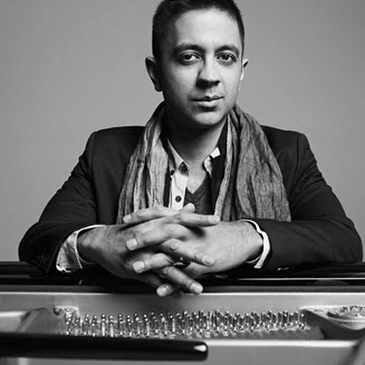
Iyer is a tenured professor at Harvard University. Iyer recently served as composer-in-residence at London’s Wigmore Hall, and artist-in-residence at New York’s Metropolitan Museum of Art. Among many awards: His honours include a MacArthur Fellowship and three Grammy nominations. He was the critics’ Jazz Artist of the Year in 2016 and in 2018, and his sextet was voted 2018 Jazz Group of the Year.
BRIAN ENO
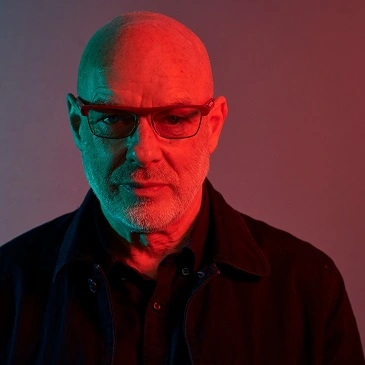
Eno was born on 15 May 1948 in the village of Melton, Suffolk, England, the son of a postal worker and clock and watch repairer, and a Belgian national. During his school years, he had begun to listen to American R&B, blues and doo wop artists. Whilst at school, Eno used a tape recorder as a musical instrument and in 1964 he joined school friends to form his first group with Eno on drums. Eno studied for a diploma in Fine Arts at the Winchester School of Art, from which he graduated in 1969. In late 1967, Eno pursued music once more with two Winchester undergraduates in an avant-garde music, art, and performance trio. He joined the glam rock group Roxy Music as its synthesiser player in 1971 and became known for his flamboyant, androgynous costumes and makeup. He recorded two albums with the band. After the tour in support of For Your Pleasure ended in mid-1973, Eno quit the band, citing disagreements with Ferry. He then released solo albums beginning with the rock-oriented Here Come the Warm Jets (1974). Eno then explored minimal music on the influential recordings lDiscreet Music (1975) and Ambient 1: Music for Airports (1978).
He coined the term “ambient music”, which purported to modify the listener’s perception of the surrounding environment. On ‘Ambient 4 (On Land)’ – the final edition in Eno’s ambient series – his palate shifted from electro-mechanical and acoustic instruments towards “non-instruments” like pieces of chain, sticks and stones, alongside conventional musical instruments. He began to experiment with several instruments and tools and recorded what would become Another Green World, the album was released in November 1975. The 1980’s saw Eno compose film scores and feature in more collaborative works with David Byrne of Talking Heads and his brother, Roger Eno. During the 1990s, Eno worked increasingly with self-generating musical systems, the results of which he called “generative” music – that is, music that is created according to a system of algorithms, only partly under its maker’s control. This allows the listener to hear music that slowly unfolds in almost infinite non-repeating combinations of sound.
Eno released ‘Another Day on Earth’ The album differs from his 1970s solo work due to the impact of technological advances on musical production, evident in its semi-electronic production. For the past twenty years Eno has released further solo and collaborative works including three albums in 2025 with Beatie Woolf (conceptual artist and composer) – Luminal, Lateral and Liminal – described as Dream Music, Space Music and Dark Matter, respectively From the beginning of his solo career in 1973, Eno was in demand as a record producer. He won the best producer award at the 1994 and 1996 BRIT Awards. His visual experiments with light and video continue to parallel his musical career with exhibitions all over the globe.He is involved in multiple activist work, His groundbreaking work in electronic music has been said to have brought widespread attention to and innovations in the role of electronic technology in recording.
YO LA TENGO
Yo La Tengo is an American indie rock band formed in Hoboken, New Jersey, A rock critic from New York City’s northern suburbs and the art-schooled daughter of an Oscar-winning animation duo on Manhattan’s Upper West Side shared a passion for music. Within months, they were in a close relationship, and they started playing together, Ira on guitar, Georgia on drums. By 1984, they’d formed Yo La Tengo and the group maintains a strong cult following. Though they mostly play original material, the band performs a wide repertoire of cover. By the time President Yo La Tengo (1989) was released, the band’s distinctive style and sound had evolved from basic roots-rock to encompass dramatic juxtapositions of often noisy guitar rock with melodic folk-influenced pop. Their music remains ‘accessible’ and their extended jams compelling in their exploration. Their catalogue is admirably diverse, encompassing warm acoustic interpretive albums as well as ultra-crude garage rock or ‘Skronk’ a raw, dissonant, and grating sound, produced by electric guitars. All blended with melodic engagement, and talented songwriting. Their longest-running lineup remains as singer-guitarist Ira Kaplan, drummer Georgia Hubley, and bassist (from 1992) James McNew. The album Painful, (1993) was Yo La Tengo’s first breakthrough, a whispery feedback-streak opus that stood as a worthy riposte to British shoegaze. Electr-O-Pura, two years later, sounded more spartan but the two records solidified Yo La Tengo as one of the best bands in the indie rock landscape. I Can Hear the Heart Beating as One, (1997)is often highlighted as their first true masterpiece. In the early 21st century. Yo La Tengo composed instrumental scores for several films and documentaries.I Am Not Afraid of You and I Will Beat Your Ass (2006), informed by their soundtrack works featured an orchestral sound bolstered by strings and horns. The album received universal acclaim. Subsequent albums, such as Popular Songs (2009) and Fade (2013), further showcased the band’s stylistic fluency. A covers collection Stuff Like That There (2015) followed and then the contemplative There’s a Riot Going On (2018) which was the band’s first digitally recorded and self-produced album
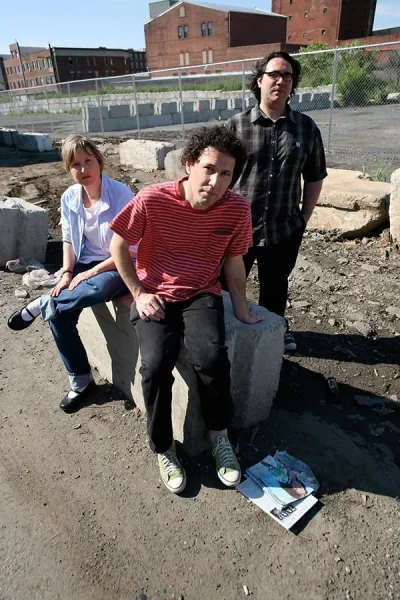
Their music explores a massive sonic landscape, effortlessly shifting between sweet, melodic dream pop and explosive, feedback-driven noise rock.
We Have Amnesia Sometimes (2020) featured extended instrumental improvisation of ambient music recorded on a single microphone. This music is not so much timeless as time-defiant. In 2023, the band released their seventeenth studio album This Stupid World. Yo La Tengo, a band that’s been so indispensable for so long because they love making music together exactly how and when they want.
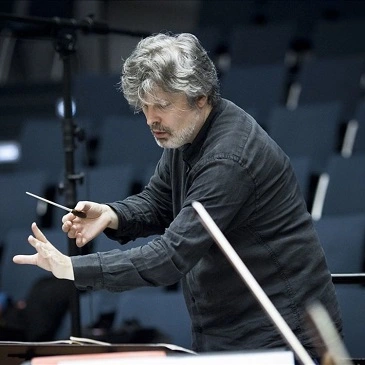
MacMillan’s music is infused with the spiritual and the political. His Catholic faith has inspired many of his sacred works, including a Magnificat (1999) and several Masses. MacMillan was composer and conductor with the BBC Philharmonic from 2000 to 2009, following which he took up a position as principal guest conductor with the Netherlands Radio Chamber Philharmonic. In 2019, The Guardian ranked MacMillan’s Stabat Mater the 23rd greatest work of art music since 2000.He was appointed a Commander of the Order of the British Empire (CBE) in 2004, and a Knight Bachelor in 2015. In 2024, he was became a Fellow of The Ivors Academy, the 26th person to be so honoured. In October 2025 he was nominated for two Ivor Novello Awards for his piece Concerto for Orchestra and Timotheus, Bacchus and Cecilia.
JAMES MACMILLAN
Sir James Loy MacMillan, CBE TOSD (born 16 July 1959) is a Scottish classical composer and conductor. MacMillan was born at Kilwinning, in 1959 but grew up in Cumnock, East Ayrshire, Scotland. He studied musical composition at the University of Edinburgh and at Durham Universitry where he gained an undergraduate degree and then a PhD degree in 1987. He was a lecturer in music at the Victoria University of Manchester from 1986 to 1988. After working as a lecturer at Manchester University, he returned to Scotland and settled in Glasgow. composing prolifically, and becoming Associate Composer with the Scottish Chamber Orchestra. As a young man he was briefly a member of the Young Communist League. MacMillan has written operas as well as ballet, orchestral, music theatre and choral works. His style has been established as basically melodic, yet modern, and written in a very personal style that is listener-friendly. He came to the attention of the classical establishment with the BBC Scottish Symphony Orchestra’s premiere of The Confession of Isobel Gowdie at the BBC Proms in 1990. Isobel Gowdie was one of many women executed for witchcraft in 17th-century Scotland. The work’s international acclaim spurred more high-profile commissions, including a percussion concerto for fellow Scot Evelyn Glennie: Veni, Veni, Emmanuel. It was premiered in 1992 and has become MacMillan’s most performed work. He was also asked by Mstislav Rostropovich to compose his Cello Concerto, which Rostropovich premiered in 1997. Further successes have included his second opera The Sacrifice, commissioned by Welsh National Opera in 2007, which won a Royal Philharmonic Society Award, and the St John Passion jointly commissioned by the London Symphony Orchestra and Boston Symphony Orchestra and conducted by Sir Colin Davis at its world premiere in 2008. Also in 2008 he received the British Composer Award for Liturgical Music for his Strathclyde Motets. Sir James MacMillan is one of today’s most successful composers and performs internationally as a conductor. His musical language is flooded with influences from his Scottish heritage and close connection with Celtic folk music, and is distinctive for its rhythmic excitement and powerful emotional communication.
Sound quality is important and the better online Streaming services will offer superior sound quality. As always, We do encourage you to purchase favoured albums from good online or High Street record stores.
Brian eno – Another Green World – Label : Island Record
Vijay Iyer – Uneasy – Label : ECM
Yo La Tengo – I Can Hear The Heart Beating As One – Label : Matador Records
James MacMillan – Violin Concerto. Symphony No 4 – Label : Onyx (in association with BBC Radio 3)
In further issues we will continue to bring you the music of popular genres to listen, review and evaluate.
Issue #5(coming soon) features Florence + The Machine, Sigur Rós, Carla Bley and Claude Debussy